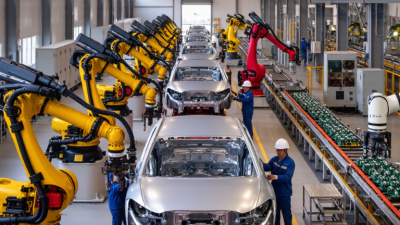
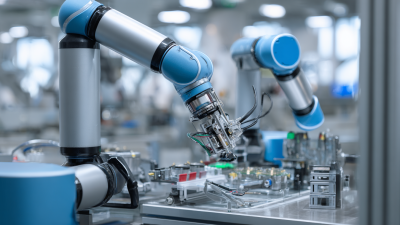
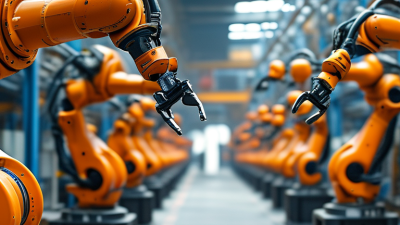
Global buyers are no longer purchasing machines alone. They are securing predictable output, safer workplaces, and stronger supply resilience. Robotic automation helps manufacturers handle repetitive assembly, palletizing, welding, inspection, and material movement with consistent performance. The International Federation of Robotics reported 541,302 industrial robots were installed worldwide in 2023. More than four million industrial robots were operating globally. These figures show a broad industrial shift, not a temporary technology trend.
The business case is becoming clearer. Deloitte’s 2024 Smart Manufacturing and Operations Survey found that 86% of surveyed manufacturers expect smart manufacturing to become essential for competitiveness within five years. For buyers, this means evaluating more than purchase price. They must examine integration, operator training, maintenance access, cybersecurity, energy use, and spare-parts availability. A robotic cell beside a packaging line can reduce handling errors and maintain steady cycle times during long shifts. Small gains matter.
Yet automation is not automatically successful. Poor process design can simply make mistakes happen faster. That is the uncomfortable part. Global buyers should request verified performance data, realistic return-on-investment estimates, and references from comparable factories. The IFR data also reminds us that adoption varies by region, sector, and workforce capability. A robot may deliver excellent precision, but it still needs skilled people, reliable software, and responsible oversight. Robotic automation is important because it can strengthen competitiveness, but only when technology matches the actual production problem.
Robotic automation uses software agents to handle repetitive procurement tasks. These tasks include purchase order creation, invoice matching, supplier data entry, and delivery updates. In global procurement, automation connects information across currencies, time zones, and approval workflows. It reduces manual copying between emails, spreadsheets, and purchasing systems. A buyer can then spend more time evaluating quality, capacity, and supplier reliability.
The practical value appears in small details. A system can flag a price mismatch before payment approval. It can also remind teams when certificates or shipping documents need review. However, automation is not a perfect solution. Poorly organized data can produce faster mistakes. Rules may also miss unusual supplier circumstances. Human review remains important for exceptions, sensitive decisions, and changing regulatory requirements. Procurement teams should test workflows with real historical orders before expanding them. That step can reveal assumptions nobody noticed.
Tips: Start with one repetitive process. Define clear approval limits. Keep an audit trail for every change. Review automated decisions regularly. Ask staff where the process still feels confusing. Their feedback may expose weaknesses that performance reports overlook.
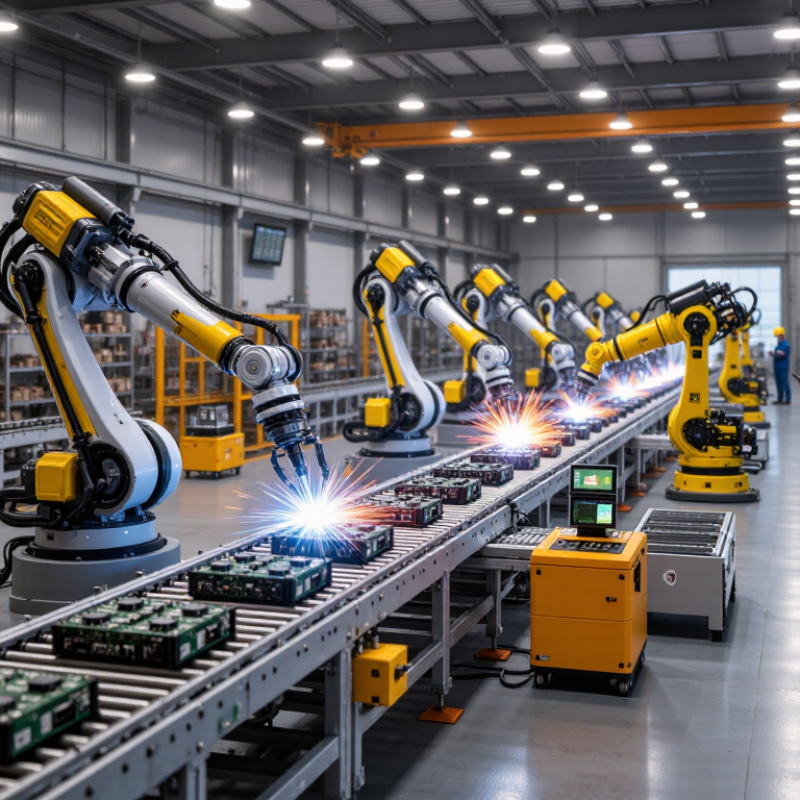
For international buyers, robotic automation can turn a distant factory into a more predictable production partner. A robot repeats welding, packing, or machine tending with stable motion. This consistency helps buyers compare samples, output rates, and quality records across suppliers. It also reduces dependence on temporary labor during peak seasons. Shorter production cycles may support faster replenishment and fewer emergency shipments. That matters when oceans, borders, and time zones add uncertainty.
The financial benefit is broader than the equipment price. Buyers should examine energy use, spare parts, programming, training, and local service access. A clear maintenance plan can prevent one failed sensor from stopping an entire line. Remote diagnostics may shorten response time, while standard interfaces can simplify future expansion. In practical evaluations, ask for cycle-time evidence, defect data, safety documentation, and operator training records. These details reveal whether the system works beyond a showroom demonstration.
Automation is not magic. Some projects disappoint when product designs change frequently or workers receive little training. A careful buyer can begin with a limited pilot, measure results for several weeks, and then adjust the scope. Currency changes, import procedures, and technical support should also enter the cost model. Even a highly accurate robot needs human oversight for unusual materials, damaged components, and unexpected stoppages. The strongest international decisions combine measurable performance with honest discussion of limitations.
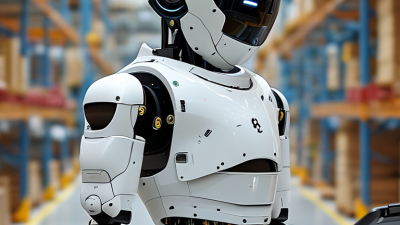
For global buyers, robotic automation improves supply chain operations by making movement more consistent. A robotic arm can sort cartons by destination, size, or delivery priority. Autonomous vehicles can move pallets between storage areas and loading docks. This reduces unnecessary walking and keeps orders flowing during peak periods. Small details matter. A missed scan can delay an entire shipment.
In warehouse projects, teams often connect robots with inventory software and barcode systems. Real-time data shows where goods are stored and when replenishment is needed. Buyers gain clearer shipment visibility across suppliers, ports, and distribution centers. Automated inspection can also identify damaged packaging before dispatch. Human workers still handle exceptions, unusual products, and safety decisions.
The results are not always perfect. Poor product data can make accurate automation unreliable. Robots may also slow down when layouts change or sensors collect dust. Regular maintenance, staff training, and manual checks remain necessary. Global buyers should assess local safety rules, power requirements, network stability, and repair support before investing. A smaller pilot may reveal hidden costs, awkward workflows, and integration gaps that planning documents miss.
Why Is Robotic Automation Important for Global Buyers?
Global buyers often view robotic automation as a way to improve consistency, safety, and production capacity. Yet adoption rarely fails because of the robot itself. Factories across regions face different power standards, safety requirements, labor practices, and technical skills. A system approved in one market may require new documentation or testing elsewhere. These differences can delay installation and increase ownership costs.
Integration can be harder than expected. A robot may move accurately, but it still depends on sensors, software, conveyors, and human operators. Local technicians may struggle with unfamiliar programming tools or limited maintenance support. Spare parts can also take weeks to arrive. I have seen efficient pilot projects lose value because training was treated as an afterthought. That mistake deserves more attention.
Tips: Run a small pilot before making a large investment. Test the system under real heat, dust, shift patterns, and product changes. Ask suppliers for clear safety records, maintenance plans, training materials, and response times. Compare total operating costs, not only purchase prices. Keep essential spare parts locally when possible. Do not hide early failures; they reveal weak assumptions. A staged rollout may feel slower, but it often protects reliability across global markets.
Industrial robot adoption is concentrated in manufacturing regions with strong automation ecosystems. This regional imbalance highlights the global buyer’s main challenge: selecting systems that can be supported by local skills, suppliers, infrastructure, and regulations.
Estimated industrial robot installations by region in 2023, in thousands of units. Asia accounted for the majority of global installations, while Europe and the Americas represented important but smaller adoption markets. Data reference: International Federation of Robotics, World Robotics 2024.
Global buyers should evaluate robotics beyond the purchase price. The International Federation of Robotics reported 541,302 industrial robots were installed worldwide in 2023. That growth is impressive. Yet demand alone does not prove a sound investment. Buyers should measure cycle-time gains, product variation, floor-space changes, and maintenance costs using real production data. A robot that saves labor but creates frequent stoppages may weaken the business case.
Integration deserves careful attention. Check whether the system can communicate with existing machines, warehouse software, and quality controls. The World Economic Forum’s Future of Jobs Report 2023 found that 44% of workers’ core skills may change within five years. Buyers therefore need training plans, not only installation plans. Operators should understand safe recovery procedures, basic troubleshooting, and process limits. Ask for documented safety testing, spare-parts availability, response times, and local technical support. Cheap support can become expensive downtime.
Energy use and cybersecurity also require evidence. Request measured power consumption during normal production, not only laboratory figures. Review access controls, software updates, network separation, and data ownership before connecting equipment. The calculation will not be perfect. Product demand may change, and labor costs may rise differently across regions. A practical pilot can expose these weaknesses. Set clear measures, such as uptime, defect rate, payback period, and training hours. Buyers should also compare manual, semi-automated, and robotic options. More automation is not always better. Sometimes, a simpler process wins.
Watch video