China’s industrial robots market is entering 2026 with stronger domestic competition and broader factory adoption. Manufacturers now serve automotive plants, electronics workshops, warehouses, and metalworking lines. Their products differ in payload, reach, repeatability, software, and service support. A six-axis robot may handle welding, while a compact SCARA model moves components across a fast assembly station.
This guide examines ten leading Chinese manufacturers using practical evaluation criteria. These include product reliability, control-system performance, integration experience, safety certifications, after-sales coverage, and publicly available business evidence. We also consider robot performance in demanding environments, such as dusty workshops, continuous shifts, and high-temperature production areas. Customer references and maintenance capability matter as much as impressive specifications. A robot that stops beside a conveyor can affect an entire production line.
The ranking is not absolute. Market positions can change quickly. Public information is also incomplete. Some companies report detailed technical data, while others provide limited field results. That limitation deserves attention. Therefore, this list combines manufacturer information, industry reputation, application experience, and observable market development. It does not treat marketing claims as proven performance.
Readers can use this overview to compare established suppliers with fast-growing challengers. The most suitable choice may depend on programming support, spare-parts access, integration cost, and local technical teams. Lower purchase prices can hide training or maintenance expenses. Real factories reveal the difference. This review aims to provide a balanced starting point for selecting China’s top industrial robot manufacturers in 2026.
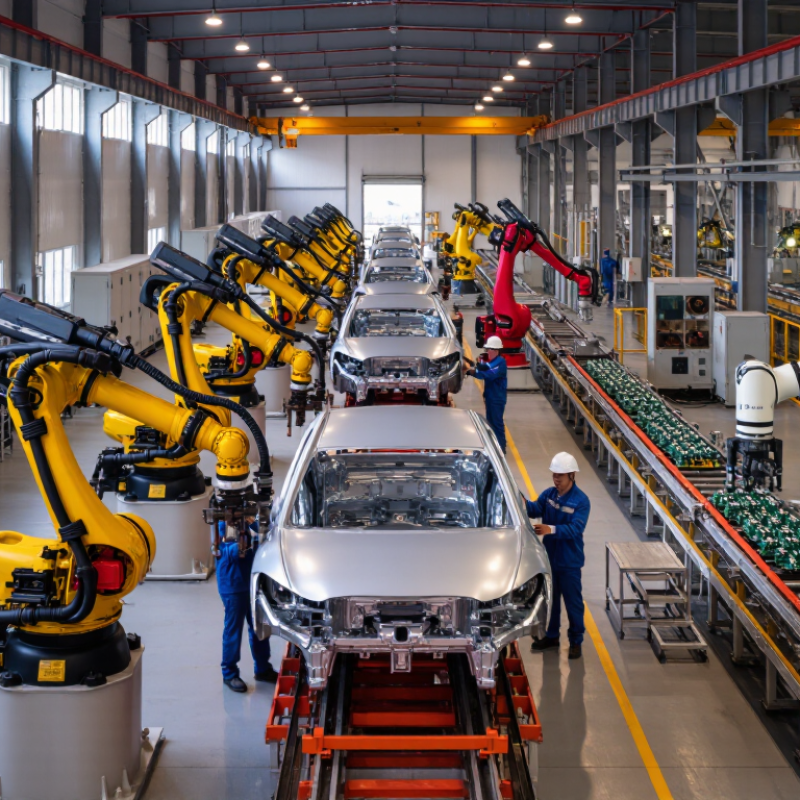
China’s top industrial robot manufacturers in 2026 should be defined by verified capability, not publicity or shipment volume alone.
A strong manufacturer designs reliable robot arms, controllers, software, and application systems for demanding factory conditions. Its products should support welding, assembly, packaging, handling, inspection, or other measurable production tasks. Performance must be checked through cycle time, positioning accuracy, uptime, energy use, and maintenance records.
Selection requires evidence from operating factories, not polished brochures. Useful evidence includes audited quality systems, safety certifications, documented testing, customer references, and multi-year service data. Engineers should examine spare-parts availability, remote diagnostics, training, software updates, and response times after installation.
Local engineering support also matters when a production line stops at midnight. A manufacturer with strong research investment deserves attention, especially in motion control, machine vision, and human-machine safety. However, patents alone do not prove dependable factory performance.
No ranking is perfectly objective. Some public data may be incomplete, and customer references can be selective. Therefore, independent trials and site visits should carry meaningful weight.
Cost matters, but the cheapest quotation may create higher integration and downtime expenses later. A practical assessment should compare total ownership cost over five to eight years, including installation, maintenance, upgrades, and operator training. Reliability is earned on the factory floor.
China’s industrial robotics market is moving from rapid expansion toward deeper industrial integration.
Demand is growing in automotive production, electronics, metalworking, logistics, and battery manufacturing. Factories increasingly require robots that can operate beside workers, manage variable materials, and connect with production software.
The strongest manufacturers are investing in servo control, machine vision, force sensing, and safer collaborative operation. Domestic supply chains are also improving, especially for controllers, reducers, motors, and precision sensors.
This progress can shorten maintenance cycles and reduce dependence on overseas components. However, performance still varies between applications. A robot that excels at welding may struggle with flexible assembly.
Practical deployment reveals the real technology trend. Engineers now measure uptime, changeover speed, energy use, and programming time, not just payload capacity.
Cloud monitoring supports predictive maintenance, but poor data quality can create misleading alerts. That weakness deserves attention. Smaller factories may also lack skilled technicians, making training and simple interfaces essential.
China’s next stage will depend on reliable integration, strong safety testing, and repeatable results across different production lines. Great hardware alone is not enough.
China’s top ten industrial robot manufacturers in 2026 show a broad and practical market. Their profiles include makers of six-axis arms, SCARA robots, palletizing systems, welding units, and collaborative machines. Several began with factory automation before developing complete robot platforms. This experience often supports faster customization for automotive, electronics, metalworking, and logistics plants.
The strongest manufacturers combine servo control, vision systems, offline programming, and local service teams. Some focus on high-speed assembly, while others build heavy-payload robots for casting or material handling. A few compete through compact collaborative models for small workshops. Their advantages include shorter delivery routes, flexible engineering, and lower maintenance costs. However, software compatibility and overseas support still vary. That weakness deserves honest attention.
Tips: Compare payload accuracy, repeatability, cycle time, and safety functions under real production conditions. Ask for test videos, spare-parts plans, training details, and integration references. A polished demonstration is not enough. Visit a working customer site when possible. Check how the robot performs after dust, heat, vibration, and long operating shifts. Also review certification for the target market, because approval requirements differ across countries. Procurement teams should evaluate the controller interface carefully; a low purchase price can become expensive when programming support is limited.
China Top 10 Industrial Robot Manufacturers in 2026?
A practical top-ten list should compare product range, not publicity. Leading Chinese suppliers typically cover articulated arms, SCARA robots, delta units, collaborative robots, and mobile platforms. These systems support welding, palletizing, machine tending, assembly, inspection, and warehouse movement. In factory audits, payload and reach matter first. A compact SCARA robot may outperform a larger arm on a crowded electronics line.
The market is substantial. The International Federation of Robotics reported 276,288 industrial robot installations in China during 2023, representing 51% of global installations. Its World Robotics 2024 report also recorded China’s manufacturing robot density at 470 units per 10,000 employees. These figures explain the strong focus on automotive, batteries, electronics, metalworking, and general manufacturing. However, product breadth does not guarantee reliable deployment. Cycle-time stability, controller compatibility, spare-parts access, and local service often decide the real result.
Industry specialization separates the strongest candidates. Some manufacturers concentrate on high-speed assembly and vision integration. Others target heavy welding, cleanroom handling, or flexible collaborative workstations. The ranking remains imperfect. Public data rarely separates domestic sales, exports, software revenue, and installed-base performance. Buyers should therefore verify reference plants, safety documentation, energy use, and five-year maintenance costs before trusting any 2026 comparison. Numbers can look impressive. Factory evidence is harder.
China Top 10 Industrial Robot Manufacturers in 2026?
China’s leading industrial robot manufacturers should be compared across four practical dimensions: innovation, production capacity, service, and global reach. Innovation now means more than adding artificial intelligence. It includes force control, vision guidance, digital twins, energy efficiency, and easier programming for small factories.
Production scale matters, but volume alone can mislead. The International Federation of Robotics reported 276,288 industrial robots installed in China during 2023, representing about 51% of global installations. A strong manufacturer should also show stable component supply, repeatable quality, and short delivery cycles. Factory audits reveal useful details: testing benches, calibration records, spare-parts storage, and technician training. These details are often more convincing than impressive brochures.
Service separates equipment sellers from long-term partners. Buyers should examine installation support, remote diagnostics, local engineers, and documented response times. Global reach requires more than exporting machines. It includes regional warehouses, safety certifications, multilingual software, and integration experience with overseas production lines. The IFR’s World Robotics data also shows China’s manufacturing robot density reached 470 units per 10,000 employees in 2023, increasing competitive pressure on suppliers. The ranking remains imperfect. Public data differs widely, and some manufacturers disclose little about failure rates or overseas service performance. That gap deserves careful review.
Anonymous comparison of innovation, production capacity, service capability, and global reach.
The chart presents an anonymized 0–100 benchmark based on publicly reported product development, manufacturing scale, service infrastructure, and overseas market activity. Higher scores indicate stronger relative performance; the ranking is an analytical comparison rather than an audited market-share table.
Watch video