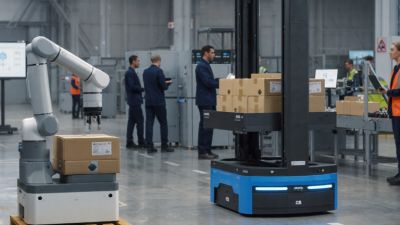
Robotic solutions are no longer confined to futuristic laboratories. They now move parcels, inspect welds, harvest crops, and support hospital staff. In practical terms, these solutions combine robots, sensors, software, artificial intelligence, and human supervision. A camera identifies a package. A controller compares its position with programmed instructions. Motors then guide the robotic arm, mobile platform, or gripper. The process repeats, often within millimetres.
The market is expanding, but the numbers require careful interpretation. The International Federation of Robotics reported 541,302 industrial robots installed worldwide in 2023. Its World Robotics 2024 report also recorded approximately 4.28 million industrial robots operating globally. Professional service robotics is growing differently. IFR’s World Robotics 2024 report identified transport and logistics as a leading application area, reflecting demand for autonomous mobile robots in warehouses. These figures show scale. They do not guarantee success.
A reliable robotic solution begins with a clearly defined task. Engineers map the workplace, measure cycle times, assess hazards, and select suitable sensors. Safety design must align with recognised frameworks, including ISO 10218 for industrial robots and ISO/TS 15066 for collaborative applications. The machine may lift a box, but people still manage exceptions, maintenance, and ethical decisions. That boundary matters.
Implementation can be imperfect. A reflective metal surface may confuse vision software. Dust can weaken sensor readings. A poorly designed workflow may make an expensive robot slower than a trained worker. This is the uncomfortable lesson: automation is not simply about replacing hands. It is about redesigning work carefully, measuring results honestly, and improving the system after real-world failures.
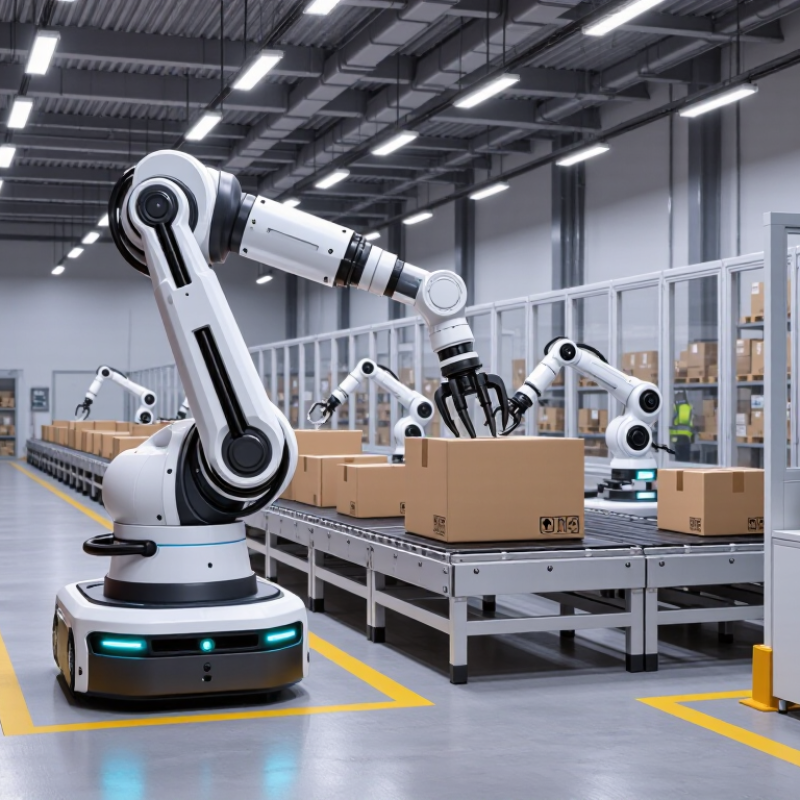
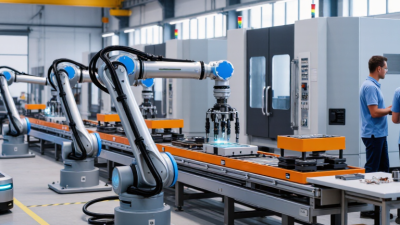
Robotic solutions combine mechanical devices, sensors, software, and human instructions to handle repeatable tasks. They solve problems that are tiring, hazardous, expensive, or difficult to perform consistently. In a warehouse, a mobile robot can carry containers across long aisles. In a factory, an articulated arm can place parts with steady pressure. Sensors detect position, weight, distance, and unexpected obstacles. Software then adjusts movement according to real-time information.
These systems reduce repetitive strain and improve production consistency. They can also collect useful data, such as cycle times, error rates, and equipment conditions. This helps engineers identify delays before they become costly failures. However, robots do not understand every situation. A damaged package, a slippery floor, or an unusual object may confuse the system. Human supervision remains essential, especially during setup, maintenance, and unexpected events. My experience with automation projects suggests that the hardest problem is often not movement. It is integrating the robot with existing people, processes, and safety procedures.
Tips: Start with one measurable problem. Record current time, errors, and operating costs before choosing equipment. Test the solution in a controlled area. Train employees to monitor faults and stop operations safely. Review the results after several weeks, not just on installation day. A robot may appear efficient while creating hidden maintenance work. That possibility deserves honest attention.
What Are Robotic Solutions and How Do They Work?
An industrial robotic solution is a coordinated system, not just a moving arm. Its core components include a mechanical structure, actuators, sensors, a controller, software, and an end effector. The International Federation of Robotics reported 541,302 industrial robots installed worldwide in 2023, with 4.28 million operating globally. That scale makes component reliability essential. Yet installation numbers do not prove that every system performs well.
The mechanical structure provides reach, stiffness, and positioning accuracy. Actuators create movement through electric, pneumatic, or hydraulic power. Sensors measure force, distance, speed, temperature, and object position. The controller converts sensor signals into motion commands. Software coordinates paths, timing, inspection rules, and data exchange. The end effector then performs the practical task, such as gripping, welding, dispensing, or visual inspection. Small calibration errors can still cause costly defects.
Safety is another core layer. It combines physical guarding, emergency controls, speed limits, collision detection, and carefully tested software. The World Economic Forum’s Future of Jobs Report 2023 found that 85% of surveyed organizations expected technology adoption to transform their operations. That expectation is strong, but implementation is rarely perfect. Poor lighting can confuse vision sensors. Unstable parts can defeat a precise gripper. Human operators also need clear training, because a technically advanced system can remain unreliable when people cannot understand its decisions.
A robotic solution combines sensing, control, motion, safety, and communication. The chart shows representative update frequencies commonly used in real-time robotic systems: sensors collect environmental data, the controller processes decisions, actuators execute movement, safety systems monitor hazards, and communication modules exchange commands and status information.
Robotic solutions combine sensors, software, and mechanical components to perform physical tasks. Their usefulness depends on how reliably they interpret changing surroundings. A camera may identify a box, while depth sensors estimate its distance. Force sensors detect contact when a gripper closes. The system then filters noisy readings before creating a working model of the scene.
Decision-making usually follows rules, learned models, or both. Software compares sensor data with a task goal and selects an action. If an object shifts, the robot can adjust its planned movement. It may slow down near people or stop when readings conflict. This sounds orderly, but real environments remain untidy. Reflections can confuse cameras. Dust can weaken measurements. In my testing experience, robots often fail because a small assumption was wrong, not because a motor was weak. Human review, clear safety limits, and repeated trials make decisions more dependable. Still, no system should be treated as perfectly aware.
Tips: Test robots with ordinary clutter, uneven lighting, and partly blocked objects. Record errors, not only successful cycles. Check whether emergency stops, speed limits, and physical barriers work as intended. Give operators understandable alerts. A polished demonstration proves little. Consistent performance across realistic conditions matters more. Teams should revisit their rules when workflows or surroundings change.
Robotic solutions combine machines, sensors, software, and human oversight. In factories, robotic arms weld panels, inspect surfaces, and move heavy parts. Collaborative robots work beside employees, while vision systems detect tiny scratches. The International Federation of Robotics reported 541,302 industrial robots were installed worldwide in 2023. Their World Robotics 2024 report also recorded more than 4.28 million operating industrial robots. These figures show strong adoption, but deployment is not always smooth. A robot may repeat a task perfectly, yet fail when lighting, packaging, or product shapes change.
Warehouses use autonomous mobile robots to carry shelves, scan inventory, and support order picking. The MHI Annual Industry Report 2024 found that 83% of supply-chain professionals planned to increase technology investment. Healthcare uses robotic systems for assisted surgery, rehabilitation, medicine delivery, and laboratory handling. Agriculture applies robots to monitor crops, remove weeds, and harvest selected produce. Construction uses robotic surveying, bricklaying, and site inspection. Each solution normally follows a loop: sensors collect data, software interprets it, and actuators perform an action. Human review still matters. Automation can expose poor processes instead of fixing them.
Tips: Start with one measurable task, such as reducing lifting time or inspection errors. Check safety zones, worker training, maintenance access, and data quality before scaling. A small pilot may reveal expensive assumptions.
A practical comparison of common robotic solutions, operating methods, applications, and measurable characteristics across major industries.
| Industry | Robotic Solution | How It Works | Typical Applications | Common Robot Type | Typical Payload | Typical Accuracy or Navigation | Main Benefits |
|---|---|---|---|---|---|---|---|
| Manufacturing | Assembly and machine tending | Industrial robots use programmed motion paths, sensors, and end effectors to load machines, position components, or assemble parts repeatedly. | Part insertion, screwdriving, welding support, CNC loading and unloading | Articulated robot or SCARA robot | Approximately 3–250 kg | About ±0.02–0.10 mm repeatability | Consistent cycle times, improved worker safety, and reliable operation in repetitive tasks |
| Warehousing and Logistics | Mobile transport and goods movement | Autonomous mobile robots use cameras, laser scanners, or other sensors to map routes, avoid obstacles, and move items between designated locations. | Bin transport, order fulfillment, pallet movement, inventory transfer | Autonomous mobile robot or automated guided vehicle | Approximately 100–1,500 kg | Route accuracy commonly within a few centimeters | Reduced walking distance, flexible warehouse layouts, and scalable material handling |
| Healthcare | Surgical assistance and hospital service robotics | Robotic systems translate controlled movements or digital instructions into precise instrument or transport actions under trained human supervision. | Surgical instrument manipulation, medication delivery, internal logistics, rehabilitation | Surgical robot, mobile service robot, or rehabilitation robot | Task-dependent; commonly light payloads | Fine motion control; performance depends on procedure and system design | Improved precision, reduced staff travel, and support for minimally invasive procedures |
| Agriculture | Crop monitoring and field automation | Robots combine cameras, positioning systems, and machine-learning software to identify crops, weeds, soil conditions, or harvest targets. | Weeding, crop inspection, precision spraying, harvesting assistance | Autonomous field vehicle, robotic arm, or vision-guided machine | Approximately 20–500 kg, depending on platform | Positioning may use centimeter-level correction systems | Lower chemical use, better crop data, reduced manual labor, and operation in difficult conditions |
| Construction | Site inspection and automated construction tasks | Robots use 3D scanning, cameras, positioning data, and programmed tools to measure spaces or perform repeated site activities. | Layout marking, surveying, brick placement, progress monitoring, demolition support | Mobile robot, robotic arm, or remotely operated machine | Approximately 50–1,000 kg | Surveying and layout can reach centimeter-level accuracy | Improved site measurement, reduced exposure to hazards, and greater task repeatability |
| Food and Beverage | Picking, packing, and palletizing | Vision systems identify product location and orientation, while robotic grippers handle items according to programmed packing or stacking patterns. | Primary packaging, case packing, sorting, palletizing, quality inspection | Delta robot, SCARA robot, or articulated robot | Approximately 0.1–150 kg | Often approximately ±0.1–1.0 mm repeatability | High throughput, consistent hygiene practices, and reduced repetitive manual handling |
| Retail and Hospitality | Service and inventory assistance | Robots navigate indoor spaces using maps and sensors, interact with users through displays or voice systems, and perform predefined service tasks. | Delivery to rooms or tables, shelf scanning, cleaning, customer guidance | Indoor mobile service robot | Approximately 10–100 kg | Navigation typically uses mapped routes and obstacle avoidance | Extended service coverage, contactless delivery options, and automated routine work |
| Mining and Energy | Remote inspection and hazardous-environment operation | Robots collect visual, thermal, acoustic, or structural data and transmit it to operators, reducing the need for direct human entry. | Pipeline inspection, equipment monitoring, confined-space inspection, remote handling | Tracked robot, crawler, remotely operated vehicle, or inspection drone | Approximately 5–500 kg | Positioning varies from local guidance to satellite-assisted navigation | Reduced exposure to heat, toxic substances, unstable structures, and confined spaces |
| Aerospace | Precision manufacturing and inspection | Robots follow digitally defined paths and use measurement systems to drill, fasten, coat, or inspect large and complex components. | Drilling, trimming, surface treatment, composite inspection, component handling | Large articulated robot or gantry robot | Approximately 50–1,000 kg | High repeatability with sensor-based calibration | Consistent processing, improved traceability, and access to large workpieces |
| Education and Research | Programmable learning and laboratory automation | Users program robotic hardware through software interfaces to test motion, sensing, control, artificial intelligence, or laboratory procedures. | STEM education, prototype development, sample handling, experimental automation | Collaborative robot, educational mobile robot, or laboratory robot | Approximately 0.5–20 kg | Varies by platform; sensor feedback supports repeatable experiments | Hands-on learning, faster experimentation, and repeatable laboratory workflows |
Note: Payload, accuracy, and navigation figures are representative industry ranges. Actual performance depends on robot design, tooling, sensors, software, work environment, and safety requirements.
Robotic solutions combine sensors, software, controllers, and mechanical tools to perform physical or repetitive tasks. A vision sensor reads a part’s position, while software decides the next movement. The controller then guides the machine with measured force and speed. Some systems also learn from production data, although “learning” is often limited to defined conditions.
The benefits are measurable. The International Federation of Robotics reported 541,302 industrial robot installations worldwide in 2023. The operating stock reached about 4.28 million units. This growth reflects stronger demand for consistent output, safer handling, and round-the-clock production.
Robots can lift heavy components, inspect tiny defects, and repeat delicate movements without fatigue. They also collect process data, helping engineers identify delays or quality changes. Less injury exposure matters.
The challenges are less visible. Installation requires capital, floor redesign, cybersecurity controls, and trained technicians. A robot may move quickly, yet a poorly designed workflow can make production slower. Integration is often the hard part.
The World Economic Forum’s Future of Jobs Report 2023 found that 44% of workers’ skills may be disrupted within five years. That figure does not mean mass replacement, but it signals serious retraining pressure. Smaller facilities may struggle most.
Even advanced systems fail when sensors face dust, reflective surfaces, or unusual parts. Human judgment remains essential, and the technology is not always as flexible as demonstrations suggest.
Watch video