How to Choose the Right Robotic Solutions for Your Business?
Choosing the right robotic solutions begins with a business problem, not a shiny machine. A robot should reduce a measurable burden, such as repetitive lifting, inconsistent inspection, or dangerous handling. It should not become an expensive display piece.
The International Federation of Robotics reported 541,302 industrial robots installed worldwide in 2023. The global operational stock also reached approximately 4.28 million units. These figures show strong adoption, but they do not prove that every company needs automation. The World Economic Forum’s Future of Jobs Report 2023 found that 85% of surveyed organizations expect technology adoption to transform their businesses by 2027. Still, transformation requires preparation. Data quality, workforce skills, maintenance capacity, and production volume matter.
Start with the workflow. Measure cycle time, error rates, downtime, floor space, and safety exposure. Then compare collaborative robots, autonomous mobile robots, vision systems, and fixed industrial arms. Each option has different integration costs and limits. Rodney Brooks, robotics expert and former MIT professor, famously said, “The robot will not take your job, but the person who knows how to use the robot will.” That warning deserves attention.
People remain central.
A practical solution should support operators, not simply replace them. It should offer clear training, safe operating procedures, accessible spare parts, and reliable vendor support. Frankly, many automation plans underestimate integration work. I may be wrong about the best technology for your site without real process data. However, a disciplined pilot can expose weaknesses before a major investment. The right robotic solutions fit your goals, people, budget, and long-term operating reality.
Define Your Business Goals and Identify Suitable Robotic Applications
Choosing a robotic solution should begin with a clear business goal, not an impressive machine. Start with the work. Do you need faster order handling, fewer lifting injuries, or more consistent quality? Define one measurable target, such as reducing picking time by 25 percent within six months. Then examine the workflow on the shop floor. Measure the friction. Record walking distances, repeated movements, waiting time, error rates, and peak workload. A short observation session often reveals problems that spreadsheets miss.
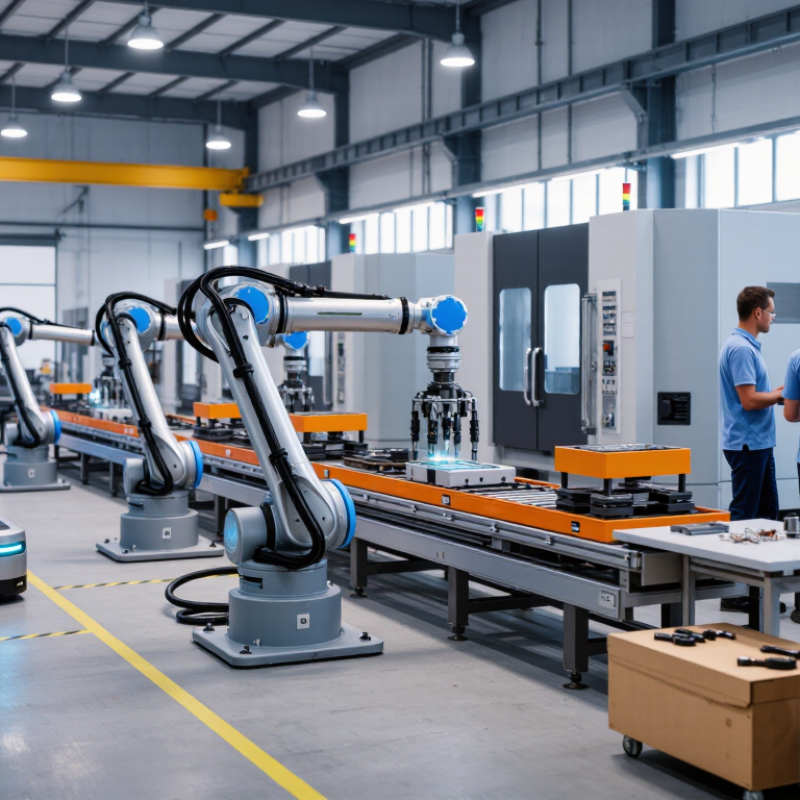
Match each problem with a suitable robotic application. Mobile robots may support material movement across warehouses, while robotic arms can handle repetitive assembly or packaging tasks. Vision systems may detect surface defects, but they require stable lighting and well-defined quality standards. Consider the working environment, product variation, available floor space, and employee interaction. A solution that works well in a controlled pilot may struggle beside a crowded loading area. That matters.
Reliable selection also requires practical testing. Pilot small. Use one process, one shift, and agreed performance measures. Check integration with scheduling, inventory, and safety procedures before expanding. Ask operators for feedback because they understand hidden delays and awkward workarounds. Their concerns may expose training needs or poor interface design. Do not assume automation will immediately reduce costs; maintenance, software updates, installation, and process redesign can change the calculation. A disappointing pilot is still valuable when it identifies a weak assumption early. Revisit the goal, adjust the application, and document every result before making a larger investment.
How to Choose the Right Robotic Solutions for Your Business?
Define your business goals first, then compare your automation ambition with manufacturing benchmarks. Robot density indicates the number of industrial robots per 10,000 manufacturing employees.
Use this benchmark to guide your application assessment: repetitive assembly, material handling, welding, packaging, and quality inspection. Data source: International Federation of Robotics, World Robotics 2024, reported robot density for 2023.
Compare Robot Types, Capabilities, Integration Needs, and Safety Features
Choosing the right robotic solution starts with the task, not the machine. A six-axis robot suits flexible assembly, welding, and precise handling. A collaborative robot may fit small workstations where people and machines share space. Mobile robots can move bins across changing layouts. Each type has limits. Payload, reach, speed, repeatability, and operating hours must match real production conditions.
Capabilities should be tested with actual parts, not only supplier demonstrations. Check cycle time using your heaviest component. Observe performance after several hours of operation. A robot that performs well for ten minutes may struggle during a full shift. Integration also matters. Review communication protocols, conveyor signals, vision systems, grippers, and existing control software. Leave room for maintenance access. Tight layouts often create expensive service problems.
Safety features require practical evaluation. Look for guarded zones, emergency stops, speed limits, force monitoring, and clear restart procedures. Risk assessments should cover loading, cleaning, programming, and unexpected interruptions. Train operators with realistic scenarios. Written instructions alone are not enough. I have seen projects focus heavily on robot speed while overlooking awkward manual loading. That mistake can reduce productivity and increase fatigue. A pilot installation can reveal these weaknesses before full deployment, although pilot results may not represent every seasonal or staffing condition.
Evaluate Total Costs, Expected Benefits, and Long-Term Scalability
Choosing a robotic solution should begin with total cost, not the purchase quotation. Include integration, tooling, safety validation, software, training, maintenance, energy, downtime, and floor modifications. Ask finance to model three years, including replacement parts and technician hours. The International Federation of Robotics reported 541,302 industrial robots installed worldwide in 2023. Its World Robotics 2024 report also recorded 4.28 million robots operating globally. That growth signals opportunity, but adoption alone does not prove payback. Measure the current process first. Record cycle time, scrap, changeover delays, labor allocation, and missed orders for at least four weeks. Then test benefits against a conservative baseline. An attractive spreadsheet can still hide weak utilization.
Expected benefits should be expressed in operational terms. Estimate throughput, quality gains, reduced ergonomic exposure, and recovered production hours. Use pilot data, not optimistic vendor assumptions. Set a payback threshold, but challenge it with sensitivity tests for volume, uptime, and staffing. Scalability requires more than adding identical machines. Check whether the system supports open data interfaces, reusable workflows, remote diagnostics, and simple retraining. Plan spare capacity for new products and seasonal demand. NIST’s Cybersecurity Framework 2.0, published in 2024, emphasizes governance, identification, protection, detection, response, and recovery across connected operations. That discipline matters when robots share production data and network access. One uncomfortable lesson remains: a technically successful pilot may fail commercially. If operators cannot adjust tasks, or maintenance is too specialized, scaling becomes expensive. Leave room to revise the business case.
How to Choose the Right Robotic Solutions for Your Business?
Evaluate Total Costs, Expected Benefits, and Long-Term Scalability
| Robotic Solution |
Typical Business Use |
Initial Investment Range |
Implementation Time |
Expected Labor Productivity Gain |
Estimated Payback Period |
Integration Complexity |
Scalability |
Best Evaluation Criteria |
| Collaborative Robot Arm |
Machine tending, assembly, inspection, packaging |
US$40,000–US$100,000 |
2–6 months |
15%–30% |
18–36 months |
Medium |
Moderate |
Task repeatability, operator safety, cycle-time improvement, available floor space |
| Automated Guided Vehicle |
Material movement between storage, production, and shipping areas |
US$50,000–US$150,000 per vehicle |
3–9 months |
20%–40% |
24–48 months |
Medium |
High |
Traffic patterns, route stability, fleet-management capability, warehouse layout |
| Autonomous Mobile Robot |
Flexible transport, order fulfillment, line-side replenishment |
US$60,000–US$180,000 per robot |
2–6 months |
20%–50% |
18–36 months |
Medium |
Very high |
Changing workflows, navigation reliability, fleet coordination, software integration |
| Automated Storage and Retrieval System |
High-density storage, pallet handling, inventory control |
US$500,000–US$3,000,000+ |
9–24 months |
30%–60% |
36–72 months |
High |
High |
Storage density, throughput, building height, inventory accuracy, future volume |
| Robotic Palletizing Cell |
End-of-line palletizing for cartons, cases, or bags |
US$150,000–US$400,000 |
4–9 months |
25%–50% |
18–36 months |
Medium |
High |
Product mix, pallet patterns, line speed, changeover frequency, safety requirements |
| Machine Vision Inspection System |
Defect detection, dimensional checks, label verification |
US$30,000–US$150,000 per line |
2–6 months |
10%–25% |
12–30 months |
Medium |
High |
Defect rate, inspection speed, lighting conditions, product variation, data traceability |
| Robotic Picking System |
Piece picking, sorting, depalletizing, e-commerce fulfillment |
US$250,000–US$1,000,000+ |
6–15 months |
30%–70% |
30–60 months |
High |
Very high |
SKU diversity, grasp success rate, order profile, warehouse software compatibility |
Cost and performance ranges are planning benchmarks for business-case development. Actual results depend on site conditions, labor costs, production volume, integration scope, safety compliance, maintenance, training, and software requirements.
Select, Implement, and Continuously Improve the Robotic Solution
Choosing a robotic solution should begin with the work, not the machine. Map each task, including handoffs, delays, safety risks, and quality checks. A solution that looks impressive in a demonstration may fail beside a crowded workstation. Speak with operators who handle the process daily. Their practical knowledge often reveals problems that spreadsheets miss.
Implementation needs a controlled starting point.
Select one measurable workflow, define success criteria, and run a limited pilot. Track cycle time, error rates, maintenance requests, energy use, and employee feedback. Provide clear training and emergency procedures before the system enters routine operation. Keep human oversight during early stages. It protects production and exposes weak assumptions.
Continuous improvement requires disciplined review.
Compare actual performance with the original targets every few weeks. Adjust layouts, task instructions, software settings, or staffing when evidence supports change. Record every modification and its effect. The first design is rarely perfect. In practice, some improvements create new delays elsewhere. That is useful information, not failure. A reliable program also checks cybersecurity, data access, equipment condition, and regulatory requirements. When workers can report faults without blame, small issues become visible earlier. Over time, the best robotic solution is shaped by measured results, safe procedures, and honest feedback from the people using it.