AI robots are no longer confined to polished demos. They move pallets, inspect equipment, and assist workers in real operating environments. The International Federation of Robotics’ World Robotics 2024 report counted 4.28 million industrial robots operating in factories worldwide in 2023, a 10% annual increase. Its service-robot report recorded nearly 205,000 professional service robots sold that year, up 30%. These figures show growing adoption, not guaranteed returns. That distinction matters.
Choosing a robot starts with a specific task, not an impressive feature list. A warehouse may need reliable pallet movement through narrow aisles; a food plant may prioritize washdown-ready equipment and consistent picking. Assess task performance, worker interaction, safety systems, integration with existing software, and ongoing support. Then calculate the full cost, including installation, training, maintenance, and downtime. Ask vendors to demonstrate the robot in your actual workflow, using realistic loads and shifts. A controlled pilot can reveal bottlenecks that a sales presentation misses. It can also expose weak data or infrastructure. That can be inconvenient.
The right choice depends on measurable business needs, available skills, and the environment where the robot will work. Compare vendors using the same operating conditions and success measures. Confirm how updates, failures, and human handoffs will be handled. No specification sheet can settle every question. Begin with evidence, but leave room to revise assumptions when the pilot meets the real world.
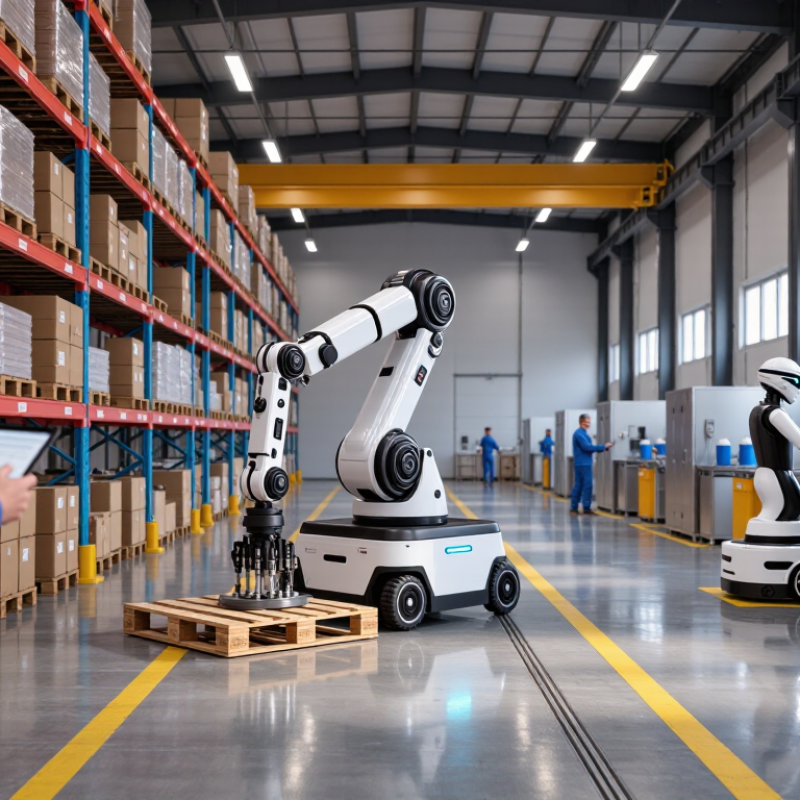
Before comparing an AI robot’s speed or payload, define the work it must do each day. A warehouse team may need carts moved between shelving rows, while a hotel may need deliveries carried through busy corridors. Note the location, operating hours, floor conditions, and people nearby. Include exceptions, such as blocked aisles or unavailable lifts. These details shape the actual requirement.
Separate repetitive tasks from work requiring judgment or human care. For each task, record its frequency, distance, load, acceptable error rate, and current completion time. Observe workers during a busy shift, not just a quiet demonstration. A robot that performs well in an empty test area may struggle with glare, loose cables, or changing foot traffic. Planning estimates can look neat but fail when the charging point is too far away. That detail is easy to miss.
Tips: Start with one measurable task and a small pilot area. Track completed trips, delays, safety interventions, and staff feedback for several weeks. If the results are mixed, revisit the task definition before expanding.
Use these estimates to shortlist repetitive, predictable tasks for further assessment. They represent the share of activity that could be automated with technologies available at the time of the study—not robot-specific performance or predicted job losses.
Source: McKinsey Global Institute, A Future That Works: Automation, Employment, and Productivity (2017). Consider task frequency, safety, environment, integration needs, and expected return before selecting a robot.
Start with the task, not the machine. A warehouse moving small cartons may need an autonomous mobile robot, while a production line may benefit from a robotic arm. For floor cleaning or routine site checks, consider service or inspection robots. Match the type to the setting: narrow aisles, uneven floors, shared workspaces, and frequent human traffic all matter. Small details matter.
Then compare capabilities against real operating conditions. Check payload, reach, speed, battery life, and accuracy under the expected workload. A robot that lifts a 20-kilogram load may still be unsuitable if its reach is too short. Ask how its sensors respond to reflective floors, dim corners, or unexpected obstacles. Confirm that it can connect with existing software and that staff can pause or redirect it easily. A capability sheet is useful, but it cannot show every snag on a busy shift.
Test a shortlist in one work area before planning a wider rollout. Track completed tasks, delays, intervention frequency, and time spent on maintenance. Include the workers who will share the space; they may notice awkward handoffs that managers miss. A pilot can also expose a mistaken assumption, such as expecting a robot to handle mixed-size loads without adjustments. There is no perfect scorecard, and early results may be uneven. Keep the test conditions close to a normal workday.
| Robot Type | Typical Capabilities | Suitable Business Tasks | Key Selection Criteria | Important Considerations |
|---|---|---|---|---|
| Autonomous Mobile Robot (AMR) | Uses onboard sensing and navigation software to move through changing indoor environments and reroute around many obstacles. | Moving totes, components, or supplies between work areas; warehouse replenishment; internal material transport. | Load dimensions and weight, travel distance, aisle width, floor condition, traffic levels, docking accuracy, and integration with doors or lifts. | Map quality, pedestrian interaction, charging plan, and traffic management affect performance. Validate routes in the actual facility. |
| Automated Guided Vehicle (AGV) | Follows a defined route using guidance methods such as floor markings, reflectors, or magnetic infrastructure; some systems can stop when obstacles are detected. | Repeated transport along stable, predictable routes in factories and warehouses. | Route consistency, payload, required throughput, guidance infrastructure, stopping behavior, and access to crossings or shared aisles. | Route changes may require infrastructure or configuration updates. Confirm how the vehicle responds to blocked paths and changing traffic. |
| Collaborative Robot Arm (Cobot) | Programmable arm designed for flexible tasks and potential operation near people when the application is properly assessed and safeguarded. | Machine tending, screwdriving, pick-and-place, light assembly, and repetitive workstation tasks. | Reach, payload at the required reach, repeatability, end-effector needs, cycle time, programming method, and workstation layout. | The collaborative designation does not make every application safe by default. Risk assessment and suitable safety measures are still necessary. |
| Industrial Robot Arm | Performs programmed motions with high speed, repeatability, and payload capacity suited to production applications. | Welding, palletizing, machine tending, painting, and high-volume handling. | Payload, reach, motion envelope, cycle time, mounting position, accuracy requirements, tooling, and production volume. | Cell layout, guarding, safety controls, and integration with fixtures and production equipment must be planned for the complete application. |
| Autonomous Mobile Manipulator | Combines mobile navigation with a robotic arm to travel between locations and interact with objects or equipment. | Flexible picking, machine tending across multiple stations, and tasks where equipment must be moved between work areas. | Base stability, arm reach, payload, navigation accuracy, grasping requirements, task cycle time, and coordination between arm and base. | Combining mobility and manipulation adds integration complexity. Test object variation, positioning tolerance, and recovery from failed picks. |
| Inspection or Patrol Robot | Collects sensor data such as images, temperature readings, or other condition measurements while moving through designated areas. | Facility patrols, visual checks, equipment condition monitoring, and data collection in accessible environments. | Sensor requirements, inspection coverage, lighting, connectivity, route access, data storage, and reporting workflow. | Confirm that sensors can capture the measurements needed and that collected data can be reviewed and acted on by staff. |
| Selection note: Define the task, operating environment, required throughput, safety requirements, and integration needs before comparing robots. Pilot the preferred option on representative routes or production tasks, and evaluate the complete system—including tooling, software, charging, maintenance, and safety measures. | ||||
Choosing an AI robot starts with the work, not the specification sheet. Define its route, payload, cycle time, and handoff points before comparing models. Then map how it will connect to sensors, production software, and emergency-stop systems. The International Federation of Robotics’ World Robotics 2024 report counted 4,281,585 industrial robots operating worldwide in 2023, with 541,302 newly installed that year. Adoption is broad, but that does not make every robot compatible with every site. Test the proposed system in the actual workspace, including crowded aisles and shift changes. Small details matter.
Safety and compliance need practical checks. Assess stopping distances, pinch points, changes in speed, and how workers can pause the machine. Review applicable editions of ISO 10218 and ISO/TS 15066, especially for systems designed to work near people. Requirements vary by location and application, so involve qualified safety and compliance staff before purchase. Keep records of risk assessments, software updates, operator training, and maintenance. NIST’s AI Risk Management Framework recommends managing AI risks throughout design, deployment, and use; apply that thinking to monitoring and human oversight. Run a limited pilot and track near misses, downtime, and task errors. Then test again. A pilot can still miss rare hazards, so keep reviewing the system after deployment.
An AI robot’s purchase price is only the visible cost. Compare the full three-year bill: integration, safety equipment, software, staff training, spare parts, and downtime. Ask vendors to price the same task and shift pattern. Then test the robot on your actual floor, with your lighting, obstacles, and workpieces. A polished demo proves little. It must handle the awkward cases.
Performance needs measurable targets. Track completed tasks per hour, error rates, recovery time, and human interventions. The International Federation of Robotics’ World Robotics 2024 report recorded 541,302 industrial robot installations worldwide in 2023. That scale shows broad adoption, not guaranteed returns for your operation. Deloitte’s 2024 smart manufacturing survey found 86% of surveyed executives expect smart manufacturing to drive competitiveness within five years. Expectations are not results. Set a paid pilot with clear acceptance criteria before committing.
Vendor support can decide whether a robot earns its keep. Ask for response-time commitments, local technician coverage, replacement-part lead times, and software update policies. Request references from sites with similar tasks, not just similar industries. Check who diagnoses failures at 2 a.m. Small detail. Big difference. A vendor may promise remote support, yet your team still needs a safe manual fallback. I would also question my own scoring: weighting purchase price too heavily can make a cheap system look smart, until every shift needs an operator to rescue it.
A promising demonstration is not proof of a good business fit. Run a six-to-eight-week pilot in one real workflow, such as moving labeled totes between a packing bench and a loading area. Record the current cycle time, error rate, downtime, and labor required before testing. The International Federation of Robotics reported 541,302 industrial robot installations worldwide in 2023, with an operational stock of about 4.28 million. That scale makes careful evaluation more important, not less.
Set measurable pass criteria with operations, IT, and frontline staff before the pilot begins. Track completed tasks per shift, human interventions, near misses, recovery time, and total operating cost. Keep the task volume and shift conditions comparable with the baseline. McKinsey’s 2024 global survey found that 72% of respondents’ organizations had adopted AI in at least one business function; adoption alone does not establish value for a specific workflow. Ask operators to log awkward handoffs and repeated failures, not just successful runs. Small details matter.
One flaw to watch: a tidy test area can hide real-world bottlenecks. Include normal aisle traffic and routine task changes, while keeping people safe. Review results weekly, and document what the system could not handle. A pilot may need more time. If the robot misses targets, revise the workflow or reject the candidate rather than stretching the numbers. Compare the full costs, including integration, training, maintenance, and downtime, before deciding whether to expand.
Watch video