Top 10 Warehouse Robots Transforming Supply Chain Efficiency?
In recent years, warehouse robots have become essential in transforming supply chain efficiency. Experts like Dr. Emily Chen, a leading authority in automation, emphasize their significance. She states, "Warehouse robots are not just a trend; they are the future of logistics."
These robots enhance productivity by automating repetitive tasks. They allow human workers to focus on more complex activities, leading to a more strategic workforce. However, the integration of warehouse robots is not without challenges. Businesses must address initial costs and training needs.
Despite these challenges, the benefits are clear. Efficiency increases, order accuracy improves, and operational costs reduce significantly. The role of warehouse robots will only grow as technology advances, shaping a more innovative supply chain landscape. This evolution urges companies to adapt and rethink their logistics strategies.
Top Technologies Driving Warehouse Automation in 2023
Warehouse automation is gaining momentum. The integration of advanced technologies in supply chains is crucial. According to a 2023 report by McKinsey, warehouses that adopt automation can increase efficiency by up to 30%. The push for faster and more accurate order fulfillment drives this transition.
Robotic systems are leading the charge. Automated guided vehicles (AGVs) and robotic arms are improving speed. They help manage inventory and streamline operations. As per a study by Research and Markets, the warehouse robotics market is projected to grow at a CAGR of 12% from 2023 to 2028. This growth highlights a deep reliance on robotics for operational success.
To optimize automation, companies should consider workforce training. Investing in staff knowledge ensures smooth integration of robots. It's not just about machines; employees need to adapt to new technologies. Additionally, data analytics is essential. Understanding patterns can significantly enhance decision-making. Accurate data informs inventory management, helping reduce waste and improve delivery times. Embracing these facets may reshape supply chain practices for years to come.
Comparative Analysis of Robotic Types: AGVs, AMRs, and Collaborative Robots
Warehouse robotics is evolving. Different types of robots bring unique advantages to supply chains. The three main categories are Automated Guided Vehicles (AGVs), Autonomous Mobile Robots (AMRs), and Collaborative Robots (Cobots). Each has its own role in enhancing efficiency.
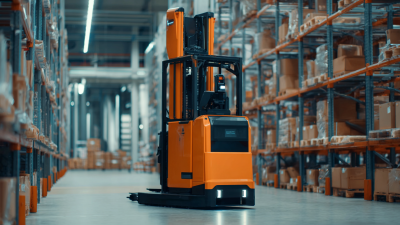
AGVs follow predetermined paths. They are reliable for transporting goods in a structured environment. However, their lack of adaptability can be limiting. On the other hand, AMRs use advanced sensors and AI. They navigate dynamically, allowing them to adjust to changes in real-time. This flexibility enhances warehouse operations. Yet, their complexity often requires higher investment and maintenance.
Collaborative Robots work alongside humans. They automate repetitive tasks, freeing staff to focus on more intricate duties. This can lead to improved job satisfaction and productivity. However, integrating Cobots can pose challenges. There is a learning curve for employees and potential safety concerns. Balancing human interaction with automation is essential for seamless operations. These different robotic types each contribute to modern supply chain efficiency, yet they also present unique challenges that need careful consideration.
Impact of Warehouse Robots on Order Fulfillment Rates and Accuracy
Warehouse robots are revolutionizing supply chain efficiency, particularly in order fulfillment. A recent study indicates that the integration of robotics in warehouses can improve order accuracy rates by up to 99%. This is a serious enhancement compared to traditional methods, where errors often plagued processes. Companies adopting these technologies report significant decreases in picking errors, which can lead to costly returns and customer dissatisfaction.
These robots work tirelessly, optimizing labor and time management. According to research by industry experts, warehouses utilizing robotics can increase their fulfillment speed by 30 to 40%. This acceleration not only satisfies demand but also aids in scaling operations during peak seasons. However, companies must remain vigilant about the implementation process. Poor integration can lead to workflow disruptions, negating the expected benefits.
The automation of repetitive tasks frees up human workers for more intricate roles that require critical thinking. Yet, reliance on robots introduces new challenges. These machines require regular maintenance and updates to ensure they function correctly. Failure to maintain them can result in costly downtimes. The journey towards full automation is not without hurdles, necessitating a balanced approach to technology and human resource management.
Economic Benefits: Cost Savings from Implementing Warehouse Robotics
Warehouse robotics is reshaping the logistics landscape. Companies are increasingly adopting automated solutions to enhance productivity. The impact on cost savings is particularly notable. Automation reduces labor costs significantly. Robots can work longer hours, minimizing the need for overtime pay.
Additionally, robots improve accuracy in inventory management. Errors in picking can lead to significant financial losses. With robotic systems, the rate of accuracy increases exponentially. By streamlining operations, businesses can cut down on wasted resources. However, implementing these systems requires an initial investment, which some firms find daunting.
Training employees to work alongside robots is another challenge. While technology provides benefits, integration can be complex. Workers may face a learning curve that could momentarily disrupt operations. Despite these challenges, the long-term economic advantages of warehouse robotics are compelling for many organizations. The potential for enhanced efficiency and cost reductions often outweighs initial hurdles.
Future Trends: Robotics and AI Integration in Supply Chain Logistics
The integration of robotics and AI in supply chain logistics is reshaping industry standards. According to the 2022 Logistics Management Report, 75% of logistics companies expect to increase their robotics investments. This rise is primarily driven by the need for efficiency and cost reduction. Automation technologies can reduce labor costs by up to 30%, allowing businesses to remain competitive.
Emerging trends indicate that autonomous mobile robots (AMRs) are becoming more common in warehouses. These machines streamline the picking process and can navigate complex environments effortlessly. A study by McKinsey highlights that AMRs can boost productivity by 20% in warehouse operations. However, there are challenges. Increased reliance on technology raises concerns about job displacement and the skill gap among workers. Companies need to balance innovation with workforce development to address these issues effectively.
The future also hints at greater collaboration between humans and robots. Research from Deloitte shows that 58% of supply chain leaders believe in a hybrid approach. This suggests a future where robots assist rather than replace human jobs. As logistics evolve, the focus will need to shift towards building an adaptable workforce capable of working alongside sophisticated technologies.
Top 10 Warehouse Robots Transforming Supply Chain Efficiency