10 Best Warehouse Robots for Global Buyers?

Warehouse robots are reshaping how companies move, store, and count goods. Global buyers now face a crowded market. This guide examines ten leading options for different warehouse conditions, budgets, and growth plans. The selection considers autonomous mobile robots, automated guided vehicles, robotic arms, and picking systems. It also examines payload capacity, navigation accuracy, battery life, software integration, and maintenance support. A compact robot may suit narrow aisles and frequent small-item orders. A heavier platform may perform better near pallets and loading docks. The right choice depends on the workflow.

Practical evaluation matters more than impressive demonstrations. Buyers should study cycle times, safety features, installation needs, and operator training. They should also ask whether the supplier supports local service, spare parts, and reliable system updates. A warehouse robot that works well in one facility may struggle with uneven floors, changing layouts, or mixed inventory. That detail is easy to miss. Total ownership costs deserve equal attention, including integration, charging equipment, repairs, and downtime. Independent testing and customer references can strengthen purchasing decisions. Still, no ranking fits every operation. Some performance data may vary by site, software version, and workload. This overview offers a clear starting point, while encouraging buyers to validate claims through trials, technical documents, and real warehouse conditions.

10 Best Warehouse Robots for Global Buyers?

What Warehouse Robots Are and How They Work

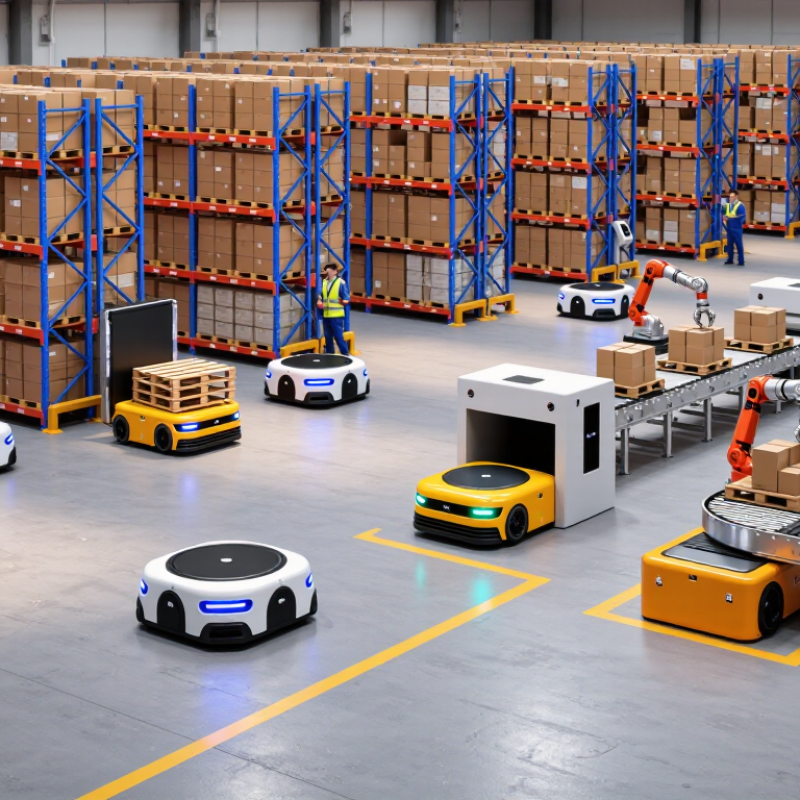
Warehouse robots are machines designed to move, store, pick, or sort goods inside distribution facilities. Some carry shelves to workers, while others transport cartons between workstations. Robotic arms can also identify items and place them into bins. Their value depends on the task, not futuristic appearance.

Most systems combine cameras, scanners, sensors, motors, and warehouse software. A robot reads location markers, maps its surroundings, and follows approved routes. Its control system receives orders from inventory software. It then selects a destination, avoids obstacles, and confirms each movement. Safety sensors slow or stop the machine when a person enters its path. Good systems keep records for every completed task.

In practical warehouse evaluations, aisle width and floor quality matter more than many buyers expect. Uneven flooring can reduce movement accuracy. Poor product labels create picking errors. Integration also needs careful testing, especially when order data changes frequently. A robot may move quickly, yet the whole process remains slow if workers wait for instructions. That assumption can fail. Global buyers should compare payload limits, battery charging, maintenance access, software compatibility, and local technical support. Trial runs with real cartons often reveal problems that brochures hide. A quiet motor is useful, but predictable performance matters more.

10 Best Warehouse Robots for Global Buyers: What Warehouse Robots Are and How They Work

Typical rated payload capacity by warehouse robot type

Warehouse robots combine sensors, software, motors, and automation systems to move goods, store inventory, pick items, or support loading operations. The chart compares representative payload ranges commonly used in warehouse applications. Actual capacity varies by configuration, safety requirements, aisle design, and operating environment.

The Ten Leading Warehouse Robots for Global Buyers

The Ten Leading Warehouse Robots for Global Buyers

Global buyers now assess warehouse robots by measurable fit, not impressive demonstrations. In practical site reviews, ten categories appear repeatedly. They include AMRs, autonomous forklifts, pallet shuttles, stacker cranes, and robotic arms. Picking robots, sorting robots, inventory drones, conveyor robots, and collaborative robots also serve important roles. Each addresses a different bottleneck. An AMR can move cartons between receiving and storage, while an inventory drone checks high racks without stopping every aisle. Keep it specific.

A serious evaluation starts with payload, aisle width, rack height, floor quality, battery runtime, and software integration. Ask for cycle-time data from a warehouse resembling yours. Request maintenance intervals, spare-parts availability, operator training, and remote-support hours. Safety matters too. Buyers should verify risk assessments, emergency stops, guarding, and local certification requirements before installation. A lower purchase price can hide expensive integration work. That lesson is easy to miss.

The best system is rarely the most autonomous one. A reliable robot should recover from a blocked aisle, weak Wi-Fi, or a misplaced carton. Test those failures deliberately. Pilot one zone before automating the whole building. Measure human travel distance, mispicks, downtime, and energy use for several weeks. Some projections look perfect on paper, yet real floors are uneven and workflows change during peak season. That uncertainty deserves a budget. Buyers should document acceptance criteria, data ownership, cybersecurity controls, and upgrade costs in plain language. Small details matter.

Key Robot Types and Their Best Warehouse Applications

10 Best Warehouse Robots for Global Buyers?
Key Robot Types and Their Best Warehouse Applications

Warehouse robots work best when matched to a specific movement problem. Autonomous mobile robots suit item picking, replenishment, and tote transport across changing layouts. Automated guided vehicles perform better on fixed routes, especially between storage zones and packing stations. Robotic arms handle repetitive picking, palletizing, and depalletizing tasks with consistent reach and force. Vertical storage robots can use narrow aisles and reduce manual travel. Each type has limits. A mobile robot may struggle with crowded floors, while a robotic arm needs stable product presentation. Fit matters more.

In practical warehouse trials, small details often decide performance. Uneven floors can reduce vehicle accuracy. Reflective packaging may affect vision sensors. Seasonal demand can also expose weak fleet planning. Buyers should compare payload, turning radius, battery time, charging methods, software compatibility, and service support. Safety features must protect workers near shared aisles and loading areas. Automation is not always faster. Poorly planned routes can create new bottlenecks.

Tips

Begin with one measurable workflow, such as moving 500 totes daily. Record walking distance, picking errors, waiting time, and damage rates. Test robots during busy shifts, not only quiet demonstrations. Leave space for maintenance and manual access. Training matters, too. A capable machine still underperforms when operators cannot adjust tasks confidently. Pilot results may disappoint, but that feedback is valuable.

How to Compare Warehouse Robots Across Countries

Choosing warehouse robots across countries requires more than comparing purchase prices. Buyers should examine labor costs, facility layouts, aisle widths, floor conditions, and local service coverage. A robot proven in a flat, high-volume warehouse may struggle on uneven floors or in humid environments. Experience matters here. Test machines with real cartons, mixed pallets, and peak-season traffic before signing a large contract.

The International Federation of Robotics reported about 113,000 professional service robots for transportation and logistics sold in 2023. That growth shows strong demand, but adoption is not uniform. Compare navigation performance, battery standards, safety certification, and software compatibility in each destination. Local electrical requirements and wireless rules can affect installation time. Ask for documented uptime, maintenance response times, and spare-parts availability, not attractive demonstration videos.

Costs also need a wider lens. The 2024 MHI Annual Industry Report found that 37% of supply-chain leaders planned to adopt robotics and automation within two years. Yet a lower-cost system can create higher expenses through integration, training, or downtime. Calculate total cost over five years, including technicians, software updates, energy, and system changes. Be honest about uncertainty. Forecasts often assume stable volumes, while real warehouses face seasonal peaks, labor shortages, and unexpected product changes. A small paid pilot may reveal more than a polished sales presentation.

Buying, Integration, Safety, and Maintenance Considerations

Choosing warehouse robots requires more than comparing speed and payload. Global buyers should check aisle width, floor quality, temperature, network coverage, and local service access. A robot moving 600 kilograms may fail if the floor has uneven joints. Measure the aisle first. Confirm battery runtime during peak shifts, not quiet hours. Ask whether the control system connects with your warehouse management software. Test barcode reading, traffic rules, and manual recovery before signing a purchase agreement. A small pilot using real orders can reveal costly integration gaps.

Safety begins with the daily movement of people, forklifts, and machines. Map pedestrian zones and loading areas before installation. Emergency stops must remain visible and easy to reach. Test the robot with full loads, empty pallets, poor lighting, and unexpected obstacles. Do not treat compliance documents as a substitute for site risk assessment. Workers need practical training, including safe restart procedures and clear hand signals. Short instructions help. Multilingual labels may prevent confusion during busy shifts.

Maintenance planning should include battery cycles, wheel wear, sensor cleaning, software updates, and spare-part availability. Ask for fault logs and remote diagnostic procedures. Keep critical parts near the facility when downtime affects shipping schedules. Clean sensors daily. Inspect charging contacts weekly. Some trials look impressive because engineers are present every hour. Real performance may decline after several months. Buyers should measure uptime, recovery time, and operator workload after the pilot ends. If productivity depends on perfect wireless coverage, the design may be too fragile.

10 Best Warehouse Robots for Global Buyers? - Buying, Integration, Safety, and Maintenance Considerations
No. Robot Category Best-Fit Warehouse Task Typical Payload Navigation and Deployment Indicative Performance Battery and Charging Integration Requirements Safety Considerations Maintenance and Buying Notes
1 Autonomous Mobile Robot (AMR) for Cart Transport Moving totes, cartons, and picking carts between storage, picking, packing, and replenishment zones. 300–1,500 kg LiDAR, cameras, and software-based mapping; usually suitable for brownfield sites without fixed tracks. Typical travel speed: 1.0–2.0 m/s; practical utilization often depends more on traffic control and station waiting time than top speed. 4–10 hours of mixed operation; automatic opportunity charging is commonly used. Warehouse execution or management system connection, fleet-management software, traffic rules, charging locations, and digital map validation. Safety-rated obstacle detection, speed reduction near people, emergency stops, audible or visual status signals, and pedestrian separation where needed. Check floor flatness, aisle width, lift and door interfaces, spare-battery availability, software update policy, and local technical support.
2 Goods-to-Person Tote AMR Delivering storage bins or shelves directly to picking operators to reduce walking and improve ergonomic conditions. 30–600 kg per load, depending on platform design Natural-feature or reflective-marker navigation; generally fast to deploy in repetitive picking areas. Common operating speed: 1.0–2.5 m/s; system capacity is normally measured by completed presentation cycles per hour. 6–12 hours; automated charging during idle periods can support multi-shift operation. Item master data, inventory locations, order-release rules, pick confirmation, workstation interfaces, and Wi-Fi coverage. Safe access zones around workstations, controlled shelf movement, pinch-point protection, and clear procedures for manual intervention. Evaluate tote dimensions, rack compatibility, pick-station ergonomics, replenishment method, and scalability from pilot to full fleet.
3 Autonomous Pallet-Moving Robot Horizontal transport of pallets between receiving, storage, production, staging, and shipping areas. 600–1,500 kg LiDAR-based or vision-assisted navigation; works best with defined pallet presentation points and consistent load quality. Typical speed: 1.0–1.8 m/s; capacity is strongly affected by pallet dwell time, crossings, and dock congestion. 6–10 hours; opportunity charging or battery swapping may be used in high-utilization operations. Pallet identification, dock-door status, conveyor or lift interfaces, warehouse-control software, and exception-handling workflows. Load stability checks, fork or deck obstruction detection, warning lights, emergency stops, speed zoning, and protected pedestrian crossings. Confirm pallet quality limits, floor load rating, ramp performance, turning radius, dock compatibility, and access to replacement components.
4 Automated Guided Vehicle (AGV) Highly repetitive transport on stable routes, such as pallet movement between fixed production and storage points. 500–2,000 kg Magnetic tape, QR markers, wires, reflectors, or fixed guidance; predictable but less flexible when layouts change. Typical speed: 0.8–1.5 m/s; well suited to steady flows with limited route variation. 8–16 hours, depending on load and duty cycle; scheduled charging is common. Fixed route design, traffic-control logic, PLC or conveyor interfaces, loading-point sensors, and production-system signals. Route barriers, fixed safety scanners, interlocked gates, emergency-stop circuits, and clearly marked crossings are important. Often economical for stable flows; budget for floor markers, route changes, infrastructure installation, and controls engineering.
5 Autonomous Forklift Robot Unmanned pallet pickup, put-away, staging, and retrieval in pallet racks or floor-storage areas. 1,000–2,000 kg LiDAR, cameras, and pallet-recognition sensors; requires accurate rack, floor, and pallet-position data. Typical speed: 1.0–2.0 m/s; lift height and pallet presentation quality influence cycle time. 6–12 hours; opportunity charging is preferred for continuous operations. Warehouse-control integration, rack-location data, pallet dimension rules, dock interfaces, and robust exception management. High-risk equipment requires validated safety functions, load detection, fork-height monitoring, protective zones, and pedestrian rules. Inspect mast, forks, tires, sensors, and battery system regularly; verify rack tolerances, floor conditions, and local regulatory requirements.
6 Robotic Piece-Picking Cell Picking individual products from totes or bins for e-commerce, distribution, and kitting operations. Usually 0.1–15 kg per item 3D vision with vacuum, parallel-jaw, or adaptive gripping; best for items with known dimensions and manageable surface variation. Approximately 300–1,000 picks per hour in suitable product mixes; actual rate depends on presentation and grasp success. Typically mains-powered; compressed air may be required for some grippers. Item images, dimensions, weight data, grasp rules, conveyor or AMR handoff, quality confirmation, and rejected-item handling. Guarding or validated presence sensing, safe robot speed, end-effector protection, and controlled access during maintenance. Test the full SKU range, including transparent, flexible, reflective, irregular, and tightly packed products before approving the purchase.
7 Robotic Palletizing and Depalletizing System Building or unloading mixed or uniform pallets at receiving, shipping, manufacturing, and distribution stations. 5–50 kg per case; pallet loads commonly 500–1,200 kg Fixed industrial robot or collaborative robot with conveyors, layer handling, vision, and pallet-dispensing equipment. About 8–20 cases per minute in many applications; pattern complexity and product stability affect output. Electric power; some grippers use compressed air or vacuum generation. Case dimensions, pallet patterns, conveyor controls, barcode or vision inspection, stretch wrapping, and warehouse-system signals. Risk assessment must address robot reach, dropped loads, conveyor interfaces, guarding, access gates, and safe restart procedures. Review gripper wear, vacuum performance, product changeover time, pallet quality, and availability of trained automation technicians.
8 Inventory-Scanning Robot Cycle counting, barcode verification, location auditing, and stock-visibility improvement in aisles and storage zones. Sensor payload typically below 50 kg Autonomous navigation using LiDAR, cameras, and barcode or RFID readers; can operate during low-traffic periods. Scanning performance varies by rack density and label quality; many systems cover several thousand square meters per shift. 8–12 hours is common; automatic docking supports scheduled scans. Inventory system, barcode or RFID database, location master data, reporting dashboard, and data-quality exception workflow. Low-speed operation, aisle awareness, privacy controls for camera data, and safe behavior around ladders, forklifts, and workers. Measure read accuracy, label visibility, data-transfer reliability, cleaning needs, and the labor required to resolve discrepancies.
9 Autonomous Cleaning Robot Cleaning warehouse floors, staging areas, loading zones, and large distribution-center corridors. Cleaning solution and debris capacity commonly 20–100 L LiDAR, cameras, and map-based navigation; requires route planning around racks, docks, cables, and temporary obstacles. Cleaning width often 0.6–1.2 m; coverage depends on floor condition, water management, and obstacle density. 3–8 hours; automatic charging and water or waste-service stations may be available. Facility map, cleaning schedule, restricted-area settings, charging station, and optional building-management notifications. Wet-floor warnings, collision detection, spill containment, safe chemical handling, and separation from moving vehicles are essential. Assess brush, squeegee, filter, tank, and battery replacement intervals; verify performance on dust, shrink-wrap, oil, and uneven surfaces.
10 Collaborative Mobile Manipulator Flexible inspection, kitting, light picking, line-side delivery, and small-batch material handling. 5–20 kg for the arm; mobile base often 50–300 kg Vision and LiDAR navigation with a robotic arm; useful where tasks change frequently and fixed automation is difficult to justify. Arm cycle time commonly ranges from 10–30 seconds for simple pick-and-place tasks; mobility and task variation reduce consistency. 4–10 hours for the mobile base; the arm generally operates from the robot battery or external power. Robot operating software, task orchestration, machine interfaces, product recipes, safety zones, and operator training. Collaborative operation still requires a documented risk assessment, force and speed limits, protected pinch points, and validated tool design. Prioritize ease of programming, tool changeover, calibration, training, cybersecurity, and availability of application-engineering support.

Buyer’s note: Performance figures are typical planning ranges for comparable warehouse-robot categories rather than guaranteed specifications. Final selection should be based on a site survey, representative product trials, local safety requirements, integration testing, total cost of ownership, and lifecycle support availability.

Smart Robotics brand movie

Watch video