What Are the 2026 Top Packaging Robot Types for Buyers?
Choosing among packaging robots in 2026 will require more than comparing speed, payload, or advertised accuracy. Buyers must examine the complete packaging line, including product shape, container stability, floor space, sanitation needs, and changeover frequency. A robot that performs beautifully with cartons may struggle with flexible pouches. That distinction matters.
Packaging machinery specialist John R. Henry offers a useful principle: “The best machine is not necessarily the fastest machine; it is the one that runs reliably in the real plant.” This view remains practical for modern buyers. Robotic arms, delta robots, collaborative robots, mobile robots, and robotic palletizers each solve different production problems. Their value depends on the task.
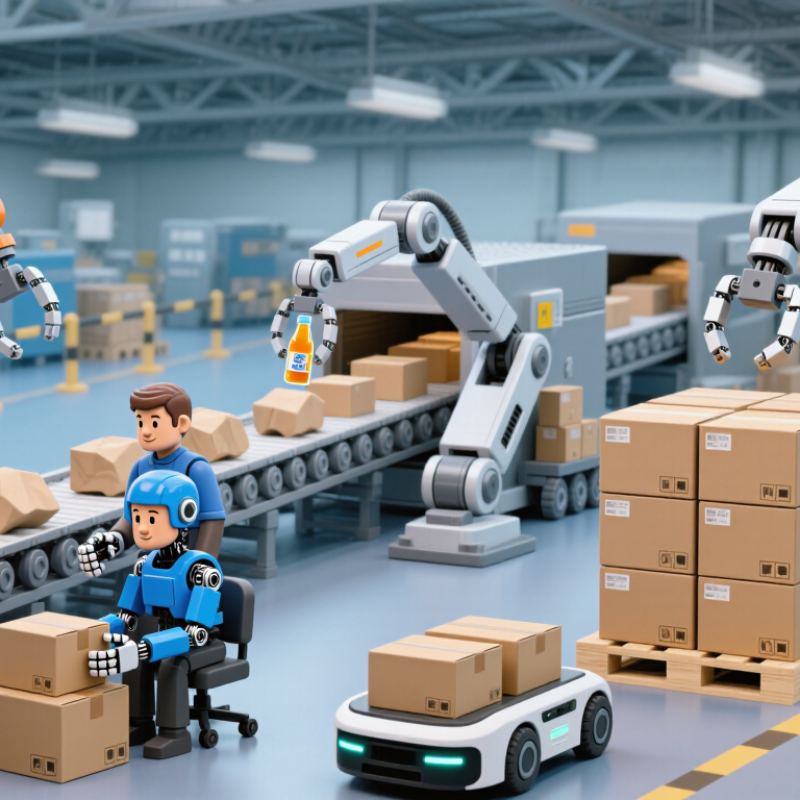
Think about a busy beverage facility. A delta robot may pick lightweight containers at high speed. A collaborative robot may handle short production runs beside operators. A six-axis robot can manage irregular products, case packing, or complex orientation changes. Meanwhile, autonomous mobile robots can move finished cases across the warehouse.
The details decide the result.
This guide examines the top packaging robot types expected to attract buyers in 2026. It considers speed, flexibility, payload, integration difficulty, worker interaction, maintenance, and total operating cost. It also recognizes an uncomfortable truth: automation projects do not always fail because of the robot. Poor product presentation, weak guarding, unsuitable grippers, and incomplete staff training can create expensive delays.
Some forecasts may change as artificial intelligence improves. Buyers should remain cautious. A promising demonstration is not the same as dependable daily production. The strongest decision combines supplier evidence, factory trials, measurable performance targets, and honest review of operational weaknesses.
What Defines a Packaging Robot in 2026?
What Defines a Packaging Robot in 2026?
A packaging robot is more than a mechanical arm moving boxes. It is a programmable system that handles, loads, seals, sorts, or places products within a packaging line. Modern models combine robotic motion, vision sensors, grippers, conveyors, and control software. These parts must work together with steady timing. A fast arm alone does not create a reliable packaging solution.
In 2026, buyers should examine adaptability as carefully as speed. A capable robot can switch between package sizes through stored settings and simple tool changes. Vision systems can detect tilted cartons, missing items, or damaged seals. Digital records can also show production counts, downtime, and maintenance alerts. These details help operators make decisions from evidence rather than guesswork. Safety remains essential, including guarded zones, emergency stops, and controlled access during servicing.
Real factory experience still exposes limitations. A robot may perform well during a demonstration but struggle with dusty surfaces or uneven products. This is often overlooked. Buyers should test real packaging materials, lighting conditions, and daily workloads before approval. Integration quality matters too. Poor conveyor timing can reduce output, even when the robot is technically powerful. Energy use, cleaning access, spare parts, training, and recovery after faults deserve equal attention. The best packaging robot is not always the fastest one. It is the system that performs consistently, changes efficiently, and remains understandable to the people who operate it.
How to Classify Packaging Robots by Their Main Functions
What Are the 2026 Top Packaging Robot Types for Buyers?
How to Classify Packaging Robots by Their Main Functions
Packaging robots are easier to compare when classified by their main job. Pick-and-place robots transfer bottles, trays, or cartons between conveyors. They suit repetitive loading tasks and often use vision systems for changing product positions. Case-packing robots place products into shipping cases with controlled movements. Buyers should check product orientation, case dimensions, and required cycle speed before choosing one.
Palletizing robots arrange filled cases on pallets in stable patterns. They need suitable payload capacity, reach, and floor space. Some models handle several product sizes, but flexibility can reduce maximum speed. Depalletizing robots perform the reverse operation and are useful where empty containers enter the line. Wrapping and labeling robots manage finishing tasks, including film application, label placement, and package presentation.
Inspection robots use cameras, sensors, or weighing systems to detect damaged seals, missing items, and incorrect positions. They do not replace every quality-control method. Their accuracy depends on lighting, software settings, and product consistency. In packaging-line assessments, I also examine washdown needs, guarding, changeover time, and maintenance access. A fast robot can still be a poor investment if operators struggle to clean it or adjust its tooling.
Performance claims deserve careful testing. Ask for trials using your actual packages. Small shape differences matter.
What Are the 2026 Top Packaging Robot Types for Buyers?
How to Classify Packaging Robots by Their Main Functions
Packaging robots are commonly classified by the task they perform. Delta robots are optimized for high-speed pick-and-place operations, SCARA robots support cartoning and tray loading, Cartesian systems handle structured case packing, articulated robots are widely used for palletizing, and collaborative robots are suited to flexible secondary-packaging tasks. The payload figures shown are representative industrial ranges and are not market-share data; actual capacity depends on the robot model, reach, tooling, cycle time, and package weight.
Which Packaging Robot Types Best Fit Different Production Tasks?
Choosing the right packaging robot starts with the production task, not the robot’s advertised speed.
Delta robots suit lightweight products moving rapidly between conveyors. They work well for snacks, cartons, and small containers. Cartesian robots offer controlled, repeatable motion for loading trays or placing products into fixed boxes. Their structure is simple to inspect.
For heavier work, robotic case packers and palletizing robots are stronger choices. Case packers load grouped products into shipping cartons with consistent spacing. Palletizing robots stack filled cases in stable patterns, reducing lifting injuries and uneven loads. Collaborative robots can support lower-volume lines, especially where workers change products often. However, their speed may disappoint on high-output operations. That trade-off deserves measurement.
Tips:
Record product weight, dimensions, cycle time, carton patterns, and available floor space before choosing. Test the robot with real packaging, including slippery film and partly filled cartons. I have seen projects fail because engineers measured average speed, not product changeover time. Leave room for guarding, maintenance, and future conveyors. A compact layout is useful, but cramped access creates expensive delays. Also check gripper performance after dust, heat, and repeated shifts. Pilot testing is rarely perfect, yet it reveals problems that drawings hide.
What Technologies Improve Packaging Robot Performance in 2026?
In 2026, packaging robot performance will depend less on arm speed alone. Buyers should examine perception, control, data, and changeover design. According to the International Federation of Robotics’ World Robotics 2024 report, 541,302 industrial robots were installed globally in 2023. This growing installed base raises expectations for smarter packaging cells. Small details matter. A 3D vision system can locate crushed cartons, while adaptive grippers adjust pressure for thin pouches or unstable boxes.
Artificial intelligence can improve inspection, pick planning, and fault detection. However, it needs clean production data and carefully defined limits. Edge computing reduces delays when robots must react within milliseconds. Digital twins also allow engineers to test conveyor speeds, robot reach, and collision risks before installation. Deloitte’s 2024 Smart Manufacturing and Operations Survey reported that 86% of manufacturing leaders viewed smart manufacturing as a major priority. That figure supports investment, but it does not prove every factory needs the same system.
Buyers should request measurable trials. Test changeovers with real cartons, damaged labels, dust, and mixed product sizes. Force-torque sensing may protect delicate packs during insertion. Predictive maintenance can monitor vibration, motor temperature, and cycle-time drift. Open communication standards can connect robots with vision systems and warehouse software. I would not treat AI as magic. Poor lighting, weak training data, or unclear alarms can still reduce output. A fast robot with unreliable vision remains an expensive bottleneck.
How Should Buyers Compare and Select Packaging Robot Types?
When comparing packaging robot types in 2026, buyers should begin with the product, not the robot catalogue. Delta robots suit lightweight items and rapid pick-and-place work. Cartesian robots offer predictable movement for loading, palletizing, and simple packaging lines. Articulated robots provide wider reach and flexible handling. Collaborative robots may help smaller teams, but their speed and payload can be more limited.
Measure the real workload. Record product weight, package dimensions, required cycle time, reach distance, and daily operating hours. A robot that meets the advertised payload may struggle with an oversized gripper or uneven product. Check changeover time, washdown requirements, floor space, and integration with conveyors, vision systems, and case sealers. Total cost should include tooling, programming, training, maintenance, energy, and planned downtime. Experienced integrators usually test sample products before recommending a configuration. That practical step prevents expensive assumptions, although testing one product may not represent every future package.
Tips: Ask for a live trial using your actual packaging materials. Compare cycle time under normal conditions, not ideal demonstrations. Request maintenance intervals and spare-part availability in writing. Review safety functions with qualified personnel and local compliance specialists. Do not choose the fastest robot automatically. A slower system with easier cleaning and quicker changeovers may deliver better output. I have seen buyers overvalue speed and underestimate gripper replacement costs. That mistake is easy to repeat. Evaluate the complete process, including the operator’s daily experience.