Why Choose Robotic Solutions for Global Procurement?
Global procurement is no longer measured only by unit price. Buyers also weigh lead times, supplier visibility, quality, and the ability to respond when plans change. Robotic solutions can support these goals by automating repetitive warehouse and production tasks, from moving cartons between receiving bays to picking components for assembly. The impact depends on the process. Automation cannot fix unclear specifications or unreliable supplier data.
The International Federation of Robotics reported 541,302 industrial robot installations worldwide in 2023, bringing the global operational stock to about 4.28 million units (World Robotics 2024). These figures show automation’s scale, but they do not prove that every procurement team needs robots. A McKinsey Global Institute analysis has also identified substantial automation potential across work activities, while stressing that adoption varies by task and context. That distinction matters. A robot may move a pallet consistently, yet still depend on people for exception handling, maintenance, and sound purchasing decisions.
Marina Bill, president of the International Federation of Robotics, has described robotics as increasingly accessible to businesses beyond traditional heavy manufacturing; this is a paraphrase, not a verbatim quotation. For procurement leaders, the practical question is where robotic solutions can reduce delays without adding hidden complexity. Start with one measurable bottleneck, such as order staging or inventory movement. Track cycle time, error rates, and total operating costs. Then review the results. The uncomfortable truth is that automation projects can disappoint when teams overlook integration work, training, or ongoing support. A careful assessment makes the business case more credible—and more useful to suppliers, operators, and decision-makers.
What Robotic Solutions Mean in Global Procurement
Why Choose Robotic Solutions for Global Procurement?
What Robotic Solutions Mean in Global Procurement
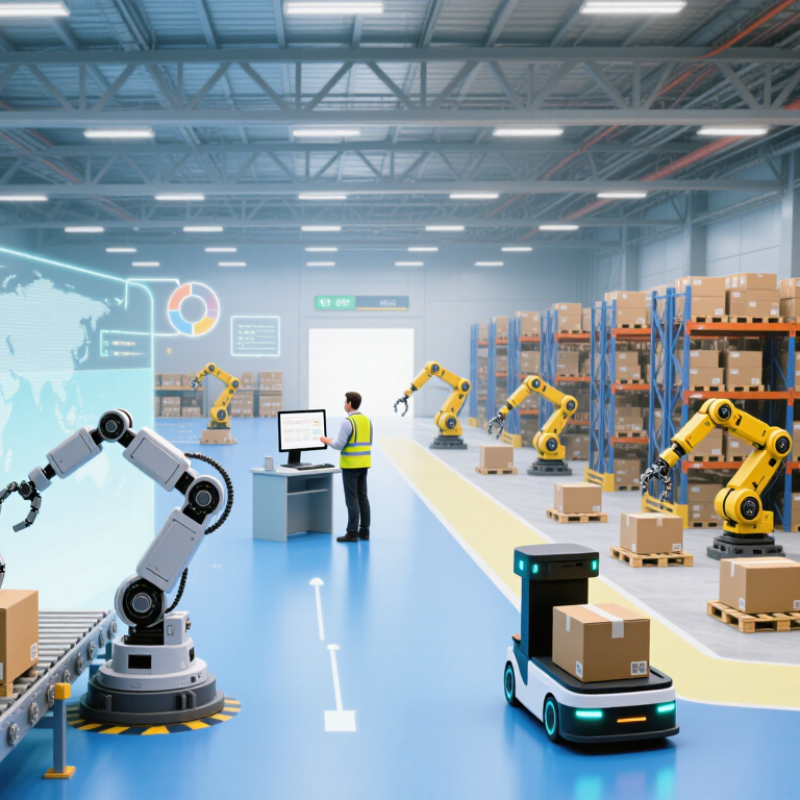
In global procurement, robotic solutions are the machines and software that move, pick, sort, inspect, or pack goods across warehouses and production sites. Examples include autonomous mobile robots carrying totes, robotic arms handling cartons, and automated storage systems retrieving components. They do not replace procurement judgment. They help teams process physical work more consistently, especially when orders cross multiple facilities and time zones.
The International Federation of Robotics reported 541,302 industrial robots installed worldwide in 2023. That figure signals broad adoption, but it does not prove every procurement operation needs automation. A robot may reduce repetitive travel between shelves, yet poor item data or unpredictable packaging can still cause delays. The practical value depends on fit: order volume, product dimensions, facility layout, and integration with inventory systems. Small trials reveal awkward details that a sales projection may miss.
Tips: Map one high-volume process before choosing equipment. Record walking distance, picking errors, and order peaks for several weeks. Then test a limited deployment and compare results against the same measures. Keep people involved; exceptions still need human judgment. Automation can disappoint. The workflow may need redesign before a robot can help.
Why Choose Robotic Solutions for Global Procurement?
Industrial robot density offers a useful indicator of manufacturing automation readiness across global sourcing markets.
Higher robot density can indicate greater automation capacity, which may support consistent production and scalable procurement. It is not a direct measure of procurement performance. Source: International Federation of Robotics, World Robotics 2023; 2022 figures.
How Robots Streamline Sourcing and Purchasing Workflows
Robotic solutions can remove repetitive steps from sourcing and purchasing, while buyers retain control of supplier choices. Software robots can transfer approved requisition details, check purchase orders against invoices, and flag missing fields before payment. The result is less rekeying and fewer routine handoffs. Small errors matter.
McKinsey Global Institute estimated that about 60% of occupations have at least 30% of activities that could be automated with existing technology. That is not a procurement-specific forecast, but it shows why task-level automation is more realistic than replacing entire roles. In practice, teams should begin with stable workflows, such as routing purchase requests or matching order records, then measure exceptions and cycle time.
Robotic tools also help organize supplier information across systems, making spend patterns and documentation gaps easier to review. Gartner predicted in 2023 that by 2027, 50% of organizations would support supplier contract negotiations using AI-enabled applications. This points to growing digital support, not autonomous decision-making. Human review remains essential for context, negotiation judgment, and unusual terms. Automation can also reproduce messy data or outdated rules. That part deserves scrutiny.
How Automation Improves Cost Control and Operational Efficiency
Global procurement teams face volatile prices, fragmented suppliers, and slow approval chains. Robotic solutions create a clearer operating rhythm. They collect quotations, compare contract terms, and flag unusual price changes within minutes. McKinsey procurement research estimates that digital tools can reduce purchasing costs by 3–5% and process costs by 30–50%. These gains matter when thousands of transactions cross borders each month. Better data also strengthens audit trails and supports more reliable decisions.
Automation improves cost control by enforcing approval limits and preferred-supplier rules. It can match invoices with purchase orders before payment, reducing duplicate or incorrect charges. The 2023 Global Chief Procurement Officer Survey reported that digital transformation remains a major procurement priority, but execution is still uneven. That gap deserves attention. A poorly designed workflow may only move mistakes faster. Human review remains essential for complex negotiations, supplier resilience, and unusual market conditions.
Tips: Start with repetitive, high-volume tasks. Measure cycle time, exception rates, and savings before expanding. Keep supplier data clean, because automation cannot repair unreliable inputs. Test rules with real transactions, not perfect examples. Train procurement staff to challenge system recommendations when context changes. This practical balance protects efficiency without treating technology as infallible.
Why Choose Robotic Solutions for Global Procurement? - How Automation Improves Cost Control and Operational Efficiency
Illustrative monthly scenario for 1,000 purchase invoices. Figures are planning assumptions, not universal industry benchmarks.
| Procurement Dimension |
Manual Process |
Robotic Workflow Scenario |
Operational Effect |
| Invoice handling time |
12 minutes per invoice
200 staff hours per month |
3 minutes of staff review per invoice
50 staff hours per month |
150 fewer handling hours monthly (75% reduction in modeled staff time) |
| Exception and rework rate |
8% of invoices require correction
80 cases per month |
2% require correction
20 cases per month |
60 fewer rework cases in the modeled month |
| Purchase-order matching |
82% matched to purchase orders and receipts on first review |
97% matched on first review |
Fewer manual checks and earlier identification of mismatches |
| Invoice-to-approval cycle |
5 business days |
2 business days |
Shorter modeled cycle through routing, reminders, and status tracking |
| Spend-reporting delay |
10 days after period end |
1 day after period end |
Faster visibility into committed and processed spend |
| Policy-compliant purchasing |
88% of sampled transactions meet defined purchasing rules |
96% meet defined purchasing rules |
More consistent use of approval limits, preferred terms, and required documentation |
Scenario calculation: 1,000 invoices × 12 minutes = 200 manual hours; 1,000 × 3 minutes = 50 review hours. Other comparison figures are illustrative assumptions for planning and should be validated against an organization’s own procurement data.
What to Consider When Adopting Robotics for Global Procurement
Robotic solutions can reduce repetitive work in global procurement, but adoption requires careful preparation. A faster workflow is not automatically a better one. Teams should map each process before selecting automation, including purchase requests, supplier comparisons, invoice checks, and shipment updates. Clear process maps reveal where human judgment still matters.
Data quality deserves close attention. Robots follow available rules, even when supplier records contain missing tax details or outdated delivery terms. Clean, consistent data should support every automated decision. Integration with finance, inventory, and contract systems also needs testing under real conditions. Small delays can become costly when orders cross several time zones. Human approval should remain mandatory for unusual prices, restricted goods, and unclear documentation.
Security and compliance cannot be treated as technical afterthoughts. Access permissions should follow job responsibilities, with activity logs retained for review. Regional privacy, trade, and procurement requirements may differ, so legal specialists should examine the workflow before deployment. A limited pilot can expose weaknesses without disrupting the whole operation. Measure processing time, error rates, supplier response quality, and manual intervention. Do not hide poor results. A robot may complete tasks quickly while creating more corrections later. Staff training matters too, because employees need to understand both the system and its limits. Some resistance is reasonable. It may identify risks that planning missed.