Why Choose a Delivery Robot for Your Business?
A delivery robot can change how a business moves goods through busy, customer-facing spaces. It may carry meals across a hotel, transport prescriptions inside a care facility, or move packages between warehouse stations. The value is practical: fewer repetitive trips, steadier service, and clearer delivery tracking. However, the technology is not a universal solution.
Choosing a delivery robot requires more than watching a smooth demonstration. Managers should examine route length, floor surfaces, elevator access, charging locations, and customer expectations. A reliable pilot can measure delivery time, battery use, staff workload, and failed handoffs. For example, a robot traveling 200 meters between a kitchen and lobby faces different demands from one serving a large campus. Small details matter. Door timing matters.
Experienced operators also consider safety, accessibility, maintenance, and human oversight. Robots must navigate around people without creating confusion or blocking emergency paths. Staff need simple controls and clear procedures when a robot stops unexpectedly. The business case may look attractive, but early results can be uneven. A pilot might reveal slow elevators, poor map accuracy, or customer hesitation. That is useful evidence, not failure.
This article explores why businesses choose a delivery robot and where the investment makes sense. It considers efficiency, service quality, operating costs, and implementation risks. It also asks a harder question: can the robot improve the customer experience, rather than merely reduce labor? Honest evaluation builds trust and supports a safer, more informed decision.
What Is a Delivery Robot and How Does It Work?
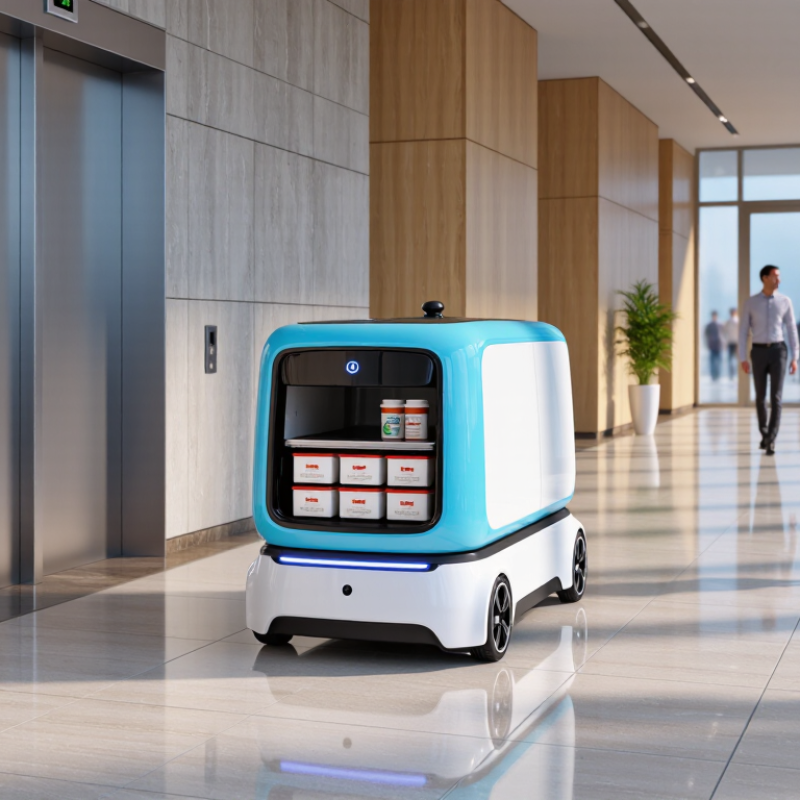
A delivery robot is a mobile machine that carries food, parcels, or supplies without a driver inside. It usually combines cameras, lidar, GPS, ultrasonic sensors, and wheel controls. These tools help it read curbs, doors, people, and changing road conditions. The International Federation of Robotics reported approximately 86,000 transport and logistics service robots sold worldwide in 2022. Its World Robotics 2024 report also identified logistics as the largest professional service robot application in 2023.
The operating process is practical, not magical. A delivery platform receives an order and assigns a route through fleet-management software. The robot builds or checks a digital map, follows safe paths, and adjusts speed near pedestrians. A locked compartment opens through a verified code or mobile confirmation. At a building entrance, remote staff may assist with elevators, blocked sidewalks, or unclear addresses. Human oversight remains important, especially during rain, construction, or crowded events. The U.S. Department of Transportation’s Automated Vehicles activities emphasize continuous monitoring, safety validation, and human control for automated systems.
Small details affect performance. A wet ramp can reduce traction. A parked bicycle can force a route change. A clean demonstration may hide these interruptions. This technology can reduce repetitive trips, but it still needs trained operators, maintenance checks, and realistic service boundaries. The business case becomes less tidy when customers expect instant delivery everywhere.
Which Business Tasks Can Delivery Robots Handle?
Delivery robots can handle repetitive movement tasks that quietly consume staff time. They can carry meals from a kitchen to tables, transport linens between hotel floors, and move supplies across hospitals or campuses. In warehouses, they can shuttle cartons between storage areas and packing stations. These jobs are structured, frequent, and easy to measure.
The International Federation of Robotics reported 158,000 professional service robots sold globally in 2022. Transportation and logistics represented about 86,000 units, making it the largest application category. McKinsey Global Institute also found that roughly 60% of occupations contain at least 30% automatable activities. This does not mean full replacement. Robots still need route planning, charging, maintenance, and human supervision. The fit is not perfect.
Tips:
Begin with one route and one shift. Measure delivery time, missed trips, staff minutes saved, and customer complaints. Keep human handoffs for fragile items or unusual requests. A short pilot often reveals problems that a spreadsheet misses. Floor markings may confuse the robot. Doors may be slow. Staff may also resist changing familiar routines. Review these issues weekly, then adjust the task design before expanding.
What Benefits Do Delivery Robots Offer Businesses?
Why Choose a Delivery Robot for Your Business?
What Benefits Do Delivery Robots Offer Businesses?
Delivery robots can improve routine transport inside hotels, hospitals, campuses, and office buildings. They carry meals, documents, medicines, or supplies along mapped routes. Staff spend less time pushing carts through corridors. They can focus on customer service and complex tasks instead. The International Federation of Robotics reported over 100,000 professional transport and logistics robots sold globally in 2023. This growth reflects practical demand, not science fiction.
Robots also create more predictable delivery records. Sensors can log arrival times, route delays, and repeated bottlenecks. Managers can use this data to adjust staffing and floor layouts. A robot does not replace every worker. It may struggle with stairs, crowded hallways, poor lighting, or unexpected spills. That weakness matters. The International Federation of Robotics’ World Robotics 2024 report also shows rapid automation growth, but adoption still depends on safe integration and trained employees. Lower labor pressure is possible, though savings are not automatic.
Tips: Start with one repetitive route. Measure delivery time, failed trips, employee workload, and customer feedback for 30 days. Keep a human backup nearby. Review privacy, accessibility, and local safety requirements before expanding. A quiet robot may look efficient, but real performance depends on maintenance, charging space, and clear public instructions. Pilot carefully. Learn before scaling.
How to Choose the Right Delivery Robot for Your Needs?
Choosing the right delivery robot starts with the route, not the machine. Map door widths, ramps, elevators, weather, pedestrian traffic, and delivery distances. Payload matters. A robot carrying hot meals needs stable compartments, temperature control, and careful braking. A larger unit may carry more, but it can struggle in crowded corridors.
The International Federation of Robotics reported about 86,000 transport and logistics robots sold globally in 2022, a 44% increase from the previous year.
This growth shows demand, but it does not prove every model fits every workplace.
Define measurable requirements before comparing suppliers.
Record average stops per hour, charging time, delivery accuracy, remote-support response, and failed handoffs. Check whether the robot connects with your ordering and dispatch systems. Ask for maintenance intervals and battery replacement costs.
McKinsey estimated that autonomous last-mile delivery could reduce delivery costs by up to 40% in suitable conditions.
“Suitable” is the difficult part.
Narrow sidewalks and frequent stairs can erase that advantage quickly.
Test the robot during real operating hours. Start with the route. Include rain, lunch crowds, and unexpected obstacles. A two-week pilot may reveal more than a polished demonstration. I would also interview staff and customers, because technical success can still create frustration. No robot is perfect. Some failures will remain. Choose the system that fails safely, reports problems clearly, and improves through measured feedback.
What Factors Affect Delivery Robot Costs and Operations?
Choosing a delivery robot starts with understanding its real operating environment. A smooth warehouse route may hide uneven sidewalks, steep ramps, or crowded entrances. These details affect speed, battery use, and delivery reliability.
Hardware is only one part of the cost. Buyers should assess sensors, navigation systems, charging equipment, maintenance, and replacement parts. Payload size also matters. A robot carrying insulated meals needs different capacity than one moving small parcels. Software fees, mapping updates, and remote support can raise monthly expenses. Labor remains important, too. Staff may need to load items, monitor routes, and handle failed deliveries. That work is easy to underestimate.
Operations depend on distance, weather, traffic, and delivery density. Short routes with many nearby stops usually create better value than scattered orders. Rain, snow, and extreme heat may reduce performance or require extra protection. Local access rules and site permissions should be checked before deployment. A controlled pilot can measure delivery time, charging cycles, intervention rates, and customer response. The first estimate is rarely right. That is normal.
Some businesses focus heavily on purchase price. This can be a costly mistake. A lower-priced unit may require more supervision or repairs. A more expensive system may reduce labor pressure, but only on suitable routes. Reviewing weekly data helps reveal whether the robot saves time or simply moves work elsewhere. Operational judgment matters as much as technical specifications.
Why Choose a Delivery Robot for Your Business?
What Factors Affect Delivery Robot Costs and Operations?
This illustrative planning model estimates the main operating-cost components for one local delivery.
Labor supervision, maintenance, connectivity, insurance, and energy requirements vary according to delivery distance,
fleet utilization, local regulations, and service conditions. The figures are planning estimates rather than vendor quotations.