What Are the Best Collaborative Robots in 2026?
Choosing the best collaborative robots in 2026 depends less on a headline specification than on the task beside the workbench. A small assembly cell may need precise placement and simple programming. A machine-tending station may need greater reach, payload, and dependable recovery after a stoppage. The right comparison starts with the job, not the brochure.
This guide examines how leading collaborative robots differ in payload, reach, repeatability, programming, safety features, and integration support. It also considers practical details: how easily an operator can move a robot between tasks, whether the gripper and vision system work smoothly together, and how much floor space the cell requires. Small differences matter. A robot that fits neatly beside a lathe can still miss a production target if its cycle time is too slow.
Specifications alone do not prove that a system will perform safely or reliably in a real workplace. Collaborative operation depends on the complete application, including tooling, layout, speed, and a suitable risk assessment. Buyers should validate the proposed setup and check service availability, training, and lifecycle costs before committing. That takes time. There is no universal winner, and product ranges can change during the year. This comparison offers a practical starting point, not a substitute for trials with your own parts and production data. A careful test may challenge an initial favorite—and that is useful.
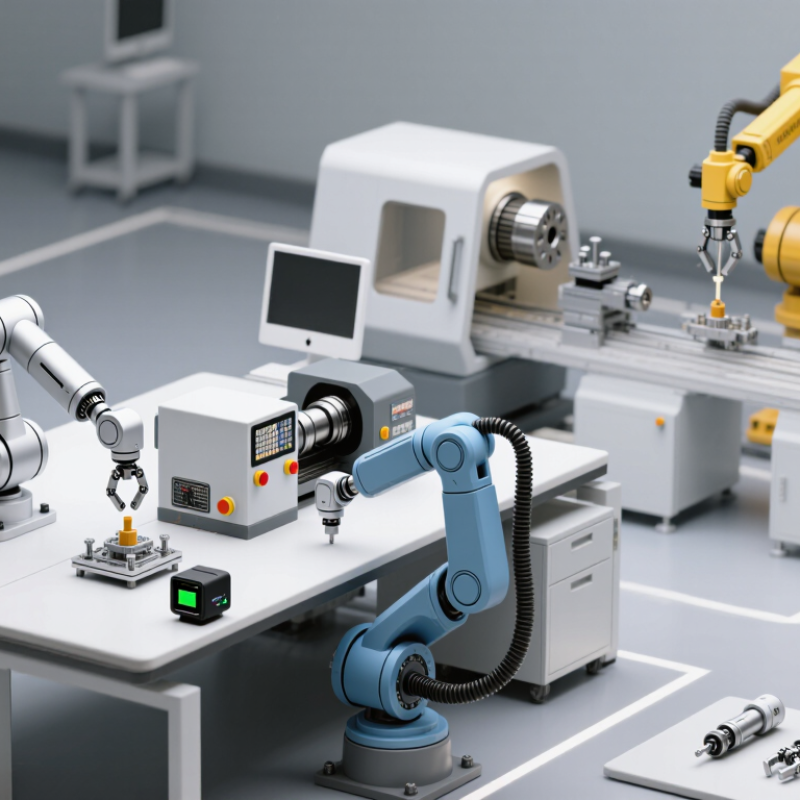
Table of Contents
[Hide]
What Collaborative Robots Are and How They Differ from Industrial Robots
What Are the Best Collaborative Robots in 2026?
What Collaborative Robots Are and How They Differ from Industrial Robots
A collaborative robot, or cobot, is designed to share a work area with people under defined safety conditions. It may assist with repetitive tasks such as placing components, tending a machine, or tightening fasteners. Its compact arm can stop when it detects contact, while force and speed limits help reduce certain risks. These features do not make every task automatically safe. The cell, tools, workpiece, and worker movements all matter.
Traditional industrial robots often operate behind guards because they move quickly, handle heavy loads, or follow fixed paths. Cobots are commonly easier to reposition and program, though they may have lower payloads or slower cycle times. The distinction is not absolute: an industrial robot can be configured for collaborative use, and a cobot may still need guarding for a particular application. That matters.
A practical comparison starts with the actual task, not the label. Check reach, payload, cycle time, precision, and how often workers enter the work area. For example, a cobot loading small parts beside an operator may save walking and lifting, but a sharp tool or fast-moving fixture can change the safety picture. Risk assessment, suitable safeguards, and operator training remain essential. In real workshops, setup takes longer than the brochure suggests. That part is easy to underestimate.
What Are the Best Collaborative Robots in 2026? What Collaborative Robots Are and How They Differ from Industrial Robots
The best collaborative robot depends on the task, payload, reach, cycle time, and workplace risk assessment. The categories and ranges below are general selection guidance, not rankings or guaranteed specifications for every robot.
Best Collaborative Robot Categories by Application
| Application category | Typical cobot profile to consider | Illustrative payload and reach | Why it can be a good fit | Key selection checks |
|---|---|---|---|---|
| Bench-top assembly and fastening | Compact arm with straightforward programming and options for tool or screw-feeder integration. | Often around 3–10 kg payload and 0.5–1.3 m reach. | Can automate repetitive handling, fastening, and component placement in a relatively small work area. | Tool weight, positioning repeatability, cycle time, cable routing, and access to the workpiece. |
| Machine tending | Arm sized to load and unload the machine, with suitable gripper and machine-interface options. | Often around 5–20 kg payload and 0.8–1.5 m reach. | Can handle repetitive part transfers while an operator performs setup, inspection, or other tasks nearby, subject to the safety assessment. | Part and gripper mass, machine-door access, chip or coolant exposure, guarding, and required loading time. |
| Inspection and laboratory handling | Compact arm with suitable positioning performance and a compatible camera, sensor, or sample-handling tool. | Often around 3–10 kg payload and 0.5–1.3 m reach. | Can automate consistent pick, place, presentation, or inspection movements in repeatable workflows. | Sensor compatibility, lighting, cleanliness requirements, repeatability needs, and process validation. |
| Packaging and case handling | Higher-payload arm with reach and end-of-arm tooling suited to the package and workcell layout. | Often around 10–30 kg payload and 1.0–2.0 m reach. | Can automate repetitive packing or transfer tasks where the payload and cycle time fit the application. | Maximum payload including the gripper, package dimensions, cycle rate, conveyor synchronization, and pallet or case stability. |
| Palletizing | Longer-reach, higher-payload cobot configured for the required stacking pattern and material flow. | Some application setups use roughly 12–30 kg or more of payload and about 1.3–2.0 m reach. | May suit lower- or moderate-throughput palletizing where a conventional industrial cell is not necessary. | Box mass, stack height, pallet position, cycle time, gripper mass, and whether the full work envelope needs safeguarding. |
Range note: Payload and reach figures are broad, illustrative market ranges; they are not definitions of a cobot category. Check the robot’s rated payload, reach, speed, repeatability, and tool-load limits for the exact configuration. Payload must include the end effector and carried workpiece.
Collaborative Robots vs. Industrial Robots
| Comparison area | Collaborative robots (cobots) | Conventional industrial robots |
|---|---|---|
| Meaning | Robots designed with features that can support applications involving people nearby or sharing a workspace, when the complete application is assessed and configured appropriately. | Robots commonly used in automated workcells, often operating at high speeds or with high payloads and separated from people by safeguards. |
| Human interaction | May support collaborative operation, but “collaborative” does not mean safe for every person, tool, part, or task without further assessment. | Typically deployed in a safeguarded cell with controlled access, such as fencing, interlocked gates, or other protective measures. |
| Safety approach | Application design may use safety functions such as monitored stops, hand guiding, speed and separation monitoring, or power and force limiting, where suitable. | Safety commonly relies on separation and safeguarding; the robot, tooling, workpiece, and cell still require a risk assessment. |
| Speed and throughput | May operate at reduced speeds in some collaborative applications. Actual speed depends on the robot, task, tooling, and safety configuration. | Often selected for high-speed, high-throughput production, especially when the workcell can be separated from people. |
| Payload and reach | Many models suit light- to medium-duty tasks, though higher-payload and longer-reach options also exist. | Available across a broad range, including very high payloads and large work envelopes for demanding production tasks. |
| Setup and redeployment | Often emphasizes accessible programming and flexible redeployment, but integration, tooling, and safety validation still take engineering effort. | May require more dedicated cell engineering and safeguarding, especially for complex, high-speed applications. |
| Typical fit | Repetitive assembly, machine tending, inspection, packaging, and other tasks where flexibility and operator proximity are valuable. | High-speed production, heavy handling, large work envelopes, and processes requiring sustained high throughput. |
| Selection priority | Confirm task suitability, risk controls, payload including tooling, reach, cycle time, and the required collaborative operating mode. | Confirm throughput, payload, reach, workcell design, safeguarding, integration requirements, and maintainability. |
Safety reminder: A cobot is not automatically safe to operate without guarding. Conduct a risk assessment of the complete application—including the robot, end effector, workpiece, and surrounding equipment—and select appropriate protective measures and operating modes.
Related Posts
-
What Are the Top Cobot Robot Manufacturers in China?
-
10 Tips for Choosing the Right Industrial Robotic Arm for Your Business
-
Future of Warehouse Robots at China's 138th Canton Fair 2025 Industry Insights and Market Growth Trends
-
10 Essential Tips for Choosing the Best Home Robot for Your Needs
-

What is Robotic Automation and How Does it Work?
-

Top 10 Benefits of Palletizing Robots for Your Business?
Customers




Smart Robotics brand movie
Watch video