Why Choose a Transparent LED Display for Your Business?
A shop window can do more than display products. It can show a short campaign while keeping the collection visible behind the glass. That balance is the appeal of a Transparent Led Display: digital content adds movement without fully blocking the space. Light matters. So does context. In a boutique, hotel lobby, or showroom, the screen can turn an ordinary window into a changing visual feature.
The benefits depend on the installation. Transparency, brightness, pixel pitch, and viewing distance all affect what customers actually see. Daylight may wash out weak content, while dense graphics can hide the products behind the screen. “A display should support the space, not compete with it,” says Maya Chen, a fictional display-technology consultant; this illustrative quote is not a verified statement from a real expert. That principle is useful when comparing screen specifications with the room’s lighting, window size, and customer path.
This article explores where transparent LED technology can fit, what businesses should assess before buying, and which trade-offs deserve attention. Installation details matter. So does maintenance access. A clear plan for content, power, mounting, and servicing can prevent an impressive display from becoming an expensive distraction. No screen suits every storefront, and that is worth admitting early. The right choice starts with the job the display must perform—not with the brightest product photo or the boldest sales claim.
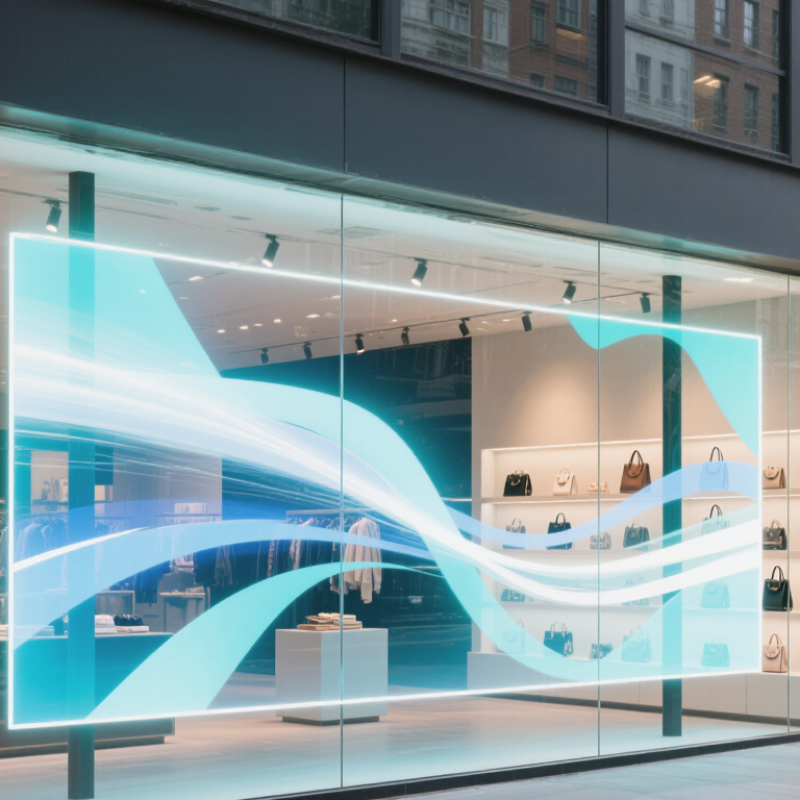
Table of Contents [Hide]
What Is a Transparent LED Display?
A transparent LED display is a screen built from light-emitting diodes arranged on a grid, leaving open spaces between pixels. Those gaps allow people to see through the panel while video and graphics appear to float on the glass. Unlike a conventional LCD, it does not need a solid backlight layer. Think of a shop window: pedestrians can still see products behind the screen, while bright text draws attention from the street. The effect is striking. But transparency is not the same as invisibility.
Image quality depends on pixel pitch, brightness, viewing distance, and the scene behind the glass. Wider gaps often improve visibility through the panel, but can make fine text look uneven up close. Daylight matters, too; a dim display may fade against a sunlit storefront. Grand View Research’s 2024 analysis estimated the global LED display market at about US$7.8 billion in 2023, with projected growth through 2030. This broad market figure does not measure transparent displays alone, but it shows the wider adoption of LED-based visual systems. For a real installation, test sample content on the actual glass and check it from both sides. A small detail can change the result. Pixels may look sharper in a brochure than they do in a busy window.
Customers




Smart Robotics brand movie
Watch video