How to Use Robotic Process Automation Tools at 139th Canton Fair?
The upcoming 139th Canton Fair presents an exciting opportunity for exhibitors and buyers alike. As technology evolves, integrating robotic process automation tools can transform the exhibition experience. These tools streamline tasks, enhance productivity, and improve interactions.
At the fair, attendees can navigate the vast 1.55 million square meters with AI-driven search and smart navigation. This innovation allows for swift identification of qualified suppliers, such as those with ISO or CE certifications. However, relying too heavily on technology can lead to oversight. Important human connections might be overlooked amid automation.
Furthermore, while automation tools improve efficiency, they require careful implementation. Misuse might result in a disconnect between buyers and suppliers. Striking a balance between technology and personal engagement is crucial. Ultimately, leveraging robotic process automation tools can significantly enhance the Canton Fair experience, but they should complement human insight rather than replace it.

Understanding Robotic Process Automation in Trade Fairs
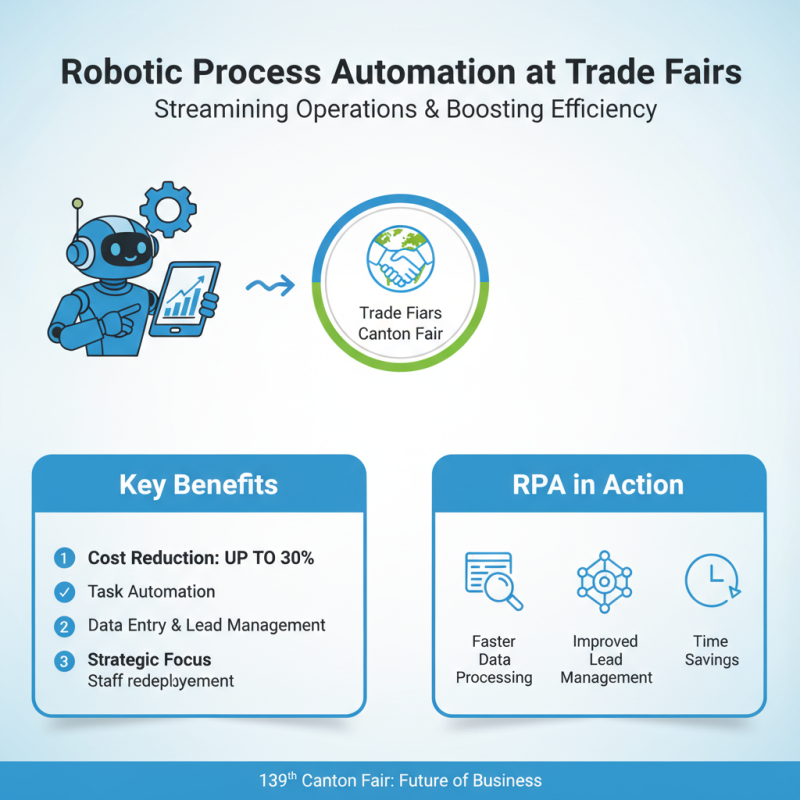
Robotic Process Automation (RPA) is transforming the way businesses operate, especially at trade fairs like the Canton Fair. At the 139th Canton Fair, implementing RPA tools can streamline operations. According to a recent industry report, companies that use RPA can reduce operational costs by up to 30%. Automation can handle repetitive tasks, like data entry and lead management, freeing up staff for more strategic roles.
Many businesses overlook the importance of proper implementation. Training staff on RPA tools is crucial. Without adequate training, issues can arise, leading to errors. A study found that 70% of RPA initiatives fail due to lack of skills and knowledge among employees. Thus, investing in training sessions is essential for success.
**Tips**: Start small. Implement RPA in one area before scaling up. Measure the results. Monitoring progress helps identify weaknesses. Regular feedback sessions can reveal gaps in processes. Embrace a culture of continuous improvement to maximize the benefits of RPA.
Identifying Suitable Processes for Automation at Canton Fair
The 139th Canton Fair presents a unique opportunity to explore
Robotic Process Automation (RPA) tools. Identifying processes
that benefit from automation is crucial. Focus on repetitive tasks such as data entry
or inventory management. These processes consume time and can lead to errors.
Automating them can increase efficiency and reduce human mistakes.
Examine the logistics of the fair. Tasks like attendee registration often require significant manpower. This is a prime candidate
for automation. Streamlining these processes can make the experience smoother for both exhibitors and visitors. However, not every
process is suitable for RPA. Some tasks demand a personal touch or critical thinking.
Consider the interaction-heavy tasks during the fair. Customer inquiries might benefit from chatbots.
Yet, tasks that require empathy should not be automated. Balancing automation with human interaction is essential. The right processes
can save time, but choosing the wrong ones could lead to frustrations. It’s vital to select wisely for a seamless experience.
Selecting the Right RPA Tools for Your Business Needs
Selecting the right Robotic Process Automation (RPA) tools is crucial for businesses aiming to enhance efficiency. According to a report by McKinsey, organizations can improve productivity by up to 40% with RPA. This statistic highlights the significant potential of RPA tools in streamlining processes. However, choosing the right tool requires careful consideration of several factors.
One challenge is understanding specific business needs. Many companies integrate RPA without defining clear goals. A recent Gartner report indicates that 60% of RPA projects fail due to a lack of clarity in objectives. Selecting tools that don’t align with these goals leads to wasted resources. Solutions should automate repetitive tasks, yet not all tools excel in this area. It's essential to assess the features that matter most, such as scalability, ease of use, and compatibility with existing systems.
Additionally, potential pitfalls arise if the tools don’t integrate well. A mismatch can hinder overall operations. According to Forrester, companies that face integration issues report a 70% increase in operational risks. Testing different RPA tools during the initial phase can mitigate these problems. Iterative refinement improves outcomes and ensures the tools selected meet actual business needs while enhancing overall productivity.
Usage of Robotic Process Automation Tools at the 139th Canton Fair
Implementing RPA Solutions During the Canton Fair
At the 139th Canton Fair, companies have a unique opportunity to leverage Robotic Process Automation (RPA) solutions. According to recent industry reports, RPA can reduce operational costs by up to 30%. This cost efficiency allows exhibitors to allocate resources more effectively. Tasks like data entry and customer inquiries can be automated, freeing up staff to focus on more engaging interactions.
Many businesses are exploring RPA to enhance their processes. In a study, 63% of companies indicated that automation improved their response times. This can be crucial during a large event where visitor traffic is high. Imagine handling hundreds of inquiries with ease. However, the integration of RPA tools is not without challenges. Some businesses report difficulty in customizing solutions to fit their specific needs. They often struggle with training staff to adapt to new technologies.
A significant consideration is data security. During trade shows, sensitive information is exchanged frequently. Organizations must ensure that their RPA implementations comply with privacy regulations. While RPA offers numerous advantages, companies need to be vigilant about these potential pitfalls. Balancing automation with personalized service remains key to success at the Canton Fair.
Measuring the Impact of RPA on Your Tradeshow Experience
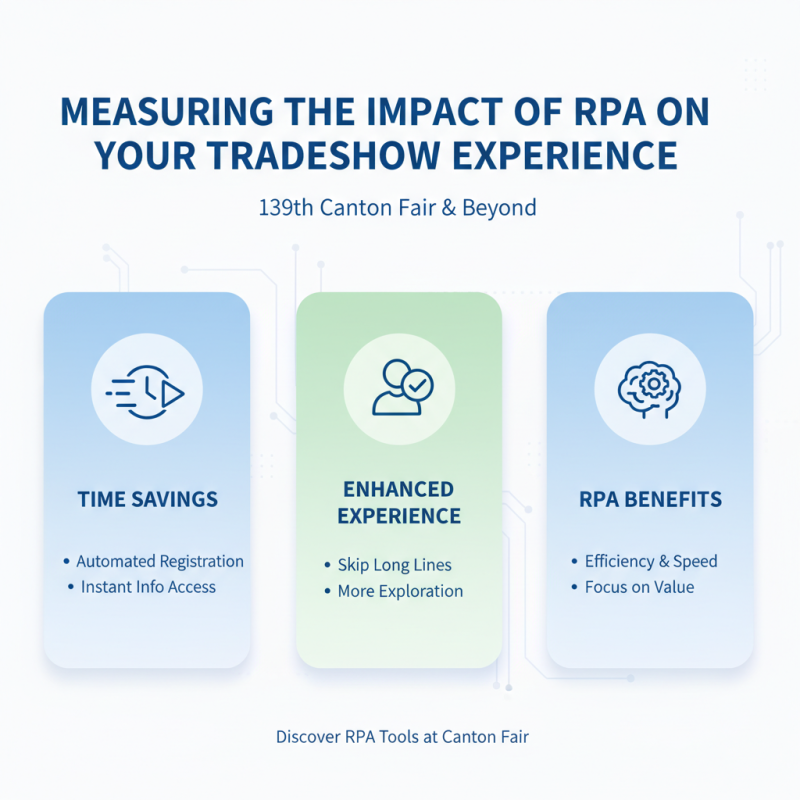
The 139th Canton Fair offers a unique opportunity to explore Robotic Process Automation (RPA) tools. RPA can enhance your tradeshow experience in various ways. For instance, automating registration processes can save valuable time. Instead of waiting in long lines, attendees can access information immediately.
Moreover, RPA tools can streamline attendee engagement. Chatbots can answer FAQs, providing instant support. This allows human staff to focus on more complex inquiries. However, relying too much on automation might lead to questions not covered by the bots. Reflecting on this, it's vital to strike a balance between technology and human interaction.
Finally, data analytics from RPA tools can offer insights into visitor behavior. Understanding which products attracted more attention can inform future strategies. While RPA enhances efficiency, the need for human oversight remains crucial. Over-automation could alienate potential clients who prefer personal connections.