What Are the Top Types of Switch Tests?
A Switch Test can reveal whether a switch works reliably, not just whether it clicks. The right test depends on its design and job. A small keyboard switch, for example, needs different checks from an industrial limit switch. Still, several test types help assess basic operation, electrical performance, and long-term wear. Details matter.
Continuity testing checks whether a circuit opens and closes as the switch changes position. A multimeter can show this clearly: an open reading should change when the contacts close. Actuation-force and travel tests measure how much pressure and movement trigger the switch. These checks are useful for comparing feel and consistency, though a single reading does not tell the whole story. Contact resistance testing can identify unwanted resistance that may affect performance. For switches used under electrical loads, testing should match the device’s rated conditions and use suitable equipment.
Durability or cycle testing repeats operation to observe wear over time. Contact-bounce testing looks for rapid, unintended signal changes after activation, which can matter in electronic controls. Insulation-resistance and environmental tests may also be appropriate for particular products. Not every switch needs every test. That point is easy to overlook. A credible evaluation records the method, conditions, and results, then compares them with the manufacturer’s specifications. If a test involves hazardous voltages or specialized equipment, qualified technicians should perform it. Tests offer evidence, not guarantees; real-world use can still expose weaknesses. A careful Switch Test combines appropriate measurements with practical judgment.
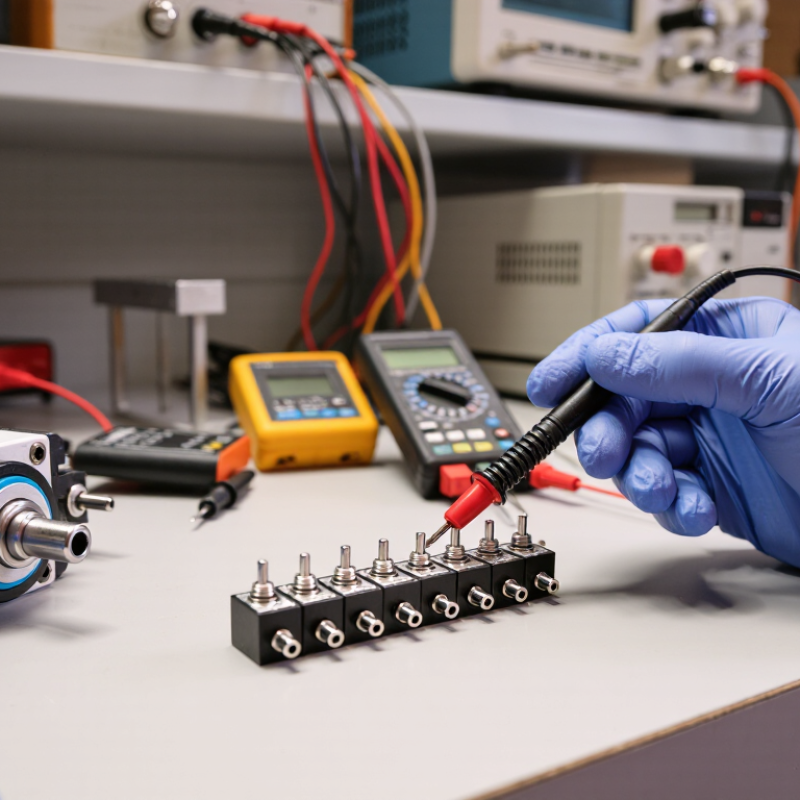
Table of Contents [Hide]
IEC 60669-1 Covers Household Switches Rated up to 440 V and 63 A
IEC 60669-1 applies to manually operated switches for household and similar fixed electrical installations. It covers switches rated up to 440 V and 63 A. These figures set the standard’s scope; they do not mean every switch suits every circuit. Check the marked rating against the installation’s voltage, current, and wiring conditions. Small details matter, including terminal design and how the switch is mounted.
Testing can examine electrical insulation, temperature rise, switching endurance, and the security of terminals. A test setup may cycle a switch repeatedly, then check whether its contacts and moving parts still work as intended. Temperature-rise checks help reveal whether components become excessively hot under specified conditions. Insulation assessments examine separation between live parts and accessible surfaces. Exact requirements depend on the switch design and the applicable edition of the standard. A rating label alone cannot show how a product performs under every real-world condition; installation and use still deserve careful review. Testing is useful, but not magic.
What Are the Top Types of Switch Tests? - IEC 60669-1 Covers Household Switches Rated up to 440 V and 63 A
| Test category | What is evaluated | Typical verification |
|---|---|---|
| Marking and documentation | Whether ratings and required product information are clear and consistent. | Check markings such as rated voltage, rated current, switch position indications where applicable, and installation instructions. |
| Protection against electric shock | Whether accessible parts are adequately protected from live parts. | Assess protection using the applicable accessibility probe and test conditions for the switch design. |
| Terminals and connections | Suitability of terminals for their intended conductors and secure electrical connection. | Examine conductor accommodation, clamping, retention, and connection performance as applicable to the terminal type. |
| Switch mechanism and construction | Mechanical operation, assembly, and the ability to maintain the intended switching action. | Inspect construction and operate the mechanism to check for reliable movement and switching positions. |
| Making and breaking capacity | Performance when switching the electrical load conditions specified for the relevant switch type. | Perform the prescribed switching operations and examine for unacceptable electrical or mechanical deterioration. |
| Normal operation and endurance | Durability of the switch under repeated operation. | Cycle the switch under the conditions prescribed for its classification, then check its operation and condition. |
| Insulation resistance and electric strength | Electrical insulation between relevant circuits and accessible or conductive parts. | Measure insulation resistance and apply the specified dielectric test voltage for the applicable test arrangement. |
| Temperature rise | Heating of terminals and other relevant parts during operation at the specified test conditions. | Measure temperature rise at designated locations while carrying the applicable test current. |
| Moisture resistance | The effect of prescribed humid conditions on insulation and safe operation. | Condition the switch as specified and conduct the relevant insulation and electric-strength checks afterward. |
| Mechanical strength | Resistance of the enclosure and operating parts to mechanical stresses relevant to use. | Apply the prescribed impact or other mechanical tests, then inspect for damage that could affect safety or operation. |
| Heat, fire, and tracking resistance | Resistance of insulating materials to heat and ignition-related hazards. | Apply the relevant material tests, such as heat or glow-wire testing, where required by the standard and product construction. |
| Resistance to rusting | Corrosion resistance of relevant ferrous parts. | Condition applicable parts using the prescribed procedure and assess them for rusting that could affect safety or function. |
Scope note: IEC 60669-1 applies to switches for household and similar fixed electrical installations within its stated ratings (up to 440 V AC and 63 A). Applicable tests, limits, and sample conditioning depend on the standard edition, switch type, and product construction; consult the relevant edition for conformity assessment.
Customers




Smart Robotics brand movie
Watch video