What Are the Top Types of Bio Sanitizer Tablets?
Bio Sanitizer Tablets are not one uniform product category. Their ingredients, intended uses, and performance can differ considerably. Some formulations release chlorine compounds, while others use chlorine dioxide or oxygen-based ingredients. These examples are not interchangeable. A tablet designed for water treatment may not be suitable for surfaces, equipment, or storage tanks. Check the product label before comparing types.
The word “bio” can sound reassuring, but it does not establish a tablet’s effectiveness by itself. Active ingredients, dosage, contact time, water conditions, and storage all matter. Labels matter. This guide will compare common tablet types by their chemistry, typical applications, practical strengths, and limitations. It will also explain what to verify before use, including approved uses and manufacturer instructions. Small details count: a cloudy container, incorrect dilution, or short contact time can affect results. Not every tablet. And not every setting. Product names can be confusing, and claims may not answer every practical question. Readers should treat the categories as a starting point, then confirm suitability with current technical information. A careful comparison is more useful than choosing by name alone.
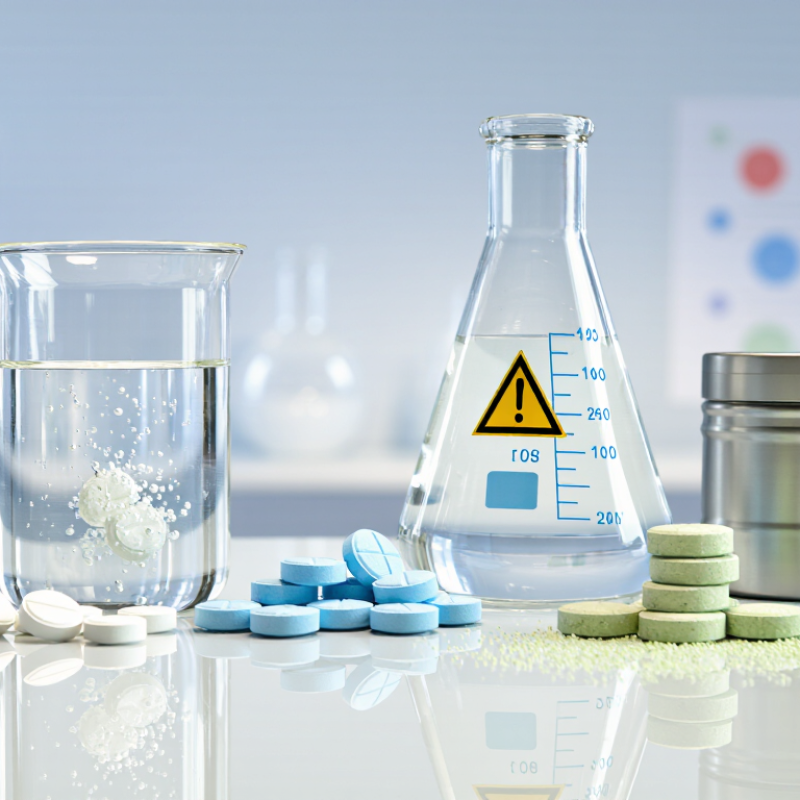
How Bio Sanitizer Tablets Are Classified
Bio sanitizer tablets are classified by what they contain, how they work, and where they are intended to be used. The word “bio” can be vague. Check the ingredient list and directions rather than relying on the label alone.
One category uses enzymes or beneficial microorganisms to help break down organic residue. These tablets may support routine cleaning or odor control, but they should not automatically be treated as disinfectants. Another category uses a sanitizing active ingredient to reduce specific microbes on a surface or in water. The distinction matters. A tablet that helps clear residue may not provide the same sanitation effect. Read the stated purpose and contact time carefully.
Tablets are also grouped by release behavior and application. Some dissolve quickly for short cleaning tasks; others release ingredients more gradually in a compatible system. A small tablet placed in a measured container is not interchangeable with one designed for equipment or a particular surface. “Fast acting” sounds simple, but performance depends on the water, temperature, and correct dose. Classification can feel untidy, and product labels do not always use terms consistently. That is worth questioning. For reliable selection, compare the intended use, active ingredients, dilution instructions, and any surface restrictions.
Chlorine-Based Bio Sanitizer Tablets
Chlorine-based bio sanitizer tablets release chlorine compounds as they dissolve in water. They are used in suitable systems, such as pools and some water-treatment setups, when the product label allows it. A tablet’s appearance can be misleading: active strength, dissolution rate, and intended use vary. They are not automatically interchangeable.
Performance depends on dosage, contact time, pH, temperature, and water movement. Small changes matter. For example, a tablet dissolving in a quiet dispenser may behave differently from one in moving water. Test the water with an appropriate kit, and adjust treatment only according to product directions. Do not assume a clear-looking sample is properly sanitized.
One detail is easy to miss: chlorine can irritate skin and eyes, and concentrated tablets may damage surfaces or equipment. Keep them dry and secured, use the handling precautions on the label, and never mix them with other chemicals. For drinking-water applications, use only tablets specifically approved for that purpose. Even careful routines can be imperfect, so record test results and recheck after unusual heat, heavy use, or rainfall.
What Are the Top Types of Bio Sanitizer Tablets? - Chlorine-Based Bio Sanitizer Tablets | Tablet type | Common active ingredient | Typical applications | Key characteristics | Important considerations |
| Sodium dichloroisocyanurate (NaDCC) | Sodium dichloroisocyanurate; releases available chlorine when dissolved | Water disinfection and, where the product label permits, disinfection of environmental surfaces | Dissolves in water and provides measurable available chlorine. Some formulations are designed for potable-water treatment. | Use only products approved for the intended application. Follow label directions and verify residual levels when required. |
| Trichloroisocyanuric acid (TCCA) | Trichloroisocyanuric acid; releases chlorine and adds cyanuric acid to treated water | Primarily swimming-pool and other specified water-treatment applications | A concentrated, stabilized chlorine source commonly supplied in solid tablet form. | Not interchangeable with tablets intended for drinking-water treatment or surface disinfection. Monitor water chemistry and follow the product label. |
| Calcium hypochlorite | Calcium hypochlorite; releases available chlorine in water | Certain pool, water-treatment, and emergency-disinfection uses, depending on the formulation and local requirements | A strong chlorine-releasing compound; some products are manufactured as tablets for controlled use in compatible systems. | Can increase calcium levels in treated water. Keep dry and handle as directed; never mix with acids or other chemicals. |
| Chlorine dioxide-generating tablets | Formulations that generate chlorine dioxide when activated as directed | Specific water-treatment or surface-disinfection uses stated on the product label | Generate chlorine dioxide, a chlorine-containing oxidizing disinfectant that behaves differently from free-chlorine-releasing tablets. | Follow activation, contact-time, ventilation, and application instructions precisely. Do not assume it is suitable for every chlorine-treatment system. |
| Selection note: “Bio sanitizer” is a broad description, not a guarantee of a specific approved use or biofilm-removal performance. Choose a tablet registered or authorized for the intended application, follow its label, and never mix chlorine products with acids, ammonia, or other cleaners. |
Oxygen-Releasing Bio Sanitizer Tablets
Oxygen-releasing bio sanitizer tablets commonly use compounds that generate hydrogen peroxide or other oxidizing agents when dissolved. The bubbling is visible, but bubbles alone do not prove sanitizing performance. Results depend on the active ingredient, dose, water temperature, contact time, and the surface or water being treated. Some formulations are intended for specific applications only, so follow their tested instructions.
There is a real need for dependable treatment. The WHO/UNICEF Joint Monitoring Programme estimated that 2.2 billion people lacked safely managed drinking water in 2022, in its 2023 progress report. That figure does not mean tablets can make every water source safe.
WHO’s household water-treatment performance specifications set targets of 2-log bacterial, 3-log viral, and 2-log protozoan reduction for “two-star” performance. These are rigorous benchmarks, not a promise that every oxygen-releasing tablet meets them. Check independent test results for the exact formulation and intended use.
A small practical detail matters: dissolved tablets need full contact time, even when the water looks clear. I would not judge efficacy by smell or fizz. That shortcut is tempting, but unreliable.
Enzyme-Based and Biological Sanitizer Tablets
Enzyme-based and biological sanitizer tablets rely on different actions. Enzymes break down residues such as grease and protein; beneficial microorganisms may help digest organic waste over time. A tablet dissolving in a bucket is not proof of disinfection. Enzymatic cleaners generally remove soil, but do not automatically kill pathogens. CDC’s 2008 disinfection guideline distinguishes three medical-device risk classes, underscoring why cleaning and disinfection requirements depend on use. For household or drain applications, check the product’s stated purpose, dilution, contact time, and storage instructions.
Small details matter. In a sink, hard water, cold temperatures, or too little contact time can affect performance. Biological formulas may also need time to work, rather than delivering an instant result. Grand View Research estimated the global enzymes market at about US$13.2 billion in 2023, with projected annual growth of 6.8% from 2024 to 2030. That figure covers many industries, not sanitizer tablets specifically, so it should not be treated as proof of product effectiveness. I would want tablet-specific test results before making stronger claims.
Look for clear ingredient descriptions and test methods relevant to the intended surface or system. If a tablet claims to sanitize, its label should identify the organisms tested and required contact time. Otherwise, describe it as a cleaning or biological-maintenance product. The distinction is easy to blur. That deserves a second look.
Top Types of Bio Sanitizer Tablets: Enzyme-Based and Biological
This qualitative comparison highlights commonly associated mechanisms, not measured performance. Enzyme-based tablets supply enzymes that act on organic soils; biological tablets contain microorganisms that can produce enzymes under suitable conditions. Formulations vary, so check the product label and use instructions.
How to Choose a Tablet Type for Its Intended Use
Choosing a bio sanitizer tablet starts with identifying the system it will treat. A tablet for a waste-holding tank may not be suitable for drinking water, drains, or surface cleaning. Check the product label for the intended application, compatible materials, dosage, and contact time. Small details matter.
Microbial or enzyme tablets support the breakdown of organic waste in compatible tanks and drainage systems. They are not instant disinfectants. Oxidizing tablets, including some chlorine-based types, are designed for specific disinfection uses. For drinking water, use only tablets explicitly labeled for potable-water treatment, and follow the stated contact time. Formulations differ. Never assume two tablet types can be mixed or substituted.
Match the tablet to the conditions, too. A cold tank, heavy organic load, or limited circulation can affect performance, so check the instructions for operating limits. Measure the water or tank volume rather than estimating from its appearance. Do not guess. I used to think a stronger dose must work faster, but that can damage equipment or create unsafe residues. If the label does not clearly cover your system, ask a qualified sanitation professional before use.