Top Tennis Stringing Machine Manufacturers in China?
Choosing a Tennis Stringing Machine for a Chinese workshop is not just a matter of comparing prices. The real test comes when the machine pulls the same tension across a busy day, while its clamps hold the frame securely and its turntable moves without catching. Small details matter. A slipping clamp can waste string and time. A clear control panel helps new staff avoid mistakes.
Experienced racquet technician Richard Parnell is a useful reference point for readers assessing stringing practice. The sentence below is an editorial paraphrase, not a verified direct quotation from him: “Repeatable tension matters more than a long list of features.” That is a practical benchmark, not a substitute for test data. This guide examines Chinese manufacturers through factors buyers can check: tension consistency, calibration options, clamp design, parts availability, training, and warranty support. It also separates verifiable product details from broad marketing claims. Some specifications look impressive on paper. Ask how they are tested. A factory visit, a sample machine, or a live demonstration can reveal how smoothly the machine handles a real racquet, from mounting the frame to pulling the final cross string. No single model fits every shop. This overview helps importers, clubs, and stringing businesses compare options with clearer questions and fewer assumptions.
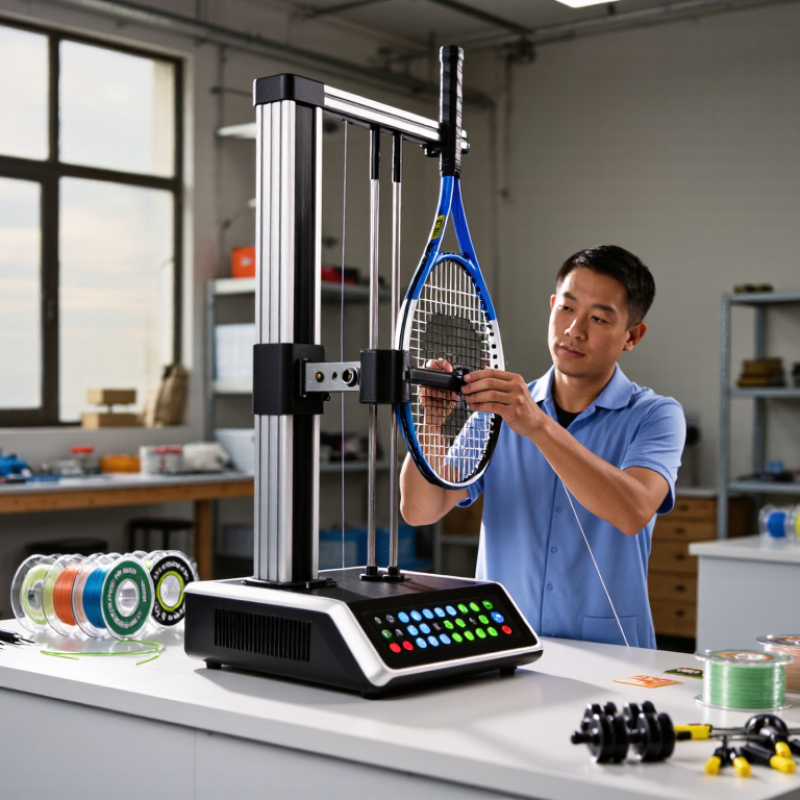
Table of Contents [Hide]
What Tennis Stringing Machines Do and How They Work
A tennis stringing machine holds a racquet steady while a stringer replaces its strings at a selected tension. The frame supports the racquet, while a tension head pulls each string and clamps hold it in place. The stringer usually installs the vertical mains first, then weaves the horizontal crosses through them. Small details matter. A missed weave or uneven clamp pressure can affect the finished string bed.
Machines commonly use electronic constant-pull or mechanical lockout systems. Constant-pull models keep drawing as a string stretches slightly; lockout models stop at a set force. Neither removes the need for careful setup. The frame must be secured without excessive pressure, and tension should be checked with a calibrated tool. It is not magic. String type, temperature, and technique can all influence results.
The ITF Global Tennis Report 2024 estimated 106 million tennis players worldwide, up from 87 million in 2019. That participation figure signals broad demand for racquet services, but it does not measure machine sales or stringing frequency. For buyers, useful checks include tension range, clamp stability, mounting design, and service support. A fast machine may still produce inconsistent results if its calibration is neglected. And calibration can drift.
Customers




Smart Robotics brand movie
Watch video