Top 10 Modular Desk Office Solutions for Global Buyers
Modular Desk Office solutions are moving from niche fit-outs to practical tools for global workplace planning. Gensler’s 2024 Global Workplace Survey shows that employees value choice, control, and workplace quality, rather than fixed seating alone. CBRE’s 2024 Global Workplace Occupancy Insights also points to uneven office attendance across markets. These findings matter to buyers. A desk system must adapt to changing teams, floor sizes, and local working habits.
Jim Keane, former Steelcase president and CEO, described the office as “a tool to help people do their best work.” That idea gives this guide a useful test. Can a Modular Desk Office support focused work at 9 a.m., collaboration at noon, and private calls later? Buyers should examine cable routing, acoustic screens, adjustable heights, load capacity, fire performance, warranty terms, and replacement parts. Details matter. A loose cable tray can undermine an otherwise efficient installation.
The following selection considers ten modular desk office solutions for international buyers. It compares flexibility, ergonomics, space efficiency, sustainability evidence, and supplier support. ISO certifications and environmental claims should be verified, not simply trusted. Prices, shipping duties, assembly standards, and accessibility requirements also vary by region. A beautiful system may fail when spare parts take twelve weeks to arrive.
That is the uncomfortable part. No single configuration fits every culture or building. Careful pilots remain essential. Each solution deserves testing with real users, real equipment, and real floor plans before a large purchase.
Definition and Scope of Modular Desk Office Solutions
Top 10 Modular Desk Office Solutions for Global Buyers
Definition and Scope of Modular Desk Office Solutions
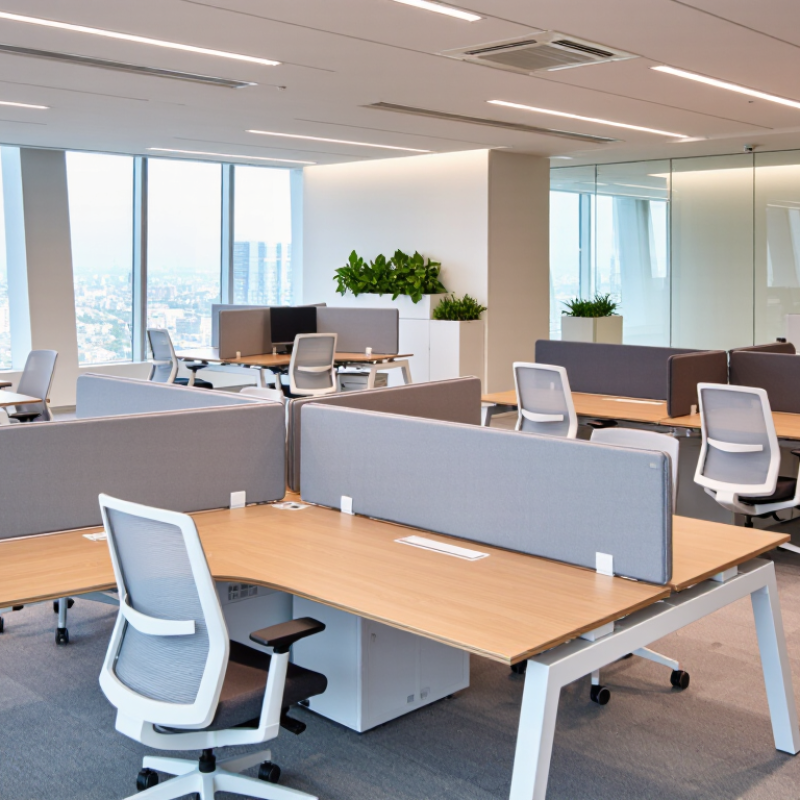
Modular desk office solutions are reconfigurable workplace systems. They combine desks, storage, screens, cable channels, power access, and acoustic elements. Unlike fixed furniture, these systems can be moved, expanded, or reduced with limited disruption. The scope also includes sit-stand mechanisms, shared workstations, meeting modules, and privacy accessories. It does not always include permanent construction, built-in electrical work, or architectural partitions. The boundary is not perfectly clean.
The Gensler Research Institute’s 2024 Global Workplace Survey found that employees prefer spending 67% of their working time in the office. JLL’s 2024 Global Occupancy Planning Benchmarking Report reported average peak office utilization of about 53%. These figures support flexible desk planning, especially for hybrid teams and changing headcounts. However, utilization data can hide cultural differences. A compact desk layout may suit one country, but feel restrictive elsewhere.
For global buyers, the definition should include practical requirements. Check desk dimensions, voltage compatibility, fire performance, accessibility, packaging, replacement parts, and local installation skills. Trial a small zone before placing a large order. Measure noise, cable clutter, movement, and user comfort after several weeks. A modular screen can improve focus. It can also reduce daylight. That trade-off deserves honest review.
Key Components, Layouts, and Modularity Options
Modular desk systems give global buyers a practical way to manage changing teams, floorplates, and workplace rules. McKinsey’s 2022 American Opportunity Survey found that 87% of employees offered remote work accepted it. That shift makes fixed desk rows less useful.
A strong system starts with replaceable components: worktops, cable trays, modesty panels, screens, pedestals, and shared storage. Choose standardized connectors and common panel sizes. They simplify repairs across different countries.
Height-adjustable desks support posture changes, while acoustic screens reduce distraction in open layouts. Small details matter. A loose cable ruins a good plan.
Layouts should match work patterns, not fashion. Bench clusters support focused individual work. Perimeter desks can protect daylight access. Central collaboration tables create visible meeting points. A neighborhood layout works well for hybrid teams, but it needs bookable rooms and clear personal-storage rules. JLL’s 2024 Global Occupier Sentiment Survey reported that many organizations are still refining hybrid workplace policies, so overbuilding fixed spaces creates avoidable risk.
Modularity can range from movable screens to demountable walls, plug-and-play power, and reconfigurable meeting pods. Buyers should compare installation time, replacement availability, fire ratings, accessibility, and local electrical standards.
A system that looks flexible may still require specialist labor. That weakness is easy to miss. Trial one full workstation cluster before approving a global rollout, and document what failed. Perfect flexibility is unrealistic. Planning for revision is better.
Top 10 Modular Desk Solutions by Workplace Application
Top modular desk solutions should match workplace application, not appearance alone. For open-plan collaboration, shared bench desks encourage quick exchanges and preserve floor efficiency. Height-adjustable frames help employees change posture during long screen sessions. Hybrid hot-desking needs compact desks with lockable storage and simple cable access. In private offices, L-shaped modules create space for documents, monitors, and confidential calls. Small details matter.
Training rooms benefit from foldable desks that support rows, circles, or rapid clearance. Project rooms need reconfigurable clusters, writable surfaces, and power near the center. Reception areas require durable counters, visitor clearance, and a calm visual profile. Call centers need narrow workstations, acoustic screens, and easy-clean surfaces. Creative studios need deeper tops for samples, drawings, and shared equipment. Accessible workstations should include adjustable heights and clear knee space. Home offices work best with modular corners that fit irregular walls.
Selection should follow real measurements, user routines, and maintenance capacity. In my experience, a desk that looks flexible may still fail when power outlets sit too far away. Pilot one area before a full purchase. Track setup time, posture changes, storage use, and complaints for several weeks. This evidence supports reliable decisions for global buyers facing different building standards and work cultures. Not every module needs wheels. Over-customization can increase repair time and confuse users. A practical solution is rarely perfect, but it should adapt without becoming fragile.
Top 10 Modular Desk Office Solutions for Global Buyers
Top 10 Modular Desk Solutions by Workplace Application
The chart compares representative desk-module widths commonly specified for different workplace applications. These standardized dimensions help global buyers evaluate space efficiency, user comfort, reconfiguration needs, and procurement compatibility.
Reference basis: typical commercial workplace planning specifications. Dimensions are representative module widths in millimeters; actual requirements may vary by project, local regulations, equipment, and accessibility standards.