Top 10 Mini Server Rack Options for Global Buyers

Choosing a Mini Server Rack is no longer a simple matter of comparing height, price, and finish. Global buyers must consider airflow, power density, security, noise, and local installation conditions. A compact rack may sit beneath a counter in a retail store, beside medical equipment, or inside a small factory control room. Each location creates different demands.

Schneider Electric data-center expert Steve Carlini has emphasized the central challenge of edge infrastructure: “The edge is where the data is created and consumed.” That principle makes rack selection more practical. A Mini Server Rack should protect equipment close to users while supporting stable operation in restricted spaces. Buyers also need to check cooling paths, cable access, caster strength, grounding, and compatibility with standard 19-inch hardware.

Small does not mean simple.

This guide reviews ten Mini Server Rack options for international buyers. It compares useful details, including usable depth, mounting capacity, ventilation design, acoustic control, and assembly requirements. It also considers shipping dimensions and regional power expectations, because a rack that works in one market may create problems elsewhere. These details are easy to overlook.

Our evaluation follows real installation logic rather than marketing language. Some models offer excellent flexibility but limited cooling. Others provide stronger protection but consume valuable floor space. No option is perfect. Even experienced purchasers can underestimate future expansion, cable bend radius, or maintenance access. Readers should verify manufacturer specifications before ordering, especially for heavier servers and demanding environments. The goal is not to identify one universal winner. It is to help global buyers choose a dependable Mini Server Rack for their actual site, budget, and operating conditions.
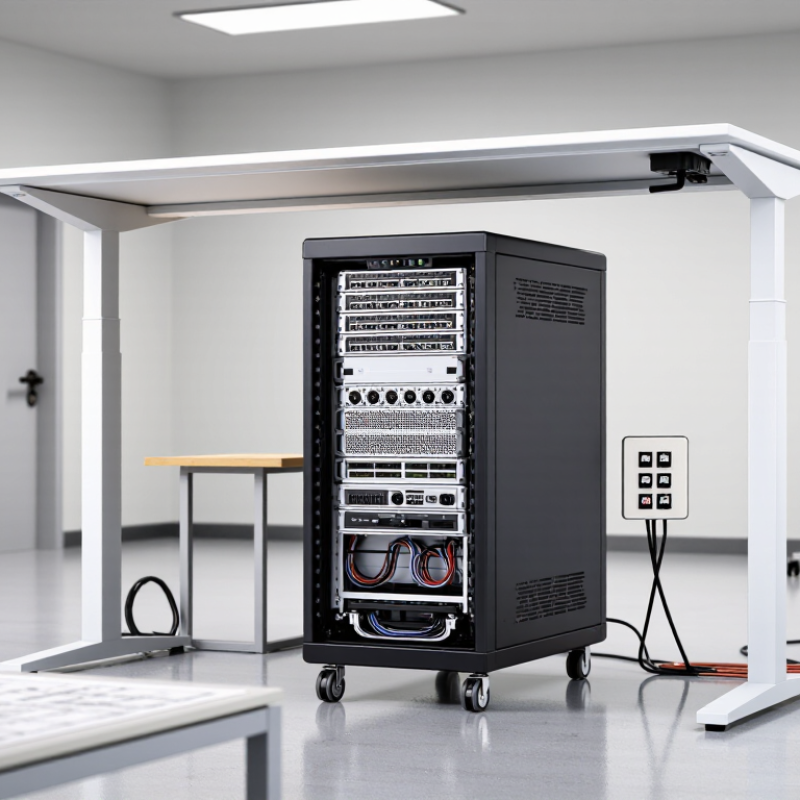
Top 10 Mini Server Rack Options for Global Buyers

Mini Server Rack Basics and Common Use Cases

Mini server racks are compact enclosures for networking, computing, storage, and power equipment. They usually range from 6U to 18U, making them practical where floor space is limited. A small office may use one for a router, switch, firewall, and backup server. A retail store may place it beneath a counter. A workshop may need a lockable rack for cameras and industrial sensors.

Heat remains the overlooked issue. The International Energy Agency’s Electricity 2024 report estimates that data centers consumed about 460 terawatt-hours globally in 2022. It also projects demand could exceed 1,000 terawatt-hours by 2026. A mini rack will not solve energy waste. However, airflow, cable discipline, and suitable power distribution can reduce avoidable stress. Uptime Institute’s 2024 outage analysis reported that over half of surveyed organizations experienced an outage within three years. Small installations deserve serious protection too. I have seen racks fail because owners planned for equipment, but not heat or maintenance access.

Tips: Measure depth, rear clearance, and door swing before buying. Leave at least 20 percent spare rack space. Use blanking panels where appropriate. Keep heavy equipment low. Add temperature monitoring for remote locations. A lock helps, but it is not complete security. Review power load regularly, since future upgrades often arrive earlier than expected.

Key Specifications for Comparing Compact Server Racks

Top 10 Mini Server Rack Options for Global Buyers

Comparing compact server racks starts with usable space, not exterior height. A 6U or 9U cabinet may fit networking equipment, but rail depth can limit modern servers. Measure the equipment, rails, cable bend radius, and rear clearance. A practical minimum is often 100–150 millimeters behind the deepest device. Rack width should follow the 19-inch standard, while mounting holes must match the selected equipment.

Thermal design deserves equal attention. ASHRAE TC 9.9 recommends an inlet temperature of 18–27°C for common air-cooled IT equipment. Check perforated doors, fan capacity, airflow direction, and filter access. A small rack is not automatically efficient. Uptime Institute’s 2024 Global Data Center Survey identified power problems as the leading cause of impactful outages, representing about 55% of reported incidents. Therefore, compare power distribution ratings, circuit protection, grounding, and metering. Do not judge capacity by socket count alone.

Load rating, cabinet depth, noise, locking options, and cable management also affect daily operation. A compact rack carrying 300 kilograms needs stronger casters and anchoring than a wall-mounted enclosure. IEC 60297 dimensions help standardize fit, but they do not guarantee compatibility. Field installers often discover that a short cabinet fits the server but not the power cords. That mistake is expensive. Leave expansion space, verify local voltage requirements, and request tested load and airflow figures from the supplier. One overlooked detail remains: door swing clearance.

Top Mini Server Rack Options for Different Buyer Needs

Top 10 Mini Server Rack Options for Different Buyer Needs

Choosing a mini server rack starts with the buyer’s working environment. A wall-mounted rack suits small offices with limited floor space. A desktop rack keeps network equipment close to a technician’s workspace. A rolling rack helps teams move devices between rooms. It sounds simple.

For quieter offices, a sound-reduced rack can limit fan noise near staff. A shallow rack fits compact switches and patch panels. A deep rack supports larger servers, batteries, and cable slack. A lockable rack adds practical protection in shared areas. A rack with adjustable rails helps buyers manage mixed equipment sizes. Ventilated panels support airflow in warm rooms. An outdoor-rated enclosure may serve remote cameras or access equipment, but environmental ratings must be checked carefully.

Fit matters more than appearance. Measure equipment depth, connector clearance, and rear cable space before ordering. Leave room for airflow. Too little space causes frustrating maintenance. In project reviews, buyers often underestimate future expansion. A rack filled on day one may become restrictive within months. I would also verify rail compatibility, power distribution, grounding provisions, and local electrical requirements. Specifications can look convincing, yet installation details sometimes tell another story. Cost, delivery time, and replacement parts also affect reliability for global buyers.

Top 10 Mini Server Rack Options for Global Buyers - Top Mini Server Rack Options for Different Buyer Needs

Option Recommended Buyer Need Rack Size External Dimensions
(W × D × H)
Usable Depth Static Load Rating Typical Cooling Setup Common Equipment Fit Key Advantage
1. Compact Desktop Rack Home labs, small offices, and test environments 6U 482 × 450 × 300 mm Up to 350 mm 15 kg Passive ventilation or one roof fan Network switches, patch panels, compact appliances Small footprint for desks, shelves, or cabinets
2. Wall-Mount 9U Rack Retail stores, classrooms, and branch offices 9U 600 × 450 × 500 mm Up to 380 mm 30 kg Vented door with optional fan tray Switches, routers, small UPS units, cable organizers Keeps equipment off the floor and saves space
3. Wall-Mount 12U Rack Growing small businesses with moderate network equipment 12U 600 × 600 × 650 mm Up to 500 mm 40 kg Perforated door with one or two fans Short-depth servers, switches, patch panels, UPS systems More vertical capacity without requiring a floor cabinet
4. Quiet 12U Rack Reception areas, offices, and noise-sensitive workspaces 12U 600 × 600 × 700 mm Up to 500 mm 50 kg Low-noise thermostatic fans and acoustic panels Network appliances, compact servers, storage devices Balances equipment protection with reduced audible noise
5. 18U Floor-Standing Rack Small server rooms and branch IT closets 18U 600 × 600 × 1000 mm Up to 500 mm 60 kg Perforated front and rear doors with roof fans Short-depth servers, switches, UPS units, and storage Floor access and better cable management than wall racks
6. 22U Deep Rack Buyers needing standard server depth in a compact cabinet 22U 600 × 800 × 1200 mm Up to 700 mm 80 kg Front-to-rear airflow with two to four fans Full-depth rack servers, storage arrays, and UPS systems Supports deeper equipment while remaining below full height
7. 27U High-Capacity Rack Small data rooms requiring room for expansion 27U 600 × 800 × 1400 mm Up to 700 mm 100 kg Perforated doors, roof fans, and optional blanking panels Servers, switches, patch panels, storage, and power distribution Provides practical growth capacity for small installations
8. 32U High-Density Rack Virtualization, storage, and higher equipment density 32U 600 × 1000 × 1600 mm Up to 900 mm 150 kg High-airflow doors, roof fans, and optional side ventilation Deep servers, disk enclosures, UPS units, and cable managers Combines substantial capacity with a smaller footprint than a 42U rack
9. Mobile 18U Rack Training rooms, laboratories, and temporary deployments 18U 600 × 800 × 1050 mm Up to 700 mm 100 kg Perforated doors with top or rear fan assembly Servers, switches, test equipment, and portable UPS units Lockable casters allow relocation without dismantling equipment
10. Secure 22U Rack Public areas, shared facilities, and security-sensitive sites 22U 600 × 800 × 1250 mm Up to 700 mm 80 kg Lockable perforated doors with filtered ventilation options Network hardware, edge servers, surveillance storage, and UPS systems Improves physical access control and equipment protection

Note: Dimensions and load ratings represent common specifications for mini and compact 19-inch rack configurations. Actual usable depth, ventilation capacity, and maximum load should be verified against the selected enclosure and equipment installation requirements.

Regional Standards, Compatibility, and Installation Factors

Top 10 Mini Server Rack Options for Global Buyers

Regional Standards, Compatibility, and Installation Factors

Regional standards often matter more than rack appearance. Most mini server racks follow 19-inch equipment spacing under ANSI/EIA-310 or IEC 60297. However, usable depth, rail adjustment, and cage-nut sizes can differ. Measure the deepest device, then add at least 75 millimeters for cables and airflow.

Power compatibility needs closer attention. European installations commonly use 230 volts and 50 hertz, while North American sites often use 120 or 208 volts at 60 hertz. Japan may require 100-volt compatibility. Confirm the plug format, circuit rating, PDU connection, and grounding method before shipment. A physically perfect rack can still fail electrically.

Cooling is not a small detail. The IEA Electricity 2024 report estimates data-center electricity demand could rise from about 460 terawatt-hours in 2022 to more than 1,000 terawatt-hours by 2026. Mini racks still generate concentrated heat. Select perforated doors, filtered intake paths, and manageable fan noise for offices or retail locations. ASHRAE TC 9.9 guidance supports controlled inlet temperatures, but local humidity remains important.

Installation conditions also change the ranking. Check elevator access, floor loading, wall clearance, seismic requirements, and local fire rules. ISO/IEC 11801 helps evaluate structured cabling, yet cable routes often expose overlooked weaknesses. My practical checklist is useful, but not perfect; real sites frequently reveal missing adapters, short rails, or inadequate service space. Leave room for revision.

Top 10 Mini Server Rack Options for Global Buyers

Regional standards, compatibility, and installation factors

The comparison uses common 19-inch rack configurations based on EIA-310 mounting width. Rack heights are shown in U, while nominal usable depths indicate the approximate equipment depth the enclosure can accommodate. Buyers should also verify local electrical requirements: 100–127 V and 220–240 V systems are common across different regions, and outlet, plug, grounding, ventilation, and cable-clearance requirements should be confirmed before installation.

Pricing, Maintenance, and Global Purchasing Considerations

Top 10 Mini Server Rack Options for Global Buyers

Pricing should begin with the complete landed cost, not the catalog price. Compare rack size, steel thickness, cooling capacity, included shelves, and shipping weight. A compact rack may cost less, yet require extra fans, rails, or reinforced packaging. Measure twice. Import duties, regional taxes, insurance, and warehouse handling can change the final figure significantly. Ask suppliers for a detailed quotation with currency, delivery terms, lead time, and spare-part pricing.

Maintenance deserves equal attention. Check whether filters, fans, locks, casters, and power accessories can be replaced locally. A simple design often reduces downtime and technician visits. Confirm the expected operating temperature, ventilation clearance, cable-entry space, and maximum equipment load. Keep spares. A failed fan in a remote office can interrupt service before a replacement arrives.

Global purchasing also requires careful verification. Request technical drawings, material details, test records, and a clear warranty process. Confirm compatibility with local power standards and facility requirements before payment. Ten attractive options may look similar online, but their tolerances and assembly quality can differ. A pre-shipment inspection can reveal bent panels, missing fasteners, or poor door alignment. It adds cost, but the cost is usually smaller than correcting a full shipment. No spreadsheet is perfect. Recheck dimensions against the actual servers, not estimated equipment lists. Even experienced buyers sometimes underestimate future expansion, leaving a rack crowded within months.

Smart Robotics brand movie

Watch video