Top 10 Combination Sweeper Scrubber Machines for Sale

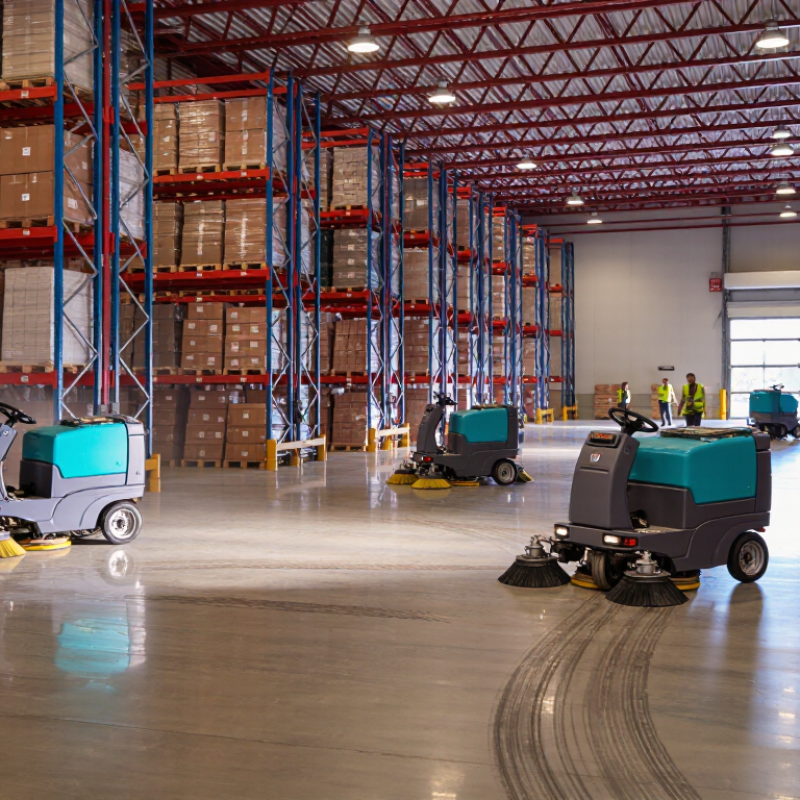
A busy warehouse rarely gives a cleaning crew a second chance at the same aisle. Dust gathers near pallet racks, while damp tire marks streak the concrete by loading doors. A Combination Sweeper Scrubber tackles loose debris and wet cleaning in one pass, helping operators cover more ground with fewer machine changes. But “two jobs in one” does not automatically mean the right machine for every site.

Floor-care equipment specialist Martin Keller puts the buying principle this way: “Choose for the floor you clean every day, not the floor you wish you had.” That practical reminder matters when comparing machines for sale. A narrow model may turn neatly around display fixtures, while a larger unit can save time across broad warehouse lanes. Buyers should check cleaning width, tank capacity, battery runtime, brush and squeegee access, and the availability of local service. Ask for a demonstration on the actual floor, if possible. Dust, oil residue, tight turns, and ramp transitions can expose limits that a product sheet misses.

This Top 10 guide compares combination sweeper scrubber machines by their intended settings, core features, and day-to-day operating considerations. It is not a promise that one model suits every facility. Specs can look impressive. The real test is a clean, safe route at the end of a shift. Some comparisons also depend on conditions we cannot fully capture here, so verify current specifications and service terms with the seller before buying.
Top 10 Combination Sweeper Scrubber Machines for Sale

What Is a Combination Sweeper-Scrubber Machine?

Top 10 Combination Sweeper Scrubber Machines for Sale

What Is a Combination Sweeper-Scrubber Machine?

A combination sweeper-scrubber machine picks up loose debris and washes hard floors in one pass. A rotating side brush or main broom gathers dust, grit, and small litter. A vacuum system collects the debris before water and cleaning solution reach the floor. Scrubbing brushes then loosen grime, while a rear squeegee pulls dirty water into a recovery tank. The result is a cleaner, drier surface with fewer separate cleaning steps. That matters in busy warehouses, retail spaces, and workshops.

These machines vary in size and layout. A compact walk-behind model may fit narrow aisles, while a ride-on unit can cover broad concrete floors faster. Check the cleaning width, tank capacity, brush condition, battery runtime, and parts availability when comparing machines for sale. Ask what floor types and debris loads the machine can handle. Fine dust, tangled packaging, or heavy spills may call for different settings or a separate cleanup step. The trade-off is real. More features can mean more maintenance, and a large tank adds weight. A careful inspection helps, but it cannot reveal every future repair. Some floors still need attention by hand.

How Sweeping and Scrubbing Functions Work Together

A combination sweeper scrubber handles dry debris and wet soil in one coordinated pass. On a warehouse aisle, side brushes gather dust, grit, and small packaging scraps before they reach the main brush. The scrub deck then loosens stuck-on marks with water and cleaning solution. A rear squeegee collects the dirty liquid into a recovery tank. One pass. Less residue.

The sequence matters. Sweeping first helps keep larger particles from spreading through the wash water or scratching the floor. BLS reported 2.6 million nonfatal workplace injury and illness cases in private industry in 2023; this figure is not limited to floor incidents, but it highlights the value of sound housekeeping. OSHA guidance also calls for walking-working surfaces to be kept clean and, where feasible, dry. For buyers comparing machines, check brush pressure, tank capacity, and how easily the squeegee follows uneven patches. A big tank sounds useful, yet a bulky machine may struggle in tight aisles. It is not magic: dried spills or overloaded debris can still require a slower pass, and operators may need to adjust water flow for the floor.

Key Types and Applications of Combination Machines

Combination sweeper scrubber machines pair debris pickup with wet-floor cleaning, but their formats suit different sites. Walk-behind units fit narrow aisles, small shops, and rooms crowded with tables. Operators can steer around chair legs and collect grit before the brushes spread it. Ride-on machines cover broad warehouse lanes, loading areas, and large retail floors with fewer turns. Compact stand-on models sit between the two, useful where doors and corridors restrict larger equipment. A trade-off remains: larger tanks reduce refill stops, yet add weight and can make tight turns awkward.

Application should guide the machine choice. In warehouses, cylindrical brushes can gather dust, packaging scraps, and small debris while scrubbing; smooth concrete benefits from consistent brush pressure. Supermarkets often need quieter operation and careful edge cleaning around checkout lanes. Hospitals and schools may prioritize maneuverability and controlled water use near occupied spaces. Safety deserves attention. The U.S. Bureau of Labor Statistics reported 865 fatal work injuries involving falls, slips, and trips in 2022. That figure is not specific to floor cleaning, but it underscores why water recovery and dry-down matter. Test the machine on a representative floor first. A polished showroom floor may behave differently from a gritty loading dock. And specifications do not tell the whole story.

Factors to Consider When Buying a Sweeper-Scrubber

When comparing combination sweeper-scrubbers, match the machine to the floor, debris, and daily route—not just its advertised cleaning width. Measure narrow aisles, doorways, ramps, and turning points. Check whether the brush deck reaches edges and whether the recovery tank can handle a full route without repeated dumping. A machine that fits the showroom may struggle around pallets. It happens.

Run a supervised site trial on the actual floor. Record cleaned area per hour, water refills, battery runtime, pickup quality, and how quickly the surface dries. Test both fine dust and larger debris; one pass may not handle both well. BLS May 2023 wage data reported a $17.27 median hourly wage for janitors and building cleaners. Use local labor costs to estimate whether reduced manual cleaning could justify the purchase, but don’t treat that figure as guaranteed savings. Real results depend on route length, training, maintenance, and downtime.

Inspect service access before buying. Ask how long routine brush, squeegee, and filter changes take, and check local parts availability. Compare noise, visibility, operator controls, and recovery performance on turns. BLS workplace safety data tracks injuries involving slips, trips, and falls, so drying behavior deserves a practical check. A damp patch can linger. Test it. A perfect-looking spec sheet is not a substitute for a slightly imperfect, honest trial on your own floor.

Top 10 Combination Sweeper-Scrubber Configurations: Theoretical Productivity

The chart compares generic cleaning widths and operating speeds, not specific products. Theoretical productivity is calculated as cleaning width (inches) × speed (miles per hour) × 440, giving square feet per hour. Actual productivity is lower because of turns, obstacles, overlap, and other site conditions. Use these figures as planning benchmarks when comparing machines for sale.

Top 10 Combination Sweeper-Scrubber Machines for Sale

Combination sweeper-scrubber machines sweep loose debris and wash floors in one pass. That can reduce repeat traffic through warehouses, loading areas, and large retail spaces. Yet “two functions in one” does not guarantee faster cleaning. Fine dust, damp litter, and tight aisles can still slow a shift.

The MarketsandMarkets Cleaning Equipment Market report estimated the broader market at USD 9.3 billion in 2023, with a forecast of USD 13.3 billion by 2028. This figure covers more than combination machines, so it signals general equipment demand—not sales of this specific category. For buyers comparing machines for sale, check practical details: cleaning width, debris-hopper capacity, tank size, turning radius, and how quickly operators can empty and refill the unit.

Test it on your own floor. A machine that looks efficient in a showroom may struggle around pallet legs or leave damp edges near a wall. Ask for a timed demonstration using the debris and floor conditions found at your site. Record the area cleaned per hour, water use, and time spent on refills. One awkward trade-off is worth noting: a larger machine may cover more floor, but it can be harder to maneuver in crowded spaces.

Top 10 Combination Sweeper-Scrubber Machines for Sale

The entries below describe representative machine configurations, not specific branded models. Specifications and prices vary by manufacturer, options, region, and condition. Cleaning productivity figures are theoretical estimates; actual results depend on layout, soil, operator, and working conditions. Price ranges are indicative new-equipment estimates in USD.

Rank Machine Configuration Typical Cleaning Width Estimated Productivity Solution Tank Debris Hopper Power Source Typical Application Indicative New Price (USD)
1 Compact walk-behind combination unit 450–550 mm (18–22 in) 1,800–2,800 m²/h 25–40 L 10–20 L Battery Small shops, clinics, and narrow aisles $4,000–$8,000
2 Mid-size walk-behind combination unit 600–700 mm (24–28 in) 2,500–4,000 m²/h 40–70 L 20–35 L Battery Schools, supermarkets, and medium-sized facilities $7,000–$14,000
3 Heavy-duty walk-behind combination unit 700–850 mm (28–33 in) 3,000–5,000 m²/h 70–100 L 30–50 L Battery Large retail floors, workshops, and warehouses $12,000–$22,000
4 Compact ride-on combination unit 700–850 mm (28–33 in) 4,000–6,500 m²/h 80–130 L 35–60 L Battery Medium warehouses and indoor loading areas $18,000–$32,000
5 Mid-size ride-on combination unit 900–1,100 mm (35–43 in) 5,500–9,000 m²/h 130–200 L 60–100 L Battery Distribution centers, factories, and large stores $28,000–$48,000
6 Large ride-on combination unit 1,100–1,300 mm (43–51 in) 7,000–11,000 m²/h 180–280 L 90–150 L Battery Large industrial floors and logistics facilities $40,000–$70,000
7 Industrial ride-on unit with expanded sweeping system 1,200–1,500 mm (47–59 in) 8,000–13,000 m²/h 200–350 L 120–220 L Battery or LPG, depending on configuration Heavy-duty industrial sites and large production halls $55,000–$95,000
8 Outdoor-capable ride-on combination unit 1,000–1,400 mm (39–55 in) 6,500–12,000 m²/h 150–300 L 100–200 L Battery or LPG, depending on configuration Covered yards, rough-finished concrete, and mixed indoor-outdoor areas $45,000–$90,000
9 High-capacity industrial combination unit 1,400–1,700 mm (55–67 in) 10,000–16,000 m²/h 300–450 L 180–300 L Battery or LPG, depending on configuration Very large warehouses, transport hubs, and industrial campuses $75,000–$130,000
10 Municipal or large-site combination sweeper-scrubber 1,600–2,000 mm (63–79 in) 12,000–20,000 m²/h 350–600 L 250–500 L Diesel, LPG, or battery, depending on configuration Large campuses, terminals, and expansive hard-surface areas $100,000–$200,000+

Smart Robotics brand movie

Watch video