China Top Cement Mixer Manufacturers and Suppliers?
China has become a major source of construction equipment, including reliable Cement Mixer solutions for global projects. Manufacturers serve contractors, rental companies, distributors, and ready-mix operations with varied production needs.
This guide examines leading Chinese manufacturers and suppliers through practical purchasing factors. These include drum capacity, mixing efficiency, motor performance, frame strength, and transport requirements. A small portable mixer may suit residential foundations. Larger diesel models can support remote roadwork or continuous site operations. Product photographs help, but verified specifications matter more.
Experienced buyers should review factory history, export records, quality controls, and available certifications. They should also request videos of working machines, not only polished showroom images. A dependable supplier explains maintenance intervals, spare-part availability, warranty coverage, and delivery terms clearly. Some suppliers offer excellent prices but limited technical support. That difference can become expensive during peak construction periods.
The guide also considers customization, including voltage, drum configuration, tires, paint, and labeling. Factory visits or independent inspections can reveal welding quality, component storage, and assembly discipline. No supplier is perfect. Even experienced manufacturers may show uneven quality across different models. Buyers should compare several quotations and test realistic operating conditions before committing. Careful verification creates a stronger basis for selecting China’s top Cement Mixer manufacturers and suppliers.
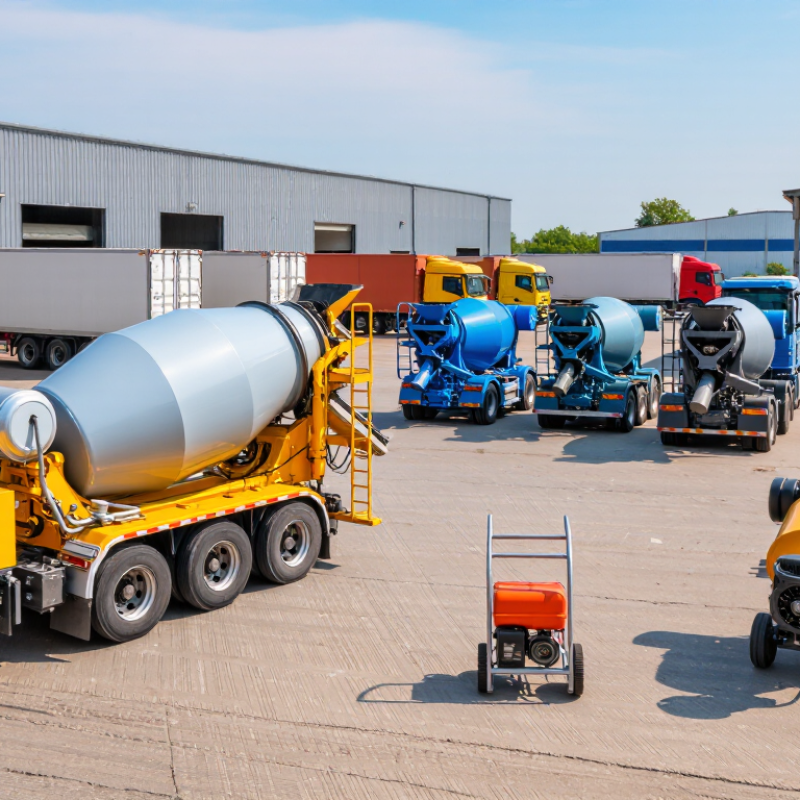
Table of Contents [Hide]
Types of Cement Mixers Made in China
China Top Cement Mixer Manufacturers and Suppliers?
Types of Cement Mixers Made in China
Chinese manufacturers produce several cement mixer types for construction sites, precast plants, and small repair projects. Drum mixers remain common because they are simple to operate and easy to move. Portable models often use wheels, compact frames, and electric motors for indoor or residential work. Some smaller units fit through narrow gates, though their output may be limited.
Twin-shaft mixers handle stiff concrete and industrial batches with strong mixing action. They are suitable for precast components, road materials, and demanding production schedules. Planetary mixers provide close, consistent blending around the mixing pan. This design often serves concrete plants producing blocks, tiles, and technical concrete products. Pan mixers work well with dry mixtures, but operators must control water carefully.
Truck-mounted transit mixers keep concrete moving between the batching plant and jobsite. Their rotating drums reduce early setting during transport, but traffic time still affects quality. Self-loading mixers combine loading, weighing, mixing, and discharge in one machine. They can help remote projects, although maintenance becomes more demanding. I have found that capacity figures need practical checking. A machine advertised for one cubic meter may deliver less usable volume after moisture, material shape, and loading habits are considered. Buyers should inspect drum thickness, motor protection, spare-part access, and test records before placing an order. Small details matter.
China Top Cement Mixer Manufacturers and Suppliers? - Types of Cement Mixers Made in China
| Mixer Type | Typical Capacity | Main Mixing Principle | Common Power Configuration | Typical Applications | Key Advantages and Considerations |
|---|---|---|---|---|---|
| Twin-Shaft Concrete Mixer | 1.0–6.0 m³ per batch | Two horizontal counter-rotating shafts fitted with mixing arms and paddles. | Electric motors with gear reducers; hydraulic systems may be used for discharge gates. | Commercial concrete plants, precast concrete, large infrastructure projects, and concrete products. | Fast and highly uniform mixing with strong aggregate movement. Requires accurate maintenance of paddles, liners, seals, and discharge components. |
| Planetary Concrete Mixer | 0.25–4.5 m³ per batch | Mixing tools rotate around their own axes while orbiting inside a vertical mixing pan. | Electric motor and planetary gearbox. | Precast elements, dry concrete products, pavers, blocks, tiles, and high-performance concrete. | Provides intensive mixing and good color or additive dispersion. The vertical design is suitable for relatively stiff and low-slump materials. |
| Pan Concrete Mixer | 0.1–2.0 m³ per batch | Vertical mixing tools rotate inside a stationary circular pan. | Electric motor with belt, chain, or gear transmission. | Small precast facilities, laboratories, construction sites, blocks, and mortar production. | Compact and comparatively simple to operate. Mixing performance depends on tool arrangement, fill level, and material moisture. |
| Single-Shaft Horizontal Mixer | 0.5–4.0 m³ per batch | One horizontal shaft rotates paddles or blades through the material. | Electric motor with gearbox; pneumatic or hydraulic discharge options are available. | Ready-mix concrete, stabilized soil, mortar, and general batching operations. | Versatile and generally easier to maintain than twin-shaft equipment. It may have lower throughput and mixing intensity for demanding formulations. |
| Drum Concrete Mixer | 0.1–9.0 m³ per batch | A rotating drum lifts and tumbles materials using internal blades. | Electric motor, diesel engine, or hydraulic drive depending on the model. | Small building projects, rural construction, repair work, and mobile batching. | Simple construction and flexible operation. Tilting or reversing drums may require more manual control and usually provide less intensive mixing than forced-action mixers. |
| Tilting Drum Mixer | 0.1–1.5 m³ per batch | A rotating drum mixes materials and tilts to discharge the batch. | Electric motor or diesel engine with mechanical or hydraulic tilting. | Construction sites where rapid loading and discharge are needed. | Convenient discharge and relatively low operating complexity. The machine needs stable ground and sufficient clearance for drum movement. |
| Reversing Drum Mixer | 0.1–1.0 m³ per batch | The drum rotates in one direction for mixing and reverses direction to discharge. | Electric motor or diesel engine with reversing transmission. | Small and medium construction projects, concrete repair, and remote work locations. | Does not normally require drum tilting. Correct blade condition and drum rotation control are important for consistent discharge. |
| Self-Loading Mobile Concrete Mixer | 1.0–6.5 m³ per batch | A vehicle-mounted or self-propelled drum loads, weighs, mixes, transports, and discharges materials. | Diesel engine, hydraulic transmission, hydraulic steering, and hydraulic drum drive. | Remote construction, road projects, rural infrastructure, and sites without a fixed batching plant. | Combines batching and transportation in one machine. Payload, road regulations, axle load, water metering, and operator visibility should be checked before purchase. |
| Truck-Mounted Transit Mixer | 2.0–16.0 m³ per load | A continuously rotating spiral-bladed drum keeps fresh concrete agitated during transportation. | Truck diesel engine with hydraulic drum drive. | Ready-mix delivery from a central batching plant to construction sites. | Suitable for transporting fresh concrete over practical delivery distances. Actual usable volume depends on truck chassis, axle limits, concrete density, and local road regulations. |
| Continuous Concrete Mixer | Approximately 5–60 m³ per hour | Aggregates, cement, water, and additives are fed continuously and mixed while moving through the mixing chamber. | Electric, diesel, or hydraulic drive depending on the equipment configuration. | Road foundations, soil stabilization, shotcrete support, mining, and large-volume placement. | Supports continuous production and can reduce batch interruptions. Accurate proportioning and stable material feeding are essential for uniform output. |
| Mortar Mixer | 0.1–2.0 m³ per batch | Paddles, shafts, or rotating blades blend cement, sand, water, and chemical admixtures. | Electric motor is common; diesel versions are available for remote work. | Plastering mortar, masonry mortar, floor screed, tile adhesive, and repair compounds. | Designed for finer materials and smaller batches. It should not be selected solely by volume because mortar viscosity and moisture content affect motor load. |
| Dry Mortar Mixer | 0.5–8.0 tonnes per batch | Horizontal or vertical forced-action mixing of dry powders and granular materials. | Electric motor with gear reducer; pneumatic conveying and automated dosing may be integrated. | Dry-mix mortar plants, putty powder, tile adhesive, insulation mortar, and specialty construction chemicals. | Provides controlled blending of dry ingredients. Dust collection, wear protection, additive dosing accuracy, and cleaning access are important selection criteria. |
| Laboratory Concrete Mixer | 20–200 litres per batch | Small-scale pan, planetary, or drum mixing with controlled material quantities. | Electric motor with variable-speed or fixed-speed drive. | Material testing, mix design, research, quality control, and university laboratories. | Offers repeatable small-batch testing and lower material consumption. It is not intended to represent the throughput or wear conditions of full-scale production equipment. |
Reference note: Capacities and output ranges are typical industry ranges for equipment manufactured in China and may vary by configuration, material properties, batch density, mixing time, and applicable safety or road regulations. Always verify the technical specification, test results, spare-parts support, and compliance documentation for the exact model before purchasing.
Customers




Smart Robotics brand movie
Watch video