Top 10 Robotic Process Automation Software Options You Should Know About

In today's fast-paced business environment, organizations are constantly seeking ways to enhance efficiency and reduce operational costs. One remarkable solution that has gained significant traction is Robotic Process Automation (RPA) software. According to renowned RPA expert, John Thompson, "Robotic process automation software is revolutionizing how businesses operate by streamlining repetitive tasks, allowing human employees to focus on more strategic initiatives." This transformative technology empowers companies to automate mundane processes, thereby increasing productivity and accuracy.

As the demand for RPA grows, choosing the right robotic process automation software has become critical for businesses aiming to stay competitive. With a myriad of options available, organizations need to navigate through the offerings to identify the tools that best meet their needs. This article explores the top ten robotic process automation software options that you should know about, each with unique features and advantages that can facilitate extraordinary outcomes in your operations. Whether you are a small startup or a large enterprise, understanding these software solutions is essential for driving innovation and optimizing workflows in the digital age.

Top 10 Robotic Process Automation Software Options You Should Know About

Overview of Robotic Process Automation (RPA) and Its Benefits

Robotic Process Automation (RPA) is a transformative technology that automates repetitive and rule-based tasks within business processes. By utilizing software robots, organizations can streamline operations, enhancing efficiency while minimizing human error. RPA frees up employees from mundane tasks, allowing them to focus on more strategic and creative efforts that add greater value to the organization. This shift not only boosts productivity but also elevates job satisfaction among employees as they engage in more meaningful work.

The benefits of RPA extend beyond mere task automation. It promotes significant cost savings, enabling organizations to operate with greater agility and responsiveness. Additionally, RPA can improve compliance by maintaining accurate logs of all automated tasks, ensuring that businesses meet regulatory requirements consistently. As companies increasingly adopt RPA, they find that it is not just a tool for efficiency but a catalyst for digital transformation, paving the way for innovations and improved customer experiences. Embracing RPA is not merely a trend; it represents a strategic approach to stay competitive in an ever-evolving business landscape.

Top 10 Robotic Process Automation Software Options You Should Know About

Software Option Key Features Benefits User Rating
Option A Easy integration, AI capabilities, Scalability Increased efficiency, Cost savings, Improved accuracy 4.8/5
Option B Cloud deployment, Analytics, Security features Flexibility, Data insights, Enhanced security 4.5/5
Option C User-friendly interface, Customizable workflows Rapid deployment, User satisfaction 4.7/5
Option D Multi-bot support, On-premises and Cloud Scalable solutions, Cost efficiency 4.6/5
Option E Integration with existing tools, Monitoring dashboard Streamlined operations, Real-time insights 4.4/5
Option F Robust APIs, Advanced reporting Enhanced analytics, Better decision-making 4.9/5
Option G AI-driven bots, Collaborative features Improved collaboration, Efficiency gains 4.3/5
Option H Cross-platform support, Task automation Increased productivity, Time savings 4.5/5
Option I Cognitive capabilities, Process mining Higher accuracy, Data-driven decisions 4.8/5
Option J Seamless user experience, Continuous improvement Sustained efficiency, Enhanced user experience 4.7/5

Criteria for Selecting the Best RPA Software for Your Organization

When selecting the best Robotic Process Automation (RPA) software for your organization, it’s essential to consider several key criteria that can significantly influence the effectiveness of automation initiatives. According to a report by Gartner, over 60% of organizations that implement RPA see a notable improvement in operational efficiency within the first 12 months. Therefore, having a user-friendly interface and strong support documentation are crucial factors that can help teams adapt quickly to new tools.

Another important criterion is the scalability of the RPA solution. As businesses grow and processes evolve, the ability to easily scale up automation efforts can determine long-term success. A recent study by McKinsey reveals that companies that leverage scalable RPA solutions can increase productivity by up to 30%, demonstrating the financial benefits of investing in adaptable technology. Furthermore, ensuring that the software integrates seamlessly with existing systems is vital, as poor integration can hinder the potential benefits of automation and lead to higher operational costs.

Top 10 Robotic Process Automation Software Options

This bar chart illustrates the comparative ratings of various criteria that organizations should consider when selecting Robotic Process Automation (RPA) software. The scale ranges from 1 to 10, with higher numbers indicating better performance in that category.

Top 10 RPA Software Solutions: Features and Use Cases

Top 10 Robotic Process Automation Software Options You Should Know About

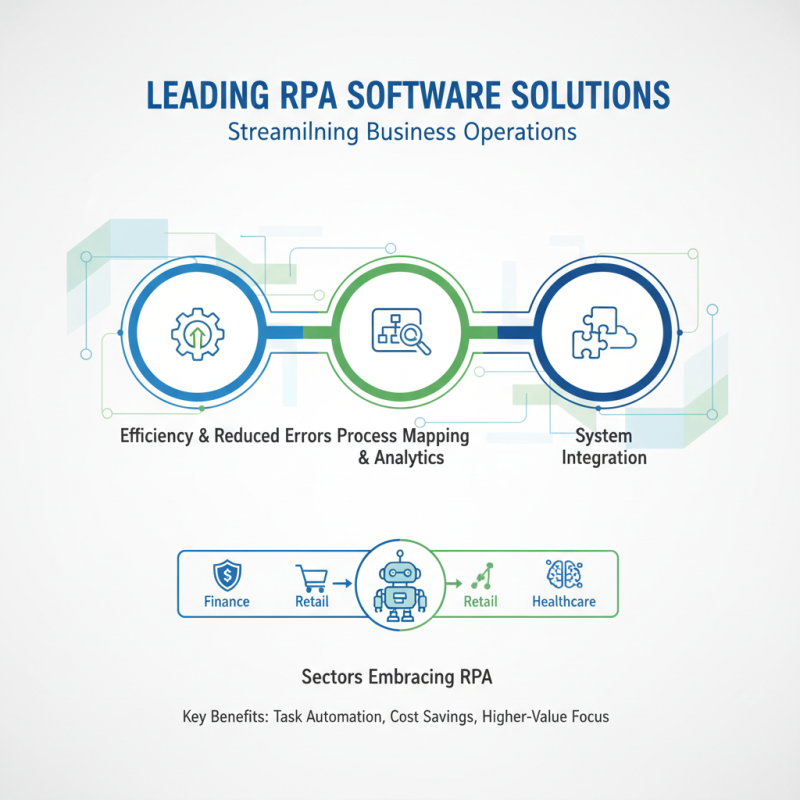
In today's rapidly evolving landscape of robotic process automation (RPA), several leading software solutions have emerged, each tailored to meet distinct business needs. These solutions offer various features, from process mapping and analytics to integration capabilities with existing systems. Organizations are increasingly leveraging RPA tools to enhance efficiency, reduce errors, and streamline operations. For instance, sectors such as finance are particularly embracing RPA to automate routine tasks, enabling employees to focus on higher-value activities.

As the market continues to mature, the integration of artificial intelligence (AI) with RPA systems is gaining momentum. Businesses are witnessing the emergence of intelligent agents that not only automate processes but also make decisions based on data analysis. This evolution, highlighted by the recent trends in AI-driven capabilities, suggests a shift towards more sophisticated automation solutions. The ongoing discussions around the effectiveness of RPA Agents signify their potential as a comprehensive solution for enterprises looking to harness the power of automation alongside AI, ultimately driving digital transformation efforts across various industries.

Comparative Analysis of RPA Software: Pros and Cons

When evaluating Robotic Process Automation (RPA) software, it's essential to weigh the pros and cons of each option to ensure the best fit for your organization. Some popular RPA tools such as UiPath provide a user-friendly interface and extensive support resources, making it easier for businesses to implement automation readily. On the upside, this accessibility can lead to quicker deployment times and lower operational costs. However, organizations may find that such tools come with significant licensing fees, which can be a drawback for smaller enterprises with limited budgets.

Another contender, Blue Prism, is known for its robust security features and scalability, which suits larger organizations with complex workflows. The pro here is that its security protocols can mitigate risks associated with automated processes. Nevertheless, the learning curve for Blue Prism can be steep, potentially leading to a longer time to value as teams adapt to the software. In contrast, tools like Automation Anywhere offer a balanced approach with a wide range of features and flexible pricing, appealing to companies of various sizes. Yet, users might struggle with integration issues, highlighting the importance of thorough pre-implementation testing. By carefully analyzing these advantages and disadvantages, businesses can make informed decisions about their RPA software investments.

Future Trends in Robotic Process Automation Technology

As the landscape of Robotic Process Automation (RPA) continues to evolve, the market is projected to reach approximately $139.7 million in 2024 and is expected to grow to around $374.1 million by 2032, reflecting a robust compound annual growth rate (CAGR) of 13.1%. This significant growth emphasizes the increasing reliance on automation technologies across industries, driven by the need for enhanced efficiency and reduced operational costs.

Key trends shaping the future of RPA technology include the integration of embodied AI, which enhances interaction between AI systems and the physical world. This transition marks a shift from purely data-driven approaches to more interactive and adaptive systems capable of cognitive evolution through physical engagements. Furthermore, advancements in IT technologies are enabling continuous optimization of production processes, ensuring that industries can respond effectively to future challenges. As large models capable of controlling terminal devices emerge, they are poised to bring transformative changes to the RPA sector, redefining how businesses approach workflow automation and optimization.

Smart Robotics brand movie

Watch video