Magnetic Starter technology remains a practical foundation for industrial motor control. It combines contactors, overload protection, and control circuits in a compact assembly. Inside a factory panel, its role is simple but critical: start the motor, stop it safely, and respond to overload conditions.
The U.S. Department of Energy’s Industrial Motor Systems Market Assessment reports that motor-driven equipment can consume about 60% to 70% of industrial electricity. The International Energy Agency also identifies electric motor systems as major global electricity consumers. These figures explain why starter selection affects operating costs, maintenance schedules, and production reliability. Small choices matter.
As motor-control author Austin Hughes wrote, “The induction motor is the workhorse of industry.” A suitable Magnetic Starter supports that workhorse with dependable switching and thermal protection. IEC 60947-4-1 also provides an important reference for low-voltage contactors and motor starters. Compliance alone, however, does not guarantee good performance. Installation quality, enclosure design, ambient temperature, and service access still matter.
This guide examines the Top 10 Magnetic Starter Manufacturers Worldwide through practical criteria. These include product range, protection features, certification coverage, distribution strength, technical support, and field reputation. Rankings can change by region and application. That is worth admitting.
A starter that performs well in a clean workshop may struggle in a dusty plant or humid processing area. Buyers should compare real operating conditions, not only catalog ratings. The manufacturers discussed here offer different strengths, and none is perfect for every motor-control project.
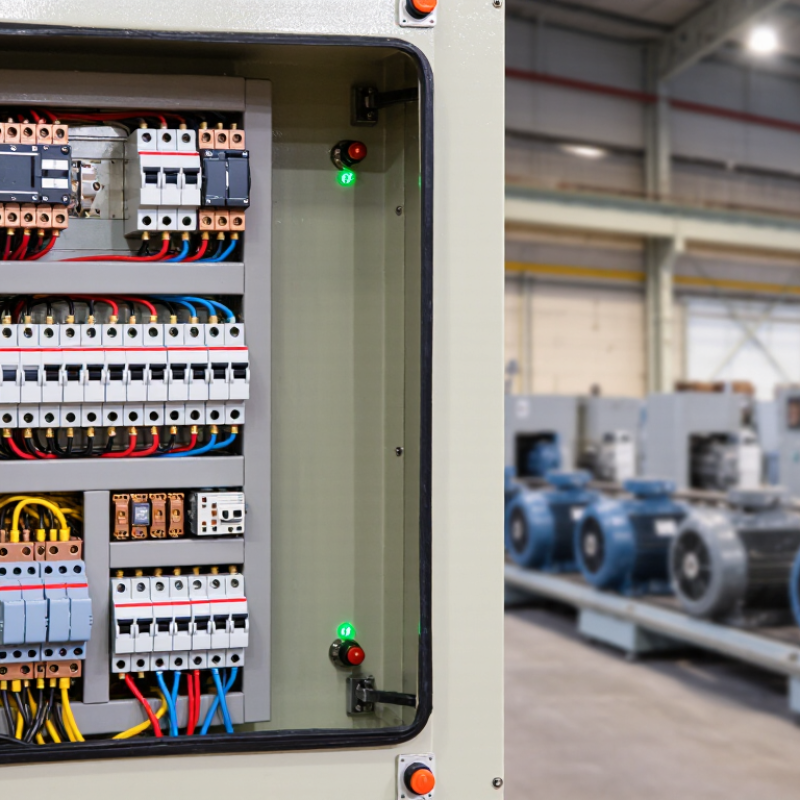
Magnetic starters remain practical choices in global motor-control panels, especially where simple switching and overload protection matter. IEC 60947-4-1 defines the requirements for contactors and motor-starters used in low-voltage systems. Its AC-3 duty category covers squirrel-cage motors during starting and switching off while running. That distinction matters. AC-3 is not a decorative label.
A 690 V rating can mislead. It usually identifies the rated operational voltage, but coordination, insulation, short-circuit protection, and utilization category still require verification. The starter must match motor current, starting frequency, enclosure temperature, and control voltage.
The U.S. Department of Energy’s 2021 Motor Systems Market Assessment estimates that motor-driven equipment consumes about 69% of industrial electricity in the United States. Small selection errors can therefore create large operating costs. The IEA also highlights motor-system efficiency as a major industrial energy opportunity. Yet efficiency claims are sometimes too broad. A starter alone does not make a motor efficient.
Tips: Check AC-3 current at the actual 690 V application. Confirm overload adjustment range, SCCR, terminal clearances, and local certification. Ask for test evidence, not only catalog figures. A practical review should also inspect switching frequency and ambient temperature. These details are easy to miss. For a worldwide manufacturer shortlist, compare documented IEC compliance, production traceability, and field support. I would slow down here. A lower purchase price may hide replacement delays, weak coordination data, or unsuitable accessories.
In 2024, demand for magnetic starters remains closely tied to industrial motor control. Factory upgrades, water treatment, HVAC systems, and agricultural pumping support steady orders. Many control cabinets still rely on contactors, overload relays, and compact enclosures. That combination is practical and familiar.
Market forecasts commonly place magnetic starter growth near 5% to 7% annually through the early 2030s. However, estimates differ because researchers classify motor protection products differently. Forecasts are not perfectly comparable. The strongest volume is expected in Asia-Pacific, supported by factory construction, infrastructure spending, and expanding automation. China, India, Southeast Asia, and South Korea remain important production and consumption centers.
North America shows demand from warehouse automation, commercial buildings, and replacement projects. Europe is more focused on energy efficiency, machine modernization, and stricter equipment performance requirements. The Middle East and Africa may grow through water infrastructure, cooling systems, and process industries. Latin America presents opportunities in mining, food processing, and agricultural equipment, though currency pressure can delay purchases.
The leading ten manufacturers are likely to compete through thermal protection accuracy, short-circuit coordination, compact designs, and dependable supply. Field experience suggests that reliability matters more than a low purchase price. A starter that trips repeatedly can stop an entire production line. Regional certification, service access, and spare-part availability also influence purchasing decisions. The outlook is positive, but construction cycles and component shortages could still weaken near-term forecasts.
| Position | Anonymized Manufacturer Profile | Typical Product Scope | Primary Demand Regions | 2024 Demand Signal | 2024–2029 Planning CAGR | Key Competitive Strength |
|---|---|---|---|---|---|---|
| 1 | Global industrial controls supplier | IEC motor starters, contactors, overload relays, control panels | Europe, North America, East Asia | High replacement demand from aging industrial equipment | 5%–7% | Broad certification coverage and established distribution |
| 2 | Low-voltage automation specialist | Compact starters for pumps, fans, conveyors, and compressors | China, India, Southeast Asia | Strong demand linked to factory automation and infrastructure | 6%–9% | High-volume production and competitive unit pricing |
| 3 | North American motor-control supplier | NEMA-style starters, magnetic contactors, overload protection | United States, Canada, Mexico | Stable commercial, HVAC, water, and manufacturing demand | 4%–6% | Compatibility with NEMA installation practices |
| 4 | European modular-control producer | DIN-rail starters, electronic overload relays, safety accessories | Western Europe, Central Europe, Middle East | Demand supported by energy-efficiency upgrades | 4%–7% | Compact form factors and IEC conformity |
| 5 | Asia-Pacific electrical equipment producer | General-purpose starters for machinery and process equipment | China, Japan, South Korea, ASEAN | High unit demand from machinery exports and new plants | 6%–8% | Localized supply chains and broad current ratings |
| 6 | Process-industry control specialist | Starters for water treatment, chemicals, food processing, and utilities | North America, Europe, Gulf states | Moderate-to-high project demand with emphasis on reliability | 5%–7% | Application engineering and harsh-environment options |
| 7 | OEM-focused control manufacturer | Preassembled starters for machine builders and packaged systems | Germany, Italy, China, United States | Demand follows machinery production and export activity | 4%–7% | Customization, fast integration, and short lead times |
| 8 | Regional electrical-distribution supplier | Standard starters for commercial buildings, workshops, and agriculture | Latin America, Africa, South Asia | Growth driven by electrification and construction activity | 7%–10% | Local availability and application support |
| 9 | Energy-efficiency control specialist | Reduced-energy-coil starters and coordinated motor-control assemblies | Europe, Japan, Australia, North America | Replacement demand supported by efficiency regulations | 5%–8% | Lower panel energy loss and digital monitoring options |
| 10 | Value-oriented private-label producer | Entry-level IEC starters, contactors, and thermal overload relays | Emerging markets and price-sensitive industrial segments | Steady volume demand where initial equipment cost is decisive | 5%–9% | Cost efficiency and flexible private-label manufacturing |
Top 10 Magnetic Starter Manufacturers Worldwide
Ranking magnetic starter manufacturers requires more than checking catalog size. Quality should begin with IEC 60947-4-1 testing, covering contactors and motor starters for low-voltage applications. Factory experience also matters. A starter should close cleanly, control motor current, and survive repeated switching in dusty control cabinets.
Capacity is measured through verified production lines, delivery records, spare-part availability, and tested overload-relay ranges. The IEA’s Electricity 2024 report expects global electricity demand to grow by about 4% annually through 2026. That growth increases pressure on manufacturers to deliver consistent volumes, not occasional large shipments. A practical ranking might assign 40% to product quality, 30% to production capacity, and 30% to certification and service evidence. The weighting is not perfect. Application risk can change the priorities.
Tips: Request test reports, factory audit dates, and batch traceability. ISO 9001 certification supports process control, but it does not prove every starter performs equally. The ISO Survey 2022 recorded more than 1.2 million ISO 9001 certificates worldwide, showing how common certification has become. Therefore, buyers should check the certificate scope, issuing body, and current validity. Look for thermal endurance data, short-circuit coordination, and clear technical drawings. Real field feedback remains valuable. A polished certificate cannot replace reliable switching after years of operation.
Top 10 Magnetic Starter Manufacturers Worldwide
The top ten magnetic starter manufacturers serve industrial automation, water treatment, HVAC, mining, and process equipment markets. Their product ranges commonly include contactors, thermal overload relays, motor protection breakers, reversing starters, and enclosed control assemblies. Some manufacturers focus on compact starters for machine builders. Others emphasize heavy-duty units for pumps, conveyors, and compressors.
Field data matters. I compare manufacturers through rated operational current, coil voltage options, short-circuit withstand capacity, enclosure protection, and overload adjustment range. AC-3 ratings reveal motor-switching performance, while IP ratings indicate resistance to dust and moisture. Strong suppliers usually provide clear wiring diagrams, replacement parts, test reports, and regional technical support. Certification coverage also affects project acceptance across export markets.
Ratings can mislead. A starter with a high current rating may perform poorly under frequent starts, high ambient temperatures, or unstable voltage. My assessment is practical, but not flawless; installation quality often changes the result. In one factory review, loose terminals created more heat than the starter design itself. The leading manufacturers therefore combine reliable hardware with better documentation, diagnostics, and service training. Smart models add communication functions, yet basic electromechanical starters remain easier to inspect and repair in demanding facilities.
Common IEC AC-3 rated operational-current tiers found across global magnetic-starter product portfolios.
The chart uses standardized and widely marketed IEC AC-3 current ratings for motor starters at approximately 400 V. Actual motor power, enclosure design, coil voltage, overload range, and short-circuit coordination vary by application and product series.
Top 10 Magnetic Starter Manufacturers Worldwide
Magnetic starters support motors from 0.37 kW to 1,000 kW across demanding industries. They appear in pumps, compressors, conveyors, fans, mixers, and machine tools. Small motors often serve water systems or packaging lines. Larger units drive crushers, cooling plants, and production conveyors.
The International Energy Agency reports that motor-driven systems consume more than 40% of global electricity. The U.S. Department of Energy’s 2021 Motor Systems Market Assessment estimates that motors use about 68% of industrial electricity in the United States. These figures make starter selection an energy and reliability decision, not merely a control-panel detail.
A practical selection checks rated current, starting method, overload protection, enclosure rating, and short-circuit coordination. IEC 60947-4-1 provides a key reference for electromechanical contactors and motor starters. At 1,000 kW, a conventional starter may not be the best fit. Reduced-voltage or electronic solutions can limit mechanical stress and voltage dips. Yet this is not universal. Site conditions matter more than catalogue size. Dust, humidity, frequent starts, and long cable runs can change the specification. A missed overload setting may quietly damage a motor before operators notice. Experience still matters. Data sheets alone are insufficient.
Watch video