7 Tips for Choosing the Best Auto Pipe Welding Machine?
Choosing the right Auto Pipe Welding Machine can influence weld quality, production speed, and long-term operating costs. In a busy fabrication shop, the wrong machine may create uneven seams, excessive rework, or difficult maintenance. A suitable model should match pipe diameter, wall thickness, material, joint design, and required welding position. These details matter more than an impressive catalog photograph.
Real workshop experience shows that automation alone does not guarantee reliable results. Operators still need clear controls, stable clamping, accurate alignment, and practical training. Power requirements, cooling systems, consumable compatibility, and service support also deserve careful attention. A machine that performs well during a short demonstration may behave differently during continuous production. That possibility should not be ignored.
This guide presents seven practical tips for evaluating an Auto Pipe Welding Machine. It considers welding accuracy, control systems, productivity, safety features, maintenance access, and total ownership cost. Manufacturer qualifications and documented testing can provide valuable confidence. However, specifications should be verified against actual production conditions, not accepted blindly. A lower purchase price may become expensive when downtime increases. A premium machine may also be unnecessary for simple, low-volume work. The best decision comes from comparing measurable needs with proven performance. Small details matter. A clean weld, steady travel speed, and accessible replacement parts often reveal more than marketing language. Some choices may still involve uncertainty, so careful trials and honest feedback remain essential.
Understanding Auto Pipe Welding Machines and Their Main Applications
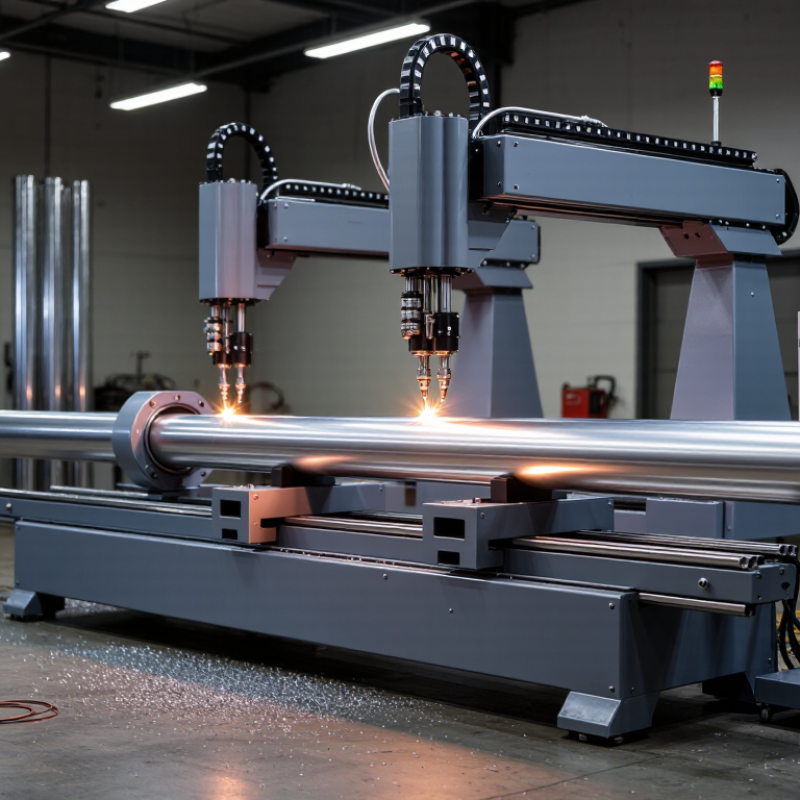
Auto pipe welding machines automate torch movement around a pipe joint. They control travel speed, welding current, rotation, and shielding gas. This reduces hand movement and helps produce more uniform welds. Consistency matters.
In practical workshops, these machines serve process piping, water treatment systems, power facilities, food plants, and ship construction. Orbital welding models are useful for stainless steel tubes and repeatable joints with limited access. Larger systems can handle thicker carbon steel pipes and long fabrication runs. The best application depends on pipe diameter, wall thickness, material, joint design, and production volume. A machine made for thin tubing may struggle with heavy pipe.
Choosing equipment requires more than checking its maximum diameter. Examine the welding process, cooling method, torch adjustment, power stability, and programming controls. Data recording can support quality checks and reveal changes in current or travel speed. Qualified operators still matter. Automation does not correct poor fit-up, contamination, or incorrect gas flow. I have seen accurate machines produce weak joints because preparation was rushed. That lesson is easy to overlook. Buyers should also check training, spare parts, maintenance access, and technical support. A slightly slower machine may be the more reliable choice when settings are easier to verify and repeat.
Defining Welding Requirements Before Selecting a Machine
7 Tips for Choosing the Best Auto Pipe Welding Machine?
Defining Welding Requirements Before Selecting a Machine
Choosing an automatic pipe welding machine starts with the joint, not the machine. Measure the pipe diameter, wall thickness, material grade, and joint design. These details control torch access, heat input, travel speed, and filler-wire needs. A machine suited to thin stainless steel may struggle with thick carbon steel. Do not guess here.
In practical welding work, I record the full production cycle before comparing equipment. Note the number of joints per shift, required weld positions, and acceptable dimensional variation. Check whether the pipe rotates or remains fixed. Also examine tack-weld quality and fit-up consistency. Poor alignment can make advanced automation look unreliable. It is an easy mistake.
The control system should support repeatable parameters and clear adjustment records. Look for stable arc control, accurate travel movement, and suitable cooling capacity. Confirm that operators can access maintenance points without excessive downtime. Ask a qualified welding engineer to review procedures, inspection methods, and safety controls. Independent verification strengthens purchasing decisions. Still, a specification sheet cannot reveal every workshop problem. Trial welding with representative pipe sections is often more informative. Record defects, setup time, operator feedback, and cleanup effort. Leave room for improvement. Requirements may change after the first production run.
Comparing Automation Levels, Welding Methods, and Pipe Compatibility
Choosing an auto pipe welding machine starts with the joint, not the brochure. In field trials, I check whether the system supports stable travel speed around curved surfaces. Low-automation machines need closer operator control and suit varied, short-run work. Semi-automatic equipment reduces repetitive torch movement while preserving manual adjustment. Fully automatic systems can improve repeatability, but they demand accurate setup and disciplined maintenance. That trade-off is easy to underestimate.
The welding method must match wall thickness, material, and production pace. GTAW offers clean, controlled root passes, especially on stainless steel and critical lines. GMAW can increase deposition speed during longer production runs. FCAW may handle outdoor conditions better, but slag removal adds labor. Some projects combine methods instead of forcing one process everywhere. A machine supporting suitable power, wire, shielding gas, and torch controls is more useful than a feature-heavy model.
Pipe compatibility requires more than a diameter range. Check the outside diameter, wall thickness, joint design, position, and available clearance. Narrow trenches expose weaknesses in bulky carriages. Misalignment also matters. Even a small fit-up error can produce an unreliable root. Ask for test welds using your pipe and consumables. Review recorded parameters, inspection access, and service response. I once favored a faster unit, then found its clamp changes slowed every setup. That mistake was expensive. Operators may also need time to trust automation.
Checking Maintenance Needs, Supplier Support, and Overall Value
Choosing an auto pipe welding machine should begin with its maintenance demands, not its advertised speed.
In my experience, accessible torch assemblies, clear error codes, and standard wear parts reduce downtime. Ask how often operators must clean sensors, replace liners, or recalibrate tracking systems. Simple maintenance matters. A machine that needs specialist tools for every adjustment can become expensive during a busy production week. Check weld logging, joint alignment, pipe diameter range, and control stability under changing wall thickness. These details show practical capability better than a high output figure.
Supplier support also shapes the machine’s real value.
Request installation training, response times, spare-part availability, and written service procedures. Speak with users handling similar pipe materials and production volumes. Their experience may reveal problems that brochures omit. Calculate total ownership cost, including energy use, consumables, software updates, training, and planned service. The cheapest quotation is not always economical. I once underestimated the cost of delayed technical support, and that mistake affected scheduling for several days. No machine is perfect. Leave room for operator feedback, maintenance records, and future process changes. A reliable supplier should discuss limitations openly, rather than promise effortless performance. Choose equipment that your team can inspect, repair, and operate confidently over many years.