7 Tips for Choosing Shot Blasting Tools
Choosing Shot Blasting Tools is not just a question of machine price. The right setup must match the part, required surface condition, production rate, and available workspace. A small bracket and a long steel beam do not need the same blast pattern. Nor do they necessarily use the same abrasive or handling system.
The scale of the problem is significant. NACE International and CEBR’s 2016 IMPACT study estimated global corrosion costs at US$2.5 trillion annually, equal to 3.4% of global GDP. The report also noted that better corrosion management could reduce costs by 15–35%. These figures describe corrosion broadly; they are not a direct measure of shot blasting’s savings. Still, they show why dependable surface preparation deserves careful attention. A missed corner or uneven finish can create rework. Small details matter.
This guide presents seven practical points for evaluating equipment, from workpiece size and blast method to abrasive choice, dust collection, maintenance, and operator needs. It also considers throughput and finish requirements, since a machine that runs quickly may still produce inconsistent results. Check the machine’s specifications against your actual parts and process. Ask suppliers for application-specific evidence, not just headline capacity. And be realistic: a checklist cannot replace a production trial. That is worth remembering.
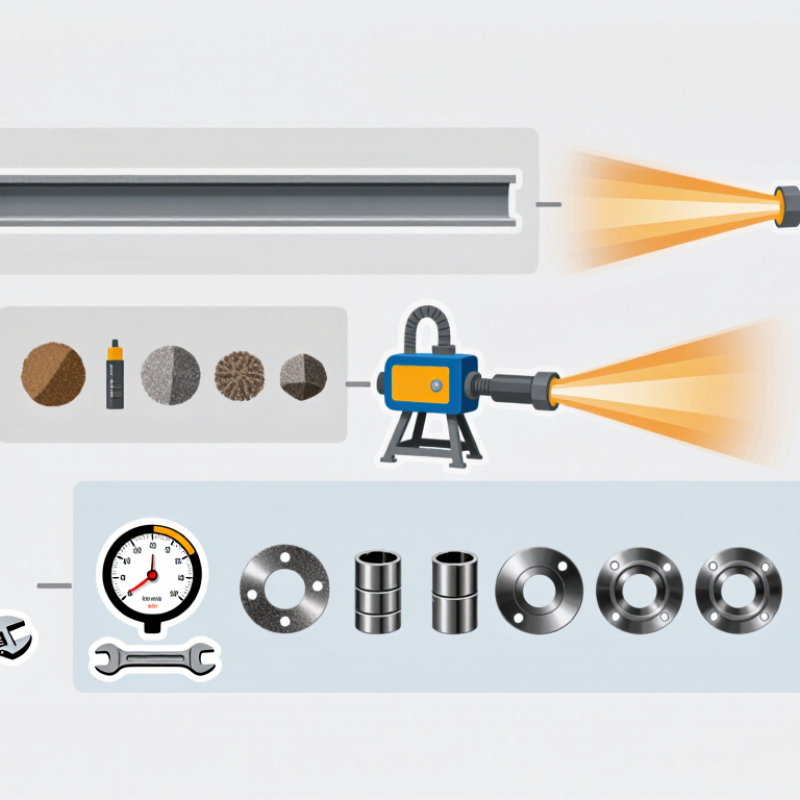
Table of Contents [Hide]
Define the Surface Preparation Goal and Required Finish
Before choosing shot blasting tools, define what the surface must do: support a coating, remove mill scale, or prepare steel for inspection. A bright finish is not automatically a suitable one. Set the required cleanliness grade and surface profile from the coating specification, then refer to ISO 8501-1 for visual cleanliness and ISO 8503 for profile assessment. These standards guide inspection; they do not replace project requirements. It is easy to over-specify. A profile that is too shallow may hinder adhesion, while an unnecessarily deep profile can consume more coating.
Match the abrasive and machine settings to the target. Round shot generally peens the surface; angular grit cuts a sharper profile. A trial panel can reveal how the chosen media performs. Test one panel. Inspect weld toes, edges, and flat areas, then verify cleanliness and measure the profile with the specified method. Record abrasive size, wheel speed, and travel rate; settings that work on a flat plate may miss recessed areas. NACE International’s 2016 IMPACT study estimated global corrosion costs at US$2.5 trillion, or 3.4% of global GDP, and identified potential savings of 15–35% through improved corrosion control. That estimate covers many practices, not blasting alone, but it underscores the value of a measurable preparation target.
Customers




Smart Robotics brand movie
Watch video