Top 10 Tips for Choosing the Right Robotic Arm for Your Needs?
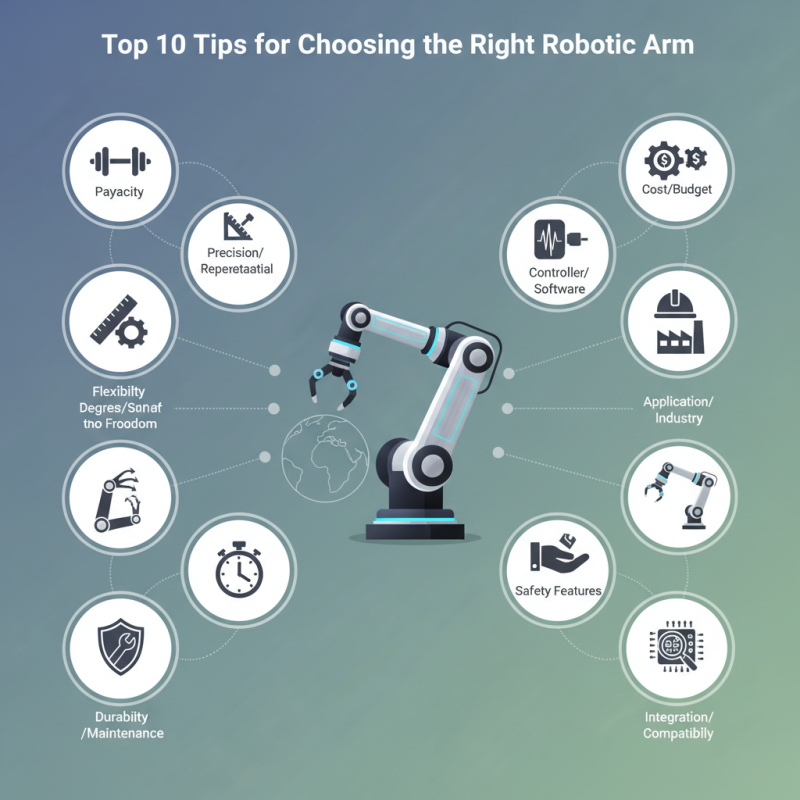
In the rapidly evolving field of robotics, choosing the right robotic arm is vital. According to Dr. Emily Chen, a leading expert in automation technology, "Selecting a robotic arm requires careful consideration of specific needs and applications." Her insights reflect the importance of understanding various factors like payload capacity, precision, and flexibility.
Many industries have unique requirements for robotic arms. For instance, manufacturing may prioritize speed and durability, while healthcare might focus on precision and safety. With numerous options available, the task can feel overwhelming. It's essential to assess your needs and match them with the right features.
Reflecting on technological advancements, one can see both the opportunities and challenges involved. Certain robotic arms excel in specific tasks, but may lack versatility. Striking a balance between function and cost is critical. Making an informed choice ensures that the robotic arm effectively meets operational goals and enhances productivity.
Understanding Your Application Requirements for a Robotic Arm
When selecting a robotic arm, understanding your application requirements is crucial. Different tasks demand specific functionalities. Assess your needs before making a decision. For example, consider payload capacity, reach, and precision. Each application is unique.
Tip: Identify the primary task of the robotic arm. Whether it’s assembly, welding, or packaging, the task guides many decisions. Evaluate the weight of objects it will handle. A robotic arm meant for light tasks will not perform well with heavy payloads. This mismatch can cause failures.
Another key factor is the environment where the robotic arm will operate. Will it be in a clean, sterile environment, or exposed to dust and debris? Choosing a robust arm suited for harsh conditions is essential.
Tip: Invest time in understanding programming requirements. Some arms require advanced programming skills, while others offer user-friendly interfaces. If your team lacks coding experience, a simpler system may be preferable. Making the right choice now can save costly adjustments later.
Evaluating the Different Types of Robotic Arms Available
When selecting a robotic arm, it’s crucial to understand the types available. Robotic arms vary widely in functionality and design. Industrial arms excel in precision and are suited for heavy-duty tasks. They often operate in manufacturing settings. According to a recent report by MarketsandMarkets, the industrial robotic arms market is projected to reach $16.5 billion by 2026. This illustrates their prevalence in various sectors.
Collaborative robotic arms, or cobots, are becoming increasingly popular. They are designed to work alongside humans, enhancing productivity and safety. Data from a 2023 study by the International Federation of Robotics highlights that the adoption rate of cobots has surged by 40% in the past three years. Their versatility makes them ideal for small to medium-sized businesses.
It’s essential to evaluate the specific needs of your operation. What tasks will the arm perform? Consider payload capacity and reach. Limits often arise when robotics are used in settings for which they weren’t designed. Additionally, ongoing maintenance and support should not be overlooked. Each choice has its pros and cons, and every option might not fit all scenarios perfectly. Engaging with industry experts can help clarify these complex decisions.
Assessing Payload Capacity and Reach Specifications
Choosing the right robotic arm requires careful consideration of payload capacity and reach specifications. The payload capacity refers to the maximum weight a robotic arm can handle. Proper assessment is crucial. In manufacturing, an average robotic arm can lift between 5 to 20 kg. For tasks requiring greater loads, specialized arms can manage up to 500 kg. Understanding your needs can help avoid costly mistakes.
Reach specifications indicate the maximum distance the arm can extend from its base. Industry standards show that most robotic arms have a reach ranging from 0.5 to 3 meters. An arm with a longer reach can access hard-to-reach areas. However, increased reach may come at the cost of precision. It's important to align reach with your specific applications.
Data from industry reports suggest that 30% of robotic arm users experience mismatches in capacity and reach during initial implementation. This mismatch can lead to inefficiencies. Users must reflect on their requirements. It’s vital to assess both payload and reach comprehensively. In robotic applications, even minor discrepancies are not insignificant. They can impact overall performance and productivity.
Considering Control Options and Ease of Use
When selecting a robotic arm, control options play a crucial role.
Intuitive controls can significantly enhance user experience. Look for systems that offer easy-to-navigate interfaces.
A well-designed software package can make programming and operation smoother.
Simplicity is often key for those unfamiliar with robotics.
Another consideration is the usability of the robotic arm.
Some arms come with extensive manuals and require technical knowledge. This can deter beginners.
On the other hand, arms designed with user-friendliness in mind often feature touchscreens or app integration.
Testing the arms, if possible, can yield insights into their ease of use.
Keep in mind that no solution is perfect. Many users report a steep learning curve.
The balance between complexity and functionality can be challenging.
Reflecting on personal needs is essential.
Consider how often you'll use the arm and for what tasks.
This can influence your decision significantly.
Budgeting for Initial Purchase and Maintenance Costs
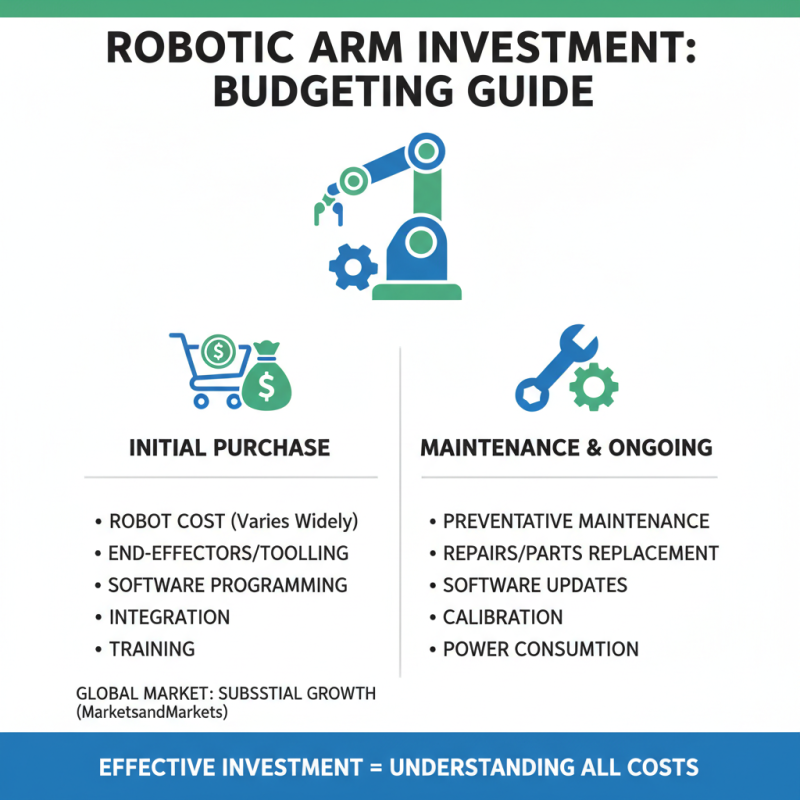
When selecting a robotic arm, budgeting for initial purchase and maintenance is crucial. According to a report by MarketsandMarkets, the global robotic arm market is projected to grow substantially. However, understanding costs is essential for effective investment.
Initial purchase prices can vary widely. Basic robotic arms may start at around $5,000, while more sophisticated models can exceed $100,000. This disparity highlights the importance of recognizing your specific needs. Are you focusing on precision, speed, or versatility? Each aspect can impact the price.
Maintenance costs should not be overlooked. Industry analysis indicates that maintenance can account for up to 15% of the total ownership cost annually. Regular maintenance is necessary to ensure optimal performance. Review the warranty options carefully. Some manufacturers offer extensive support, which can reduce long-term expenses.
Here are some tips for choosing wisely. Assess your production scale and anticipated growth. Consider not just the immediate needs but future applications. Evaluate how the robotic arm integrates with existing systems. Research potential operational costs and factor them into your budget. Investing time in thorough analysis pays off later.