What is the Role of AI Robots in Modern Technology?

In today's fast-paced world, AI robots play a crucial role in modern technology. These machines are not just tools; they are reshaping industries. From manufacturing to healthcare, AI robots enhance productivity and efficiency. They can perform complex tasks that once required human intervention. This shift raises important questions about their impact on society.

As AI robots become more prevalent, the ethical implications must be considered. For instance, while they can increase output, they may also displace jobs. Balancing innovation with potential job loss is vital. Society must reflect on how to harness these technologies for the betterment of all.

Moreover, the future of AI robots is both exciting and uncertain. Their capabilities are growing, but so are concerns about reliance on machines. Understanding their role in modern technology requires a nuanced perspective. It is essential to navigate this landscape with awareness and responsibility.
What is the Role of AI Robots in Modern Technology?

The Definition and Types of AI Robots in Modern Technology

AI robots have revolutionized modern technology. Their definition encompasses machines capable of performing tasks requiring intelligence. These robots utilize algorithms to learn and adapt over time. This flexibility makes them ideal for various applications, from manufacturing to healthcare.

There are several types of AI robots today. Industrial robots automate manufacturing processes, improving efficiency. Service robots assist in customer interactions, providing information and support. Autonomous drones perform surveillance and deliveries, showcasing their versatility. This variety reflects the growing demand for intelligent automation across industries.

However, not all AI robots function perfectly. Many still require human oversight. Miscommunication can occur between robots and users. Additionally, there are ethical questions around job displacement in traditional sectors. Understanding these challenges is crucial as we embrace AI technology in our daily lives.

What is the Role of AI Robots in Modern Technology? - The Definition and Types of AI Robots in Modern Technology

Type of AI Robot Definition Applications Key Technologies Used
Industrial Robots Automated machines designed for manufacturing processes. Assembly, welding, packaging, and material handling. Machine Learning, Robotics, Computer Vision.
Service Robots Robots that assist humans by performing tasks in various professional fields. Healthcare, hospitality, and customer service. Natural Language Processing, AI Algorithms.
Autonomous Vehicles Vehicles capable of sensing their environment and operating without human intervention. Transportation, delivery services, and personal mobility. Computer Vision, AI Navigation, Sensor Fusion.
Humanoid Robots Robots designed to resemble and interact with humans. Research, education, and entertainment. Machine Learning, Robotics, Affective Computing.
Collaborative Robots (Cobots) Robots designed to work alongside humans in a shared environment. Manufacturing, assembly line tasks, and warehousing. Real-time Sensor Data, Machine Learning.

Applications of AI Robots Across Various Industries

AI robots are transforming various industries with their unique applications. In healthcare, they assist in surgeries, analyze medical images, and manage patient data. Autonomous robots can monitor patients and optimize care routines. This enhances efficiency but raises concerns about human oversight. Can machines make critical decisions without human intervention?

In manufacturing, AI robots streamline production lines. They perform repetitive tasks with precision, reducing human error. While this boosts productivity, it may lead to job displacement. Workers need to adapt to the changing landscape. Reskilling becomes essential as automation grows.

Within the service industry, AI robots handle customer inquiries and process transactions. They provide quick responses, improving customer experiences. However, reliance on AI can sometimes result in misunderstandings. This highlights the importance of human touch in customer service. Balancing technology and personal interaction remains a challenge for businesses.

Advantages of Implementing AI Robots in Everyday Tasks

What is the Role of AI Robots in Modern Technology?

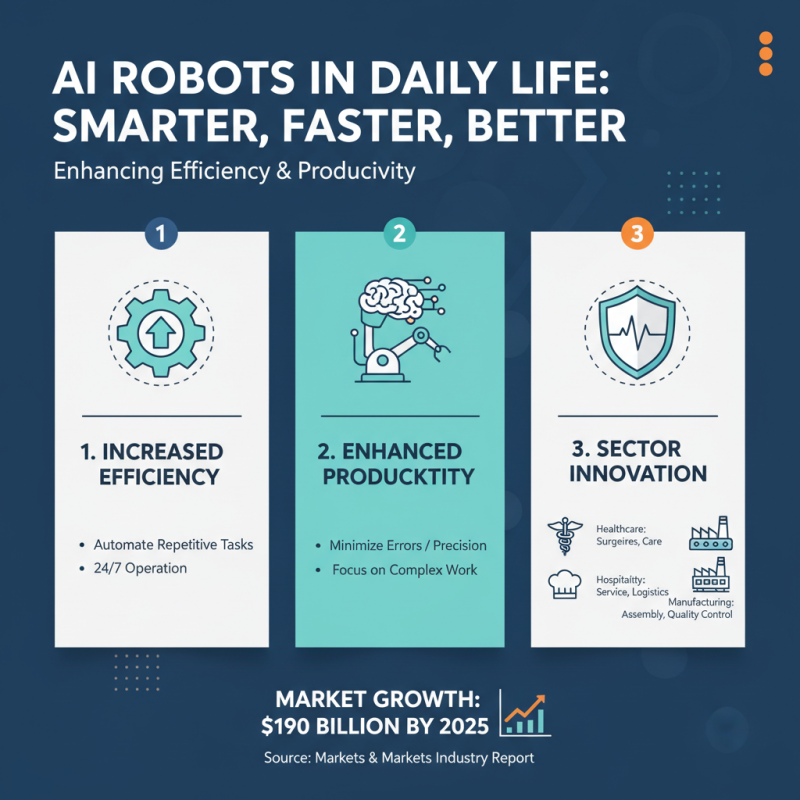
AI robots are increasingly becoming integral in our daily lives. Their role in modern technology spans various sectors, including healthcare, hospitality, and manufacturing. According to a recent industry report by Markets and Markets, the AI robot market is expected to reach $190 billion by 2025. This rapid growth underscores their potential to enhance efficiency and productivity.

Implementing AI robots in daily tasks brings numerous advantages. For instance, in healthcare, robotic assistants can manage patient data and support doctors to make informed decisions. This not only reduces human error but also streamlines processes. In manufacturing, AI robots improve production speed and quality, helping companies achieve better output. Additionally, research from McKinsey indicates that automation could raise productivity by up to 47% in certain industries.

Tips: Start integrating AI robots in small ways. For example, consider using AI assistants for scheduling or basic customer inquiries. Regularly evaluate their performance. This approach can highlight both the benefits and areas needing improvement. Adjusting your strategy based on feedback is crucial for successful implementation.

Challenges and Ethical Considerations in AI Robot Development

The rapid development of AI robots raises important ethical questions. Designers face challenges about accountability. If an AI robot makes a mistake, who is responsible? This issue complicates the landscape of modern technology. Transparency in AI decision-making is crucial. Developers must ensure that these systems behave ethically.

Privacy concerns also arise. AI robots often collect data to improve their performance. This data can include sensitive information about individuals. It's important for developers to establish guidelines for data handling. Ensuring the security of user data is paramount. Companies must prioritize user consent and privacy rights.

Tip: Always stay updated on ethical standards in AI. Collaborate with ethicists and technologists to navigate complex challenges. Another tip is to conduct regular audits of AI systems. These audits can help identify potential risks and ensure compliance with ethical guidelines. Balancing innovation with responsibility is essential for sustainable AI robot development.

Future Trends and Innovations in AI Robotics Technology

The future of AI robotics technology is exciting yet complex. Smart robots are reshaping industries, from healthcare to manufacturing. These innovations enhance efficiency by performing repetitive tasks. They allow human workers to focus on creativity and strategy. However, the integration of intelligent robots into everyday life brings challenges. Ethical concerns arise around job displacement and data privacy.

Robots powered by AI continually learn and adapt. They analyze vast amounts of data to make intelligent decisions. This capability is particularly beneficial in fields like advanced logistics and autonomous vehicles. Nevertheless, reliance on AI raises questions. Can we fully trust machines with decision-making? There is a need for oversight to ensure safety and reliability. Balancing innovation and ethical considerations is crucial as we move forward.

Emerging trends like collaborative robots are gaining traction. These robots work alongside humans, enhancing productivity. Yet, their design must prioritize user experience and safety. Engineers face the challenge of making robots intuitive while addressing user concerns. As AI technology evolves, society must engage in meaningful discussions. Working together is essential in shaping a future we can all embrace, with intelligent robots playing a pivotal role.

Smart Robotics brand movie

Watch video