What Is Strength Equipment and How to Choose It?

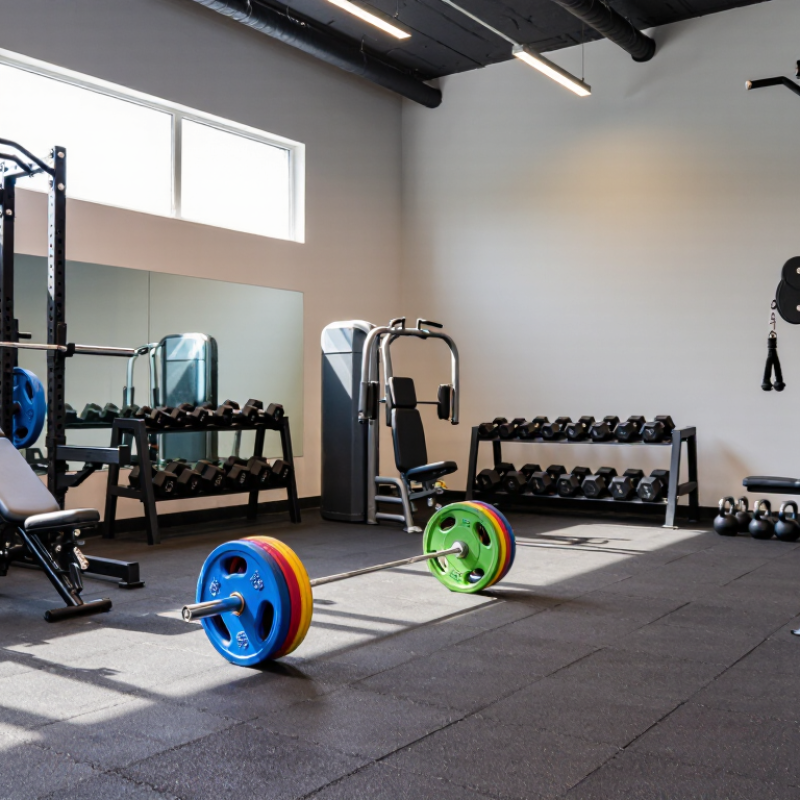
Strength Equipment includes machines, free weights, racks, benches, cables, and functional training tools. Each option creates a different training experience. A barbell demands balance and control. A cable machine offers adjustable resistance and smoother movement. A commercial leg press may provide stability, but it also requires considerable floor space. Understanding these differences helps buyers avoid expensive choices that do not match their needs.

Choosing the right Strength Equipment begins with a clear training goal. Muscle growth, general fitness, rehabilitation, and athletic performance require different designs. Check the equipment’s weight capacity, adjustment range, frame stability, padding, and warranty. Inspect welds, locking pins, handles, and moving parts. These small details often reveal build quality. A reputable manufacturer should provide specifications, maintenance guidance, and responsive customer support.

Space matters too.

Measure doorways, ceiling height, and the area around each station. Leave enough clearance for safe movement and loading plates. In my experience, people often focus on appearance and underestimate maintenance. A polished frame cannot replace reliable safety features. I have also seen strong athletes choose complex machines they rarely use. That decision is worth questioning. Simple equipment can support excellent progress when it fits the user’s routine.

This guide explains what Strength Equipment does, how major categories differ, and which features deserve careful attention. It combines practical observations with established training principles. Still, no checklist can replace professional assessment for beginners, older adults, or anyone managing an injury. The best choice is not always the largest or most expensive one. It is the equipment you can use correctly, consistently, and safely.
What Is Strength Equipment and How to Choose It?

What Is Strength Equipment? Definition, Types, and Core Functions

Strength equipment refers to tools that create external resistance against muscle force. It includes free weights, selectorized machines, cable systems, resistance bands, and bodyweight stations. Each type supports a different training experience. Barbells allow large compound lifts. Dumbbells improve balance and unilateral control. Machines guide movement and may help beginners learn safely. Cable systems offer adjustable angles for pressing, pulling, and rotation.

Its core functions are resistance, stability, progression, and measurement. Resistance challenges muscles through load, tension, or leverage. Progression means gradually increasing weight, repetitions, range, or control. Stability can come from a bench, rack, or machine frame. Measurement is often overlooked. A visible weight stack or numbered adjustment helps users record improvement. The 2023 IHRSA Global Report recorded more than 184 million fitness facility members worldwide in 2022, showing the scale of structured exercise demand. However, membership growth does not prove that every machine is useful.

Selection should begin with the user, not the catalog. A home trainee may need compact equipment and simple adjustments. A rehabilitation setting may require controlled motion and low starting resistance. Commercial facilities often need durable frames, clear instructions, and fast user turnover. The 2024 ACSM Worldwide Survey of Fitness Trends placed wearable technology among the leading trends, but data cannot replace sound movement assessment. The line is not always neat. A heavier load is not automatically better. I have seen equipment chosen for appearance, then ignored because setup felt confusing. Fit, adjustability, safety checks, and measurable progression deserve equal attention.

How Different Strength Equipment Categories Support Training Goals

What Is Strength Equipment and How to Choose It?

Strength equipment supports different training goals, not just heavier lifting. Free weights, including dumbbells, barbells, and kettlebells, develop balance and coordination because the body controls each movement. Machines offer guided paths and adjustable resistance. They can help beginners train safely or isolate a weak muscle. Cables sit between both options, allowing smooth resistance through many angles. Functional tools, such as suspension trainers and medicine balls, challenge movement quality, power, and stability.

The American College of Sports Medicine’s 2024 Worldwide Survey of Fitness Trends collected responses from 1,993 fitness professionals. Traditional strength training ranked fifth among global trends. Functional fitness training ranked ninth. These findings support a mixed equipment approach. For muscle growth, choose equipment that permits progressive loading and controlled repetitions. For athletic power, use medicine balls, sleds, or kettlebells with fast but safe movements. For rehabilitation, lighter resistance and stable machines may be more appropriate. My own practical caution is simple: equipment does not fix poor programming. I have seen strong users select advanced tools before mastering basic hinges and presses.

Tips: Start with your goal, space, and training history. Test whether adjustments feel secure. Keep two repetitions in reserve during early sessions. Record load, repetitions, and discomfort. If a machine feels awkward, stop and reassess. The best choice may be less impressive. WHO guidelines also recommend muscle-strengthening activity on two or more days weekly, but frequency should match recovery, age, and medical advice.

What Is Strength Equipment and How to Choose It? - How Different Strength Equipment Categories Support Training Goals

Equipment Category Typical Examples Training Goals Supported Key Advantages Main Limitations Suitable Users Important Selection Factors
Free Weights Barbells, weight plates, dumbbells, kettlebells, adjustable dumbbells
  • Maximum strength
  • Muscle hypertrophy
  • Power and athletic performance
  • Compound movement development
  • Allow a broad range of exercises and movement patterns
  • Require the user to stabilize the load
  • Can be progressively loaded in small or large increments
  • Efficient for full-body training
  • Technique and supervision may be important for beginners
  • Weights can be dropped or misplaced if storage is poor
  • Some exercises require a rack, bench, or lifting platform
Beginners with instruction, intermediate lifters, advanced athletes, and home or commercial gyms Load range, grip comfort, adjustability, storage, floor protection, and available safety equipment
Selectorized Machines Weight-stack press machines, leg-extension machines, row machines, pulley-guided machines
  • Muscle hypertrophy
  • General strength development
  • Accessible resistance training
  • Controlled rehabilitation-oriented exercise when professionally prescribed
  • Guided paths can simplify exercise setup
  • Resistance is easy to adjust between sets
  • Useful for isolating or emphasizing specific muscle groups
  • Often provide built-in safety stops
  • Movement path may not suit every body shape
  • Usually supports fewer exercise variations than free weights
  • Can require substantial floor space
Beginners, general fitness users, older adults, and experienced trainees seeking targeted work Adjustability, seat and pad dimensions, range of motion, smoothness, accessibility, and maintenance
Cable and Pulley Systems Adjustable cable stations, dual-pulley systems, lat pulldown stations, low-row stations
  • Hypertrophy
  • Upper-body and lower-body strength
  • Unilateral training
  • Functional movement and sport-specific patterns
  • Provide resistance through many angles
  • Support pressing, pulling, rotation, and anti-rotation exercises
  • Enable independent training of each side of the body
  • Offer smooth, continuous resistance when properly maintained
  • Require adequate ceiling height and operating space
  • Cables, pulleys, and attachments need regular inspection
  • Some systems have limited maximum loading
Home users with sufficient space, personal-training studios, athletes, and general fitness users Cable travel, pulley ratio, maximum load, attachment options, adjustment range, and frame stability
Resistance Bands and Tubes Loop bands, therapy-style bands, tube bands with handles, fabric resistance bands
  • General strength and muscular endurance
  • Warm-ups and activation work
  • Mobility-supporting exercises
  • Travel and home workouts
  • Lightweight, portable, and relatively low-cost
  • Can be used for many upper-body, lower-body, and core exercises
  • Provide increasing tension as the band is stretched
  • Require little storage space
  • Resistance is difficult to measure precisely
  • Anchor points must be secure
  • Elastic materials can wear, snap, or lose tension over time
Beginners, travelers, rehabilitation users under guidance, and home exercisers Resistance levels, material quality, length, handle design, anchor security, and signs of wear
Bodyweight and Suspension Equipment Pull-up bars, parallel bars, suspension straps, gymnastic rings, push-up handles
  • Relative strength
  • Core stability
  • Grip strength
  • Body control and movement coordination
  • Uses the user's body mass as resistance
  • Supports compound movements and stabilization demands
  • Usually requires little or no external loading
  • Can be adapted by changing body angle, leverage, or range of motion
  • Progression can be challenging for some movements
  • Requires adequate grip, joint control, or foundational strength
  • Suspension systems depend on a reliable anchor point
Beginners using regressions, calisthenics trainees, athletes, and travelers Anchor strength, height adjustment, handle comfort, load rating, clearance, and exercise progression
Functional Training Equipment Medicine balls, sandbags, sleds, battle ropes, plyometric boxes, landmine attachments
  • Power and explosive strength
  • Conditioning combined with resistance
  • Work capacity and athletic movement
  • Coordination and force transfer
  • Supports dynamic, multi-joint movement
  • Can combine strength, speed, balance, and conditioning
  • Useful for varied group or individual sessions
  • Many tools can be used indoors or outdoors
  • Technique and space management are important
  • Some tools are difficult to quantify for progressive loading
  • High-impact exercises may not suit every user or floor
Athletes, coaches, group-training participants, and experienced general fitness users Intended movement, load or weight, impact level, floor surface, available space, and user skill
Specialty Strength Equipment Squat racks, power cages, lifting benches, deadlift platforms, dip stations, specialty bars
  • Heavy compound lifting
  • Strength sport preparation
  • Progressive overload
  • Structured barbell training
  • Can support heavier loads when correctly installed and used
  • Safety arms, uprights, and benches can improve training control
  • Creates a stable setup for major compound lifts
  • Allows systematic progression and exercise customization
  • Needs more space and usually more setup time
  • Requires attention to installation, alignment, and load limits
  • May be excessive for users seeking only light general exercise
Intermediate and advanced lifters, strength-focused home gyms, and training facilities Rated capacity, rack dimensions, safety-stop adjustment, bench stability, floor anchoring, and bar clearance

How to Choose Equipment Based on Fitness Level and Objectives

What Is Strength Equipment and How to Choose It?

Strength equipment includes free weights, resistance bands, weight machines, benches, racks, and bodyweight tools. Each option creates resistance that challenges muscles during controlled movement. Choosing well starts with your current ability, not the equipment’s appearance. A beginner may need adjustable dumbbells, a stable bench, and light resistance bands. These tools support basic movements without overwhelming balance or technique.

Your objective should guide the equipment choice. For general fitness, full-body exercises such as squats, rows, presses, and hinges offer efficient training. Muscle growth usually requires gradually heavier resistance and enough recovery between sessions. Strength development demands heavier loads, longer rest periods, and careful attention to form. I once increased weight too quickly and ignored shoulder discomfort. That slowed my progress. It was a useful mistake, but an avoidable one.

Assess your movement quality before adding resistance. Can you perform ten controlled repetitions without twisting, bouncing, or holding your breath? If not, reduce the load and practice the pattern. Beginners should consider equipment with simple adjustments and clear safety features. Experienced lifters may benefit from racks, heavier free weights, or specialized machines. A qualified fitness professional can check technique and suggest suitable progressions, especially after an injury. Keep a training record. Small improvements matter. Equipment should fit your space, budget, and routine, because unused equipment cannot build strength.

Which Features Matter: Safety, Adjustability, Space, and Durability

Strength equipment includes free weights, resistance machines, racks, benches, and cable systems. Each tool creates resistance that muscles must control. In my experience, safe design matters more than impressive appearance. Look for stable frames, secure adjustment pins, non-slip footplates, and handles that feel firm without sharp edges. A small wobble can become a serious distraction during heavy repetitions.

Adjustability should match the people using the equipment. Check whether the seat, back support, handles, and bar height move smoothly. Clear markings help users repeat the same position accurately. This is important when several family members or clients share one station. I once underestimated reach distance and chose a setup that felt awkward for shorter users. That mistake changed how I assess equipment now.

Space affects safety too. Measure the equipment, then add room for movement, loading plates, and emergency access. A compact machine is not practical if its cables hit a wall. Durability depends on more than thick steel. Inspect welds, moving joints, padding, fasteners, and the quality of protective coatings. Ask whether replacement parts and maintenance instructions are available. Equipment may look solid on day one. Its long-term reliability is harder to judge. Record unusual noise, loose bolts, or uneven motion during regular checks. Small faults deserve attention before they become expensive problems.

What Is Strength Equipment and How to Choose It?

Practical comparison of safety, adjustability, space efficiency, and durability

Ratings use a five-point planning scale based on common equipment characteristics. Safety reflects stability and the availability of controlled movement or protective features; adjustability reflects exercise and user-position options; space efficiency reflects useful training capacity relative to floor area; durability reflects the number of structural and moving parts designed for repeated use. Higher scores are generally preferable, but actual specifications should be checked before purchase.

How to Build a Practical Strength Training Setup Within Your Budget

What Is Strength Equipment and How to Choose It?

Strength equipment includes tools that make muscles work against resistance. Common options include dumbbells, resistance bands, adjustable benches, racks, and cable systems. A practical setup does not need every item. It needs equipment that matches your space, training goals, and spending limit.

Begin with adjustable dumbbells or a compact barbell set. They support presses, rows, squats, and deadlifts without filling the room. Add a stable bench only when floor exercises become limiting. Resistance bands cost less, store easily, and work well for warm-ups and lighter sessions. However, their resistance can feel less predictable near full stretch. That limitation matters.

Check weight ratings, handle comfort, floor stability, and adjustment mechanisms before buying. A strong frame is more important than a polished finish. Measure your training area, including ceiling height and movement space around each item. Leave enough room to lower weights safely. Used equipment can reduce costs, but inspect welds, bolts, cables, and padding carefully. Never assume a low price means good value.

One planning mistake is buying heavy equipment before building consistent habits. I have seen compact setups outperform crowded rooms because they encourage regular use. Set aside part of your budget for flooring, storage, and maintenance. These details feel boring. They prevent avoidable damage. Increase resistance gradually, record your sessions, and replace damaged parts promptly. If pain persists, seek advice from a qualified health professional.

Article Source:

Smart Robotics brand movie

Watch video