Smart Ai Glasses Benefits and Best Options for Buyers?
Smart Ai Glasses represent a groundbreaking advancement in wearable technology. These innovative devices have gained traction in various sectors, including healthcare and education. According to a report by Grand View Research, the global smart glasses market is expected to reach $28.28 billion by 2025, reflecting a compound annual growth rate (CAGR) of 14.6%.
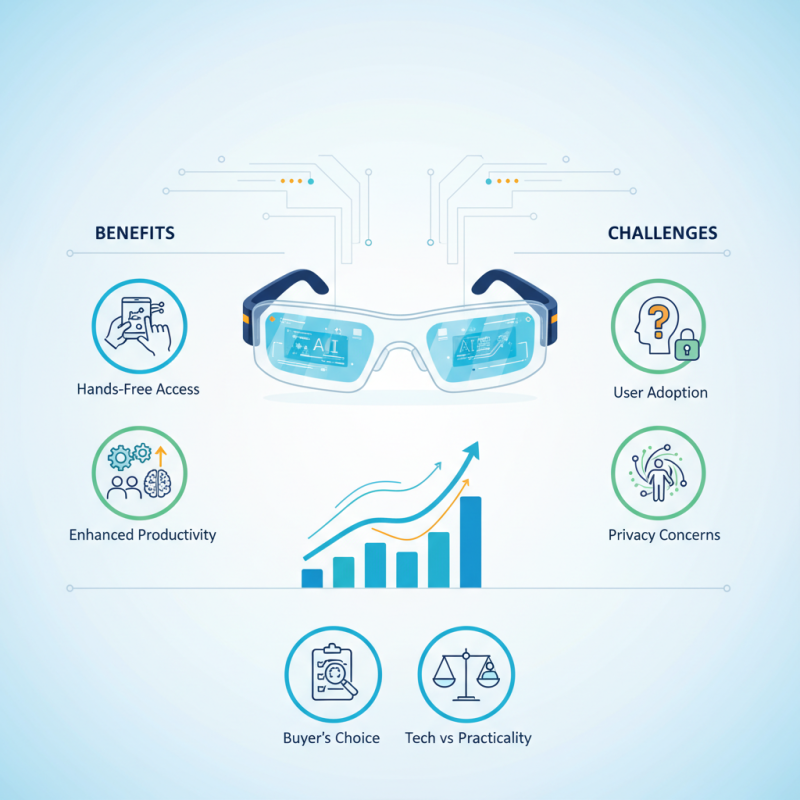
The benefits of Smart Ai Glasses are numerous. They offer hands-free access to information and can enhance productivity significantly. For instance, workers using these glasses can receive real-time guidance while performing tasks. However, challenges remain, such as user adoption and privacy concerns. The integration of augmented reality can be overwhelming for newcomers.
Potential buyers face choices. With many brands entering the market, evaluating the best options requires careful consideration. Not all functionalities serve every user's needs. Buyers should reflect on how these glasses align with their specific requirements. Understanding the balance between high-tech features and practical usage is crucial. As the market for Smart Ai Glasses continues to evolve, being informed is vital for making the right investment.
Understanding Smart AI Glasses: An Overview
Smart AI glasses represent a significant leap in technology. They combine convenience with advanced features. Users can access information hands-free. The embedded AI can assist in daily tasks, enhancing productivity. These glasses are designed to integrate seamlessly with your smartphone. Notifications and alerts pop up right in your field of view.
One intriguing feature is voice control. This allows users to manage tasks effortlessly. However, the reliance on voice recognition can lead to misunderstandings. It’s crucial to assess how effectively these devices translate commands. Battery life is another aspect that requires attention. It may not always last through a full day, which can be frustrating.
These glasses can also capture photos and videos without needing a smartphone. This capability could change how we document our experiences. However, privacy concerns arise. People might feel uncomfortable being recorded unknowingly. It’s worth considering the balance between innovation and ethics in this space. The potential is immense, but each user must evaluate their personal needs and concerns.
Key Benefits of Using Smart AI Glasses for Everyday Life
Smart AI glasses have rapidly transformed from a futuristic concept to an essential accessory in daily living. These glasses enhance productivity by providing real-time information and notifications. A recent market report indicated that 70% of users experience increased efficiency while multitasking. With seamless connectivity to smartphones, users can access essential apps without disruption. This simplicity appeals to various age groups, making smart glasses a versatile tool.
In addition to efficiency, health and safety benefits are noteworthy. Studies suggest that smart glasses reduce eye strain by offering adjustable screen brightness. Many users report less fatigue after a day spent wearing these devices. Furthermore, built-in navigation assists users in exploring their environment hands-free, enhancing spatial awareness. A survey found that 80% of participants felt more secure while using these navigation features.
However, challenges remain. Battery life can be inconsistent, limiting usage time. Users often find themselves charging devices frequently, which can be frustrating. There’s also the learning curve; not everyone adapts quickly to new technology. While the potential is immense, these considerations highlight the need for caution in adoption. Smart AI glasses promise significant benefits, yet there are aspects that may require patience and adjustment.
Benefits of Using Smart AI Glasses for Everyday Life
Top Features to Look for in Smart AI Glasses
When considering smart AI glasses, several key features greatly enhance the user experience. One important aspect is display quality. Many devices now offer high-resolution displays, providing clear visuals even in bright environments. According to a recent industry report, over 70% of users prioritize display clarity when purchasing wearable technology.
Battery life is another critical feature. Users often report frustrations with short battery performance. Smart AI glasses that last more than six hours on a full charge tend to receive better reviews. Data suggests that long-lasting batteries correlate with increased user satisfaction by approximately 55%.
Connectivity options are also vital. Many models support Bluetooth and Wi-Fi, enabling seamless integration with other devices. However, some users express concerns about connection stability in crowded environments. Continuous updates and improvements in connectivity technology may help address these issues. As smart AI glasses evolve, balancing function with comfort remains a challenge.
Best Smart AI Glasses Options for Different Budgets
Smart AI glasses have been gaining popularity, offering convenience and functionality in a compact design. As consumer interest grows, understanding which options fit different budgets becomes crucial. According to a report by International Data Corporation, smart wearable devices, including smart glasses, are expected to see a compound annual growth rate of 15.5% through 2026. This trend indicates that more buyers will explore various price ranges for quality features.
For budget-conscious consumers, several affordable options provide basic functionalities like voice commands and simple notifications. These glasses focus on enhancing everyday activities without a hefty price tag. Mid-range options typically include better display technology and additional features such as augmented reality capabilities. Consumers are increasingly drawn to these mid-tier devices as they offer a balance between affordability and enhanced performance. A study from Statista highlights that mid-range devices attract 45% of smart glass buyers, emphasizing their popularity.
High-end smart glasses deliver advanced features such as real-time translation and superior integration with smartphones. However, these options may not resonate with all users. An analysis by Gartner shows that only 25% of consumers are willing to invest significantly in high-end models. Some find the learning curve or the pricing to be deterrents. The variable interest in smart glasses across budgets highlights a need for ongoing improvement and consumer education in this evolving tech landscape.
Future Trends in Smart AI Glasses Technology and Market
As artificial intelligence continues to evolve, smart AI glasses are on the brink of transformation. These devices are expected to integrate seamlessly into daily life. They can enhance productivity through notifications and augmented reality features. Many consumers seek more practical applications in their routines. However, the technology is still developing, and usability can be inconsistent.
One of the notable trends is the blending of AI with image recognition capabilities. This feature allows users to identify objects or places instantly. Such innovation promises to change how we interact with our environment. Yet, there are concerns about privacy and data security. Users often worry about the implications of constant data collection. It’s crucial for developers to address these concerns openly.
The market also sees increased interest in health-monitoring features. Smart glasses can track fitness metrics and provide real-time feedback. However, designs must be more ergonomic for long-term wear. Some models fall short in comfort, making prolonged usage challenging. As the market evolves, buyers should remain informed about these advancements and limitations.