What Is a Pneumatic Butterfly Valve and How Does It Work?
A Pneumatic Butterfly Valve turns compressed air into a quick, controlled quarter-turn. Inside the body, a circular disc rotates across the flow path. At 90 degrees, it opens or closes the line. The action is simple. The details matter.
The U.S. Department of Energy’s Improving Compressed Air System Performance sourcebook reports that compressed air represents about 10% of industrial electricity use, with higher shares in some facilities. That figure makes actuator selection and air-system efficiency practical concerns, not minor details. A correctly sized actuator must overcome pressure, seat friction, and operating conditions without wasting air or compromising shutoff. ISO 5211 also provides standardized interfaces for mounting actuators on industrial valves, supporting consistent installation and maintenance.
A butterfly valve is not automatically the right choice for every service. Media, temperature, pressure, leakage requirements, and cycling frequency all affect performance. A disc that looks small on a drawing still meets the full flow in the pipe. That can influence pressure drop. Before specifying a Pneumatic Butterfly Valve, compare the valve’s design and actuator torque data with actual process conditions.
No traceable expert quotation was supplied for this topic, so I will not invent one or attribute words to a named specialist. For a publication-ready expert quote, verify the wording and attribution directly with a valve engineer or manufacturer. The hardware is straightforward. The specification deserves care.
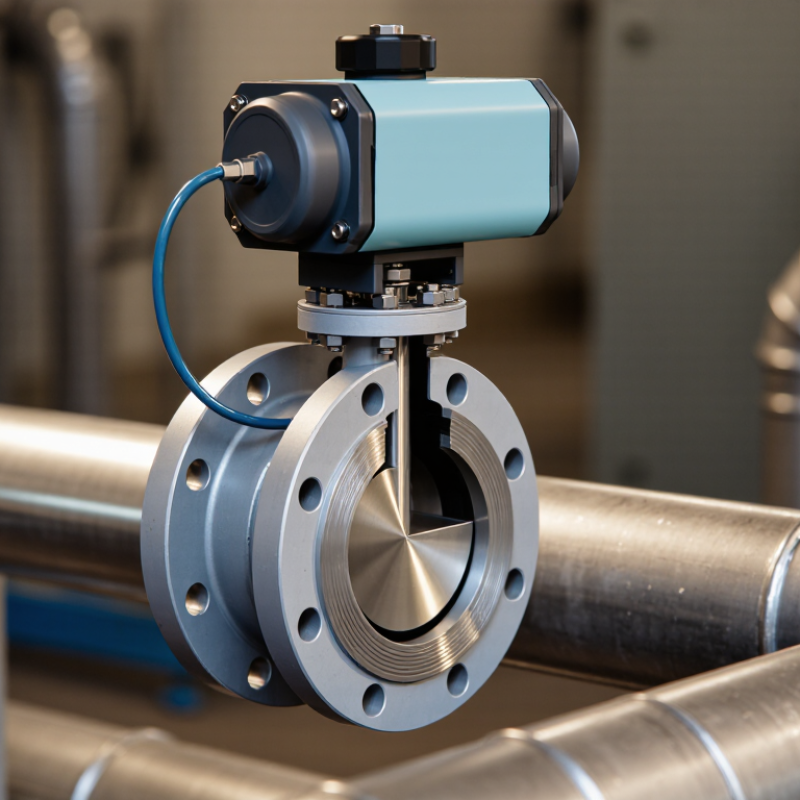
What Is a Pneumatic Butterfly Valve?
A pneumatic butterfly valve is a quarter-turn valve that uses compressed air to rotate a circular disc inside a pipe. The disc turns about 90 degrees to open or close the flow path. The valve body, disc, stem, seat, and pneumatic actuator form its main parts. The motion is simple. An actuator may use air pressure in both directions, or a spring to return the valve when air pressure stops. This makes the valve useful where automated, quick shutoff is needed.
In water treatment, process lines, and building services, its compact body can fit between pipe flanges. It is often lighter than a comparable gate valve, but performance depends on disc design, seat material, pressure, and fluid. A butterfly valve is not automatically a precise flow-control device; check its control range and the fluid’s compatibility with the seat. Grand View Research estimated the global industrial valves market at USD 78.5 billion in 2023. This broad market figure reflects the importance of valve systems, not pneumatic butterfly valves alone.
Tips: Confirm the air supply pressure and actuator torque against the valve specification. Check whether the actuator is spring-return or double-acting. A small mismatch can leave the disc short of its intended position. That detail is easy to overlook.
How Does Compressed Air Operate the Valve?
A pneumatic butterfly valve uses compressed air to turn a circular disc inside a pipe. A control signal shifts a solenoid valve, directing air into an actuator. In a rack-and-pinion design, air moves pistons that rotate the valve stem, usually through 90 degrees. The disc then opens, closes, or throttles flow. Simple motion. Double-acting actuators use air for both directions; spring-return models use air one way and a spring for the return stroke.
The actuator must deliver enough torque to overcome seal friction and pressure across the disc. That requirement changes with valve size, operating pressure, and fluid conditions, so actuator sizing matters. The U.S. Department of Energy’s Improving Compressed Air System Performance: A Sourcebook for Industry reports that compressed air can account for about 10% of industrial electricity use, and 30% or more in some facilities. That makes leaks and unnecessarily high pressure worth checking, even on a small valve assembly. A pressure gauge helps, but it does not prove the actuator is receiving adequate flow. Slow movement may point to a restricted line, undersized tubing, or worn seals. And sometimes the cause is less obvious: air quality and installation details deserve a second look.
How Does the Disc Control Fluid Flow?
A pneumatic butterfly valve controls flow by rotating a circular disc inside the pipe. Compressed air moves an actuator, which turns the disc through an angle, usually up to 90 degrees. When the disc sits across the pipe, it blocks most flow. As it turns edge-on, more fluid passes. The change is not perfectly proportional: flow also depends on pressure, fluid properties, and the valve’s internal geometry. Small movements near the closed position can have a noticeable effect.
The U.S. Department of Energy’s 2006 report, Improving Pumping System Performance: A Sourcebook for Industry, estimates that pumping systems use nearly 20% of global electricity. That figure describes pumping systems, not butterfly valves alone, but it shows why avoiding unnecessary pressure loss matters. A disc left partly across the stream creates resistance and can increase the work required to move fluid. The actuator’s position and response therefore matter. So does correct sizing. A partially open disc is not a precise flow meter. In practice, operators should verify actual flow and pressure rather than assume disc angle tells the whole story. That distinction is easy to miss.
What Is a Pneumatic Butterfly Valve and How Does It Work?
How the Disc Controls Fluid Flow
The pneumatic actuator rotates the disc inside the valve. As the disc turns away from the closed position, it obstructs less of the pipe, allowing more fluid to pass. This chart shows a representative relationship between disc angle and relative flow coefficient at a constant pressure differential. Actual valve characteristics vary with valve design and operating conditions.
Where Are Pneumatic Butterfly Valves Commonly Used?
Pneumatic butterfly valves are commonly used in water and wastewater plants, where they control flow through large pipes. A compressed-air actuator turns a disc about a quarter turn, opening or restricting the passage. Operators value this compact design in pump rooms and treatment lines, where space can be tight. The valves also suit HVAC systems, moving chilled or heated water through building networks. Some installations use them for air ducts or other utility services.
Food and beverage facilities may use suitable versions on water, washdown, or product lines, provided the valve materials meet the process requirements. In chemical plants and power stations, they can handle compatible liquids, gases, or steam within specified pressure and temperature limits. Not every valve suits every medium. Abrasive particles, corrosive fluids, and high temperatures can wear the disc or seat, so selection needs careful review. A technician should also check air-supply reliability and whether the actuator must move to a safe position during power or air loss. A compact valve is useful, but its limits matter.