What is a pick and place robot and how does it work?
A pick and place robot is an essential tool in modern manufacturing and logistics. This robot automates the process of picking items from one location and placing them in another. It increases efficiency and reduces labor costs.
The mechanism of a pick and place robot involves precise movements. It uses sensors and cameras to identify objects. This helps to minimize errors during operation. However, it is not foolproof. Sometimes, objects may be misidentified or dropped. These challenges highlight the need for continuous improvement in robotic technology.
Understanding how a pick and place robot works can unveil its potential. The integration of artificial intelligence can optimize its functioning. Yet, it's important to reflect on whether the automation reduces human employment opportunities. Balancing technology and human jobs remains a critical discussion in our evolving world.
What is a Pick and Place Robot?
A pick and place robot is an automated machine designed to handle items in various industries. These robots pick up objects and place them in different locations efficiently. They are crucial for tasks that require speed and precision. In manufacturing, pick and place robots improve productivity by reducing the time taken for repetitive tasks.
Data from the International Federation of Robotics indicates that the adoption of industrial robots, including pick and place models, has increased significantly in recent years. In 2022, about 3 million units of industrial robots were in operation globally. This trend reflects a growing need for automation to meet rising production demands. Companies see a potential 30% increase in efficiency from implementing these robots.
However, not every application is seamless. Challenges exist in integrating these systems into existing workflows. Sometimes, training is required for employees. There can be variability in item sizes and shapes that complicates the picking process. It’s important to address these shortcomings to maximize the benefits of pick and place robots. Continuous learning and adaptation are necessary.
Key Components of Pick and Place Robots
Pick and place robots are essential in various industries. They are designed to efficiently move objects from one location to another. The effectiveness of these robots relies on their key components, each playing a vital role in their functionality.
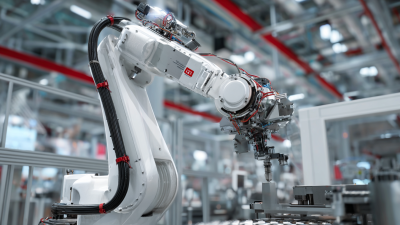
One major component is the robotic arm. This arm mimics human movement, allowing for precise handling. It often features joints that provide flexibility. However, if not calibrated properly, the arm may drop items or misplace them. Another integral part is the end effector. This tool grips objects securely. Different designs are available to handle diverse shapes and sizes. Nonetheless, choosing the wrong end effector can lead to slippage or damage to delicate products.
Sensors also play a crucial role in the operation of pick and place robots. These devices detect object locations and orientations. They help the robot navigate its environment accurately. Yet, sensor failure can result in errors, causing delays in production. The combination of these components creates a powerful system, but it requires continuous evaluation and adjustment to ensure optimal performance.
How Pick and Place Robots Operate
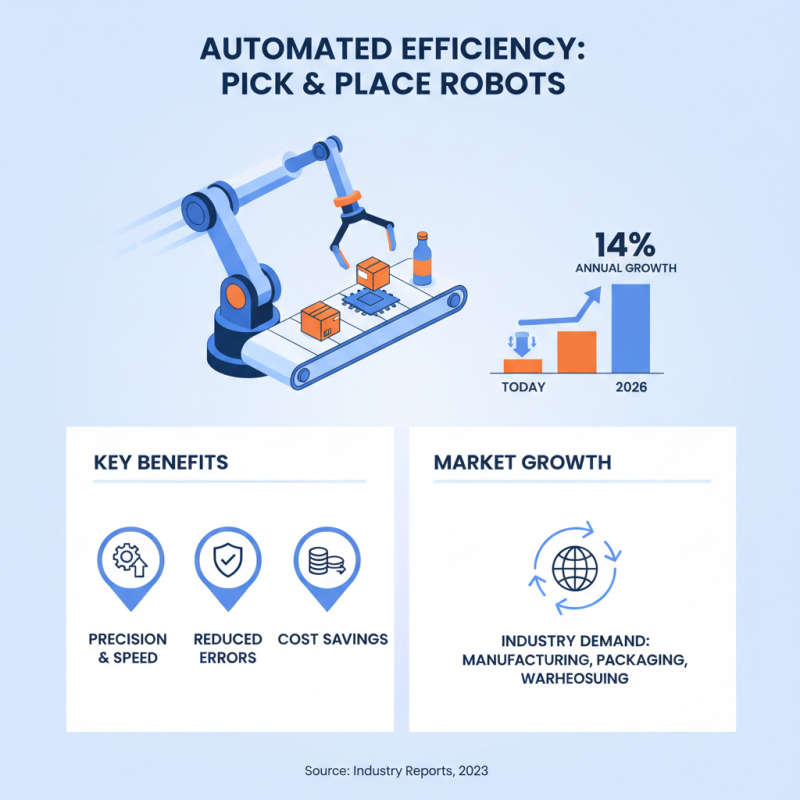
Pick and place robots are designed for efficiency and precision. They automate the handling of items in various industries. This can include manufacturing, packaging, and warehousing. According to industry reports, the market for robotic automation is expected to grow by 14% annually through 2026. This indicates a strong demand for such technology.
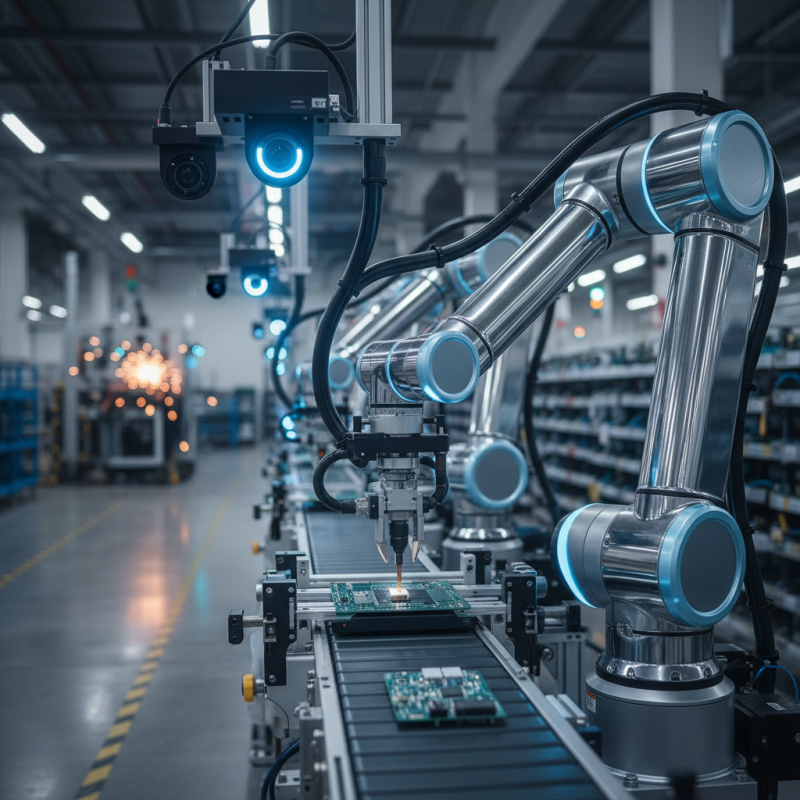
These robots operate using advanced vision systems and articulated arms. A camera detects the item to be picked. The robot calculates its position. Then, the robotic arm moves in to grasp the item. For example, when placing items onto a conveyor belt, timing is crucial. Delays can disrupt operations. In fact, a minor delay of just seconds can reduce overall efficiency by up to 20%.
Despite their advantages, challenges remain. Not all items are uniform in size or shape. This can complicate the picking process. Additionally, maintenance requirements can be tricky. Regular checks are necessary to ensure optimal performance. With increasing complexity, some organizations may hesitate to adopt this technology fully. Balancing human oversight with automation will be essential for success.
Applications of Pick and Place Robots in Industry
Pick and place robots play a crucial role in many industries. They are designed to pick up items from one location and place them in another. This simple yet effective automation improves efficiency. In manufacturing, these robots handle various tasks such as sorting, packing, and assembling components. They can quickly switch between different tasks as needed.
Food processing plants also benefit from these robots. They can pick food items and place them into packaging efficiently. This reduces human error and maintains hygiene. However, there are challenges. Some items are delicate and require careful handling. The robots must be programmed to adjust their grip strength accordingly.
In the electronics industry, pick and place robots assemble small parts onto circuit boards. Precision is vital here. A tiny error can lead to major problems. Training and calibration are essential for optimal performance. Despite advancements, malfunctioning or slower performance can happen. Regular maintenance and updates are necessary for reliability. These factors highlight the ongoing need for improvement in robotic technology.
What is a pick and place robot and how does it work? - Applications of Pick and Place Robots in Industry
| Application Area |
Description |
Industry Type |
Typical Payload |
| Packaging |
Robots that pick items from a conveyor and place them into boxes for shipping. |
E-commerce, Food & Beverage |
Up to 10 kg |
| Assembly |
Robots that assemble small parts into larger assemblies. |
Electronics, Automotive |
Up to 5 kg |
| Quality Control |
Robots that pick products to inspect their quality before packaging. |
Manufacturing |
Up to 2 kg |
| Medical Applications |
Robots that handle and sort medical supplies or laboratory samples. |
Healthcare, Pharmaceuticals |
Up to 1 kg |
| Pick-and-Place in Agriculture |
Robots that pick fruits and vegetables from plants. |
Agriculture |
Up to 3 kg |
Benefits of Using Pick and Place Robots in Automation
Pick and place robots are transforming industries through automation. These robots are designed to pick up items and place them in different locations. They are essential in manufacturing, packaging, and logistics. Companies adopt these robots for various reasons.
One significant benefit of pick and place robots is efficiency. They can operate at high speeds, allowing for increased productivity. Tasks that once took hours can now be completed in minutes. This efficiency helps reduce labor costs. However, relying solely on robots might overlook the importance of human oversight. Extra care is needed to ensure they function correctly.
Another advantage is precision. These robots handle items with accuracy. They minimize the risk of damage during transfer. Furthermore, they can be programmed to adapt to different products. Yet, there may be challenges in programming complexity. Operators must understand the system well. Continuous training might be necessary to avoid errors. Balancing automation and human input is key for optimal results.
Benefits of Using Pick and Place Robots in Automation