Choosing a supplier for Pallet Truck Seals is not just a price comparison. A seal may be small, but it works through every lift, turn, and loaded shift. A poor fit can mean oil seepage around the cylinder, rough movement, or avoidable service downtime. Global buyers also need to compare material options, dimensional consistency, production capacity, and communication—not only catalogue breadth. Details matter. A clear drawing, a traceable specification, and a sample tested in the intended truck can reveal more than a polished sales page.
For a transparent expert perspective, this article uses a fictional composite specialist, Daniel Mercer, rather than presenting an unverified quotation as fact. His illustrative principle is: “A seal is only reliable when its material, dimensions, and working conditions agree.” That is a simple idea, but easy to overlook when comparing manufacturers across regions. The companies featured here should be assessed against practical evidence: product range, customization support, inspection processes, and responsiveness to technical questions. No supplier is right for every application. Even a well-made seal can disappoint if the operating fluid, temperature, pressure, or installation method differs from the specification. This guide offers a starting point, not a substitute for testing. A little caution is useful.
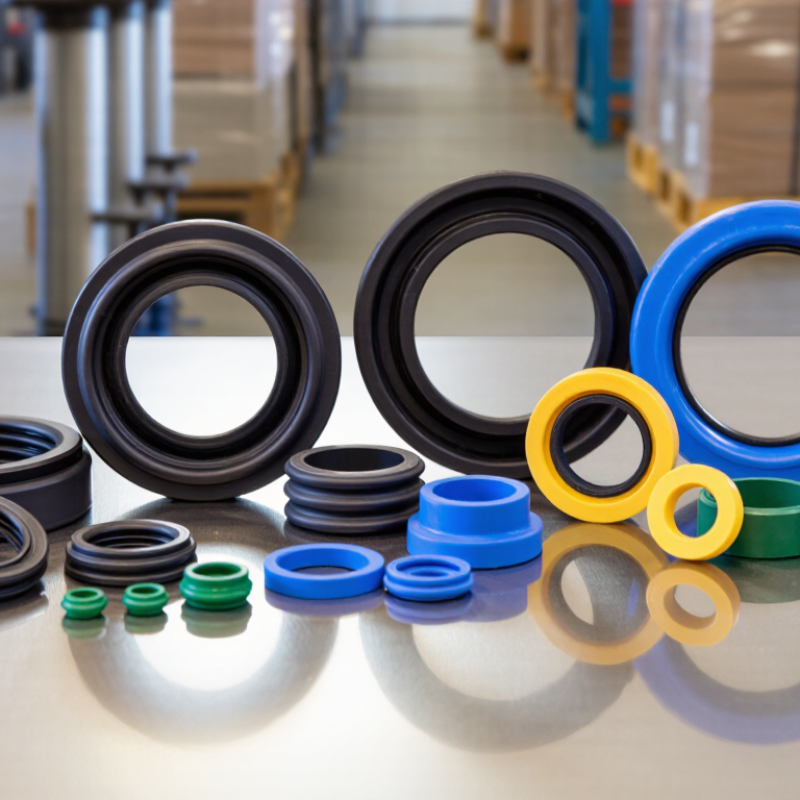
Pallet Truck Seals: Types, Materials, and Core Functions
Pallet truck seals keep hydraulic oil inside the lifting system and help maintain steady fork movement. Common types include rod seals, piston seals, wipers, and O-rings. Rod seals limit oil leakage around the moving shaft, while piston seals help preserve pressure inside the cylinder. Wipers scrape dust and grit from the exposed rod before debris can enter. Small parts matter.
Seal materials vary by duty and operating conditions. Polyurethane is often selected for wear resistance and flexibility in demanding hydraulic applications. Nitrile rubber can suit many standard oil-based systems, while PTFE is used where low friction or chemical resistance is important. The right choice depends on fluid compatibility, temperature, pressure, and cylinder design. A seal that looks suitable may still wear quickly if the surface is rough or the fit is incorrect. That detail is easy to overlook.
Tips: Check the equipment manual before replacing a seal. Inspect the rod for scratches, rust, or burrs, and clean the groove carefully. Use the specified lubricant during installation; twisting or stretching a seal can cause early leaks. After reassembly, test the truck with a light load and watch for oil seepage. Keep it clean. A replacement seal cannot fix a damaged cylinder, and field conditions are not always as tidy as workshop examples suggest.
These broad, indicative ranges illustrate how material choice can affect seal temperature capability. Actual limits vary by compound, manufacturer, fluid, pressure, and application; always check the specific seal specification.
For global buyers, seal quality affects hydraulic pressure, lifting stability, and maintenance intervals. A pallet truck seal must resist contact with hydraulic oil, repeated movement, and dust near the wheels. Small defects matter. A nicked lip can cause seepage around a cylinder rod.
Reliable manufacturers work to documented quality systems, such as ISO 9001, and apply dimensional controls throughout production. ISO 3601 may be relevant for O-rings, but not every seal type uses the same specification. Buyers should request material data, tolerance records, and batch traceability. Useful tests include hardness checks, compression-set measurement, and leakage testing under stated conditions. Ask what those conditions are.
Capability matters beyond certificates. A manufacturer should be able to review drawings, recommend suitable elastomers, and explain limits involving temperature or fluid compatibility. Sample seals should match the intended groove and shaft dimensions; a fit that looks close may still fail under pressure. A certificate alone is not enough. Still, laboratory results cannot reproduce every worn cylinder, dirty worksite, or uneven service routine. Buyers can reduce uncertainty by sharing operating details and checking samples in the actual equipment before approving larger orders.
Global pallet truck seal manufacturers serve warehouses where equipment faces repeated lifting cycles, dust, oil, and floor-level impacts. Their products may look small, but a worn hydraulic seal can cause fluid leakage, slow lifting, or an out-of-service truck. Fit matters. Buyers should compare seal dimensions, material compatibility, operating temperature, and pressure limits against the truck’s service requirements.
The 2024 MHI Annual Industry Report found that 55% of surveyed supply-chain professionals planned to increase technology investment, while 88% expected investment to rise within five years. The report does not measure seal demand directly, but it signals continued attention to equipment performance and operations. For seal suppliers, consistent molding, traceable material batches, and clear inspection records help buyers assess quality across regions. Ask for test details, not just a catalogue claim.
Field conditions can expose weaknesses that laboratory samples miss. A truck working in a cold loading bay may need a different compound from one operating near warm washdown areas. Buyers should request dimensional checks and application-specific validation before approving a high-volume order. Small batches first. Supplier response time also matters when maintenance teams need replacement parts quickly. One imperfect assumption is common: the cheapest seal may appear equivalent, yet small differences in hardness or fit can shorten service life. Compare total maintenance risk, not unit price alone.
Choosing a pallet truck seal manufacturer starts with the actual duty conditions, not a catalog photo. Record the seal’s inner and outer diameters, width, shaft speed, operating temperature, and hydraulic fluid. Ask how the material hardness and lip design suit those conditions. Request inspection records, dimensional tolerances, and batch traceability. Good answers are specific. Vague assurances deserve follow-up.
Compatibility also depends on the housing, shaft finish, and installation method; a correct nominal size can still leak. Share clear measurements, photos, or a drawing, then compare the proposed replacement against each feature. Ask whether a sample can be checked in the truck before a larger order. Look for consistent measurements across several pieces, not one carefully selected sample.
Small differences matter. No comparison sheet is perfect. It is easy to focus on price and overlook lead time, packaging, or technical support when a seal fails in service.
Record what was tested and what remains uncertain; this makes the choice more reliable, even if the process feels slower.
Global sourcing begins with working conditions, not a catalogue photograph. Record the seal profile, shaft or bore size, operating pressure, oil type, and temperature range. Even a small lip-seal mismatch can cause leakage, heat, or early wear in a pallet truck. Ask suppliers for material data, dimensional inspection records, and lot traceability. Evidence matters. Request samples made from the intended production material, then test fit and leakage under realistic duty cycles. Cold starts and repeated lifting can reveal weaknesses that a brief bench check misses.
Compare communication and delivery reliability alongside unit price. Clarify minimum order quantities, production lead times, export packing, and how drawing changes are approved. For repeat orders, ask whether retained samples and inspection results can be linked to batch numbers. These details reduce uncertainty across long shipping routes. Still, paperwork alone cannot prove field performance. Place a small trial order and inspect seals after installation, especially around the lip and contact surface. Supplier reviews can be imperfect; one late response or a clean report should not decide everything. Discuss corrective actions openly.
| Sourcing Factor | What to Specify or Verify | Global Buyer Evaluation |
|---|---|---|
| Product coverage | Confirm capability for hydraulic rod seals, piston seals, wipers, O-rings, and backup rings used in pallet truck cylinders. | Match the supplier’s product range to the cylinder design, groove dimensions, and replacement parts required. |
| Material selection | Request the compound designation and compatibility data. Common seal materials include NBR, polyurethane (PU), and FKM; suitability depends on fluid, temperature, pressure, and wear conditions. | Check compatibility with the specified hydraulic fluid and operating environment rather than selecting by material name alone. |
| Hardness and compound data | Ask for Shore hardness, test method, compound data sheet, and batch-to-batch control information. NBR compounds are commonly available in hardness grades such as 70, 80, and 90 Shore A. | Compare values only when the test method and material formulation are clearly stated. |
| Operating conditions | Provide working pressure, temperature range, reciprocating speed, fluid type, duty cycle, and expected service environment for the application. | Require application-specific limits from the supplier; allowable conditions vary by seal design, material, and installation. |
| Standards and drawings | Use controlled drawings and dimensional requirements. ISO 3601 covers O-rings; ISO 6194 covers rotary shaft lip-type seals and is relevant only when that seal type is used. | Confirm that any cited standard applies to the specific seal type and that the supplied part matches the agreed drawing revision. |
| Dimensional control | Request inspection reports for critical dimensions, including seal diameter, cross-section, lip geometry, and any application-specific tolerances. | Check measurement methods, sampling plans, and tolerance agreement before approving production parts. |
| Quality management | Review the quality management system, inspection procedures, nonconformance process, and current certification scope where applicable. | Verify certificate validity and scope directly; a quality-system certificate does not by itself certify an individual seal’s performance. |
| Traceability | Confirm whether production lots can be linked to material batches, manufacturing dates, and inspection records. | Agree on lot identification and record-retention requirements before placing repeat orders. |
| Sampling and validation | Request samples or a pre-production batch and test fit, leakage, wear, and compatibility in the intended cylinder and fluid system. | Approve production only after the sample passes agreed inspection and application tests. |
| Tooling and customization | Clarify tooling ownership, setup charges, design-change approval, and whether custom profiles or non-standard dimensions can be produced. | Record ownership and change-control terms in writing to reduce delays during future sourcing or supplier transitions. |
| MOQ and production lead time | Request the minimum order quantity, sample lead time, standard production lead time, and capacity for repeat orders. | Compare like-for-like quotations and confirm lead times for the required material, tooling, and order quantity. |
| Export documentation and packaging | Agree on commercial documents, country-of-origin information, shipment terms, packaging, labeling, and protection from contamination or deformation. | Check destination-market import requirements and ensure packaging supports the planned transport and storage conditions. |
| After-sales support | Confirm technical response channels, complaint handling, replacement-part availability, and the information required for failure analysis. | Set clear response and corrective-action expectations for warranty claims and recurring quality issues. |
Watch video