What Is a Mechanical Watch and How Does It Work?
A Mechanical Watch measures time without a battery. Instead, it stores energy in a tightly coiled mainspring. Turning the crown winds this spring and builds power. As the spring unwinds, a train of gears transfers energy across the movement. Each wheel has a carefully calculated role. Small errors can affect the entire display.
At the heart of the system, the escapement releases energy in controlled intervals. The balance wheel swings back and forth, creating the familiar ticking rhythm. This process moves the hands at a steady rate. It is precise, but not perfectly constant. Temperature, position, magnetism, and daily wear can influence performance.
Understanding a Mechanical Watch requires more than memorizing component names. You need to see how power, friction, and regulation interact. A watchmaker may inspect the oil, test the rate, and adjust tiny screws under magnification. Some movements also include automatic winding. A rotor uses the wearer’s motion to wind the mainspring. Manual models need regular winding by hand.
The beauty is mechanical. The limitation is mechanical, too. A fine watch may still gain or lose seconds each day. That fact can disappoint owners expecting electronic precision. Yet it also reveals the movement’s character. Through this guide, we will examine how each part works, why servicing matters, and what separates thoughtful engineering from decorative complexity. Even experienced enthusiasts can overlook small details. Careful observation remains essential.
Definition and Core Characteristics of a Mechanical Watch
A mechanical watch is a timepiece powered by stored spring energy, not a battery. Its central power source is a tightly coiled mainspring. Winding the crown or an automatic rotor tightens this spring. As it releases, energy travels through a train of gears. The escapement meters that release into regular impulses. A balance wheel then swings back and forth, controlling the pace. These parts work together inside a compact mechanical system.
Core characteristics include a visible relationship between motion, sound, and timekeeping. Many mechanical watches produce a soft, even ticking rhythm. Their seconds hands often move in several small steps rather than one sharp jump. An automatic model winds itself as the wearer moves, while a hand-wound model requires regular crown winding. Neither design is inherently more accurate. Regulation, lubrication, temperature, shocks, and wearing position can all affect performance. A watchmaker checks these variables with timing equipment, rather than trusting appearance alone.
Mechanical construction also brings a human limitation: friction never disappears. Dust, dried oil, or magnetism can disturb the rhythm. The definition sounds precise, but real behavior is less perfect. Even a carefully adjusted watch may gain or lose seconds each day. That variation is not automatically a defect, though it deserves measurement when it grows. In practice, owners often notice the mechanism through the crown’s resistance, faint wrist vibrations, and changing sounds between positions.
Key Components Inside a Mechanical Watch
A mechanical watch is a small energy machine powered by a wound mainspring. Its key components work together inside a compact metal case. The mainspring stores energy when the crown turns. As it unwinds, gears transfer that energy through the wheel train. Each wheel reduces speed and increases control. The gear train then drives the hands at measured intervals.
The escapement regulates this release. It includes a balance wheel, hairspring, pallet fork, and escape wheel. The balance wheel swings back and forth like a tiny pendulum. The hairspring controls its rhythm. The pallet fork unlocks the escape wheel tooth by tooth. This creates the familiar ticking sound. It also prevents the mainspring from releasing everything at once. In practice, even a carefully adjusted movement can gain or lose several seconds daily.
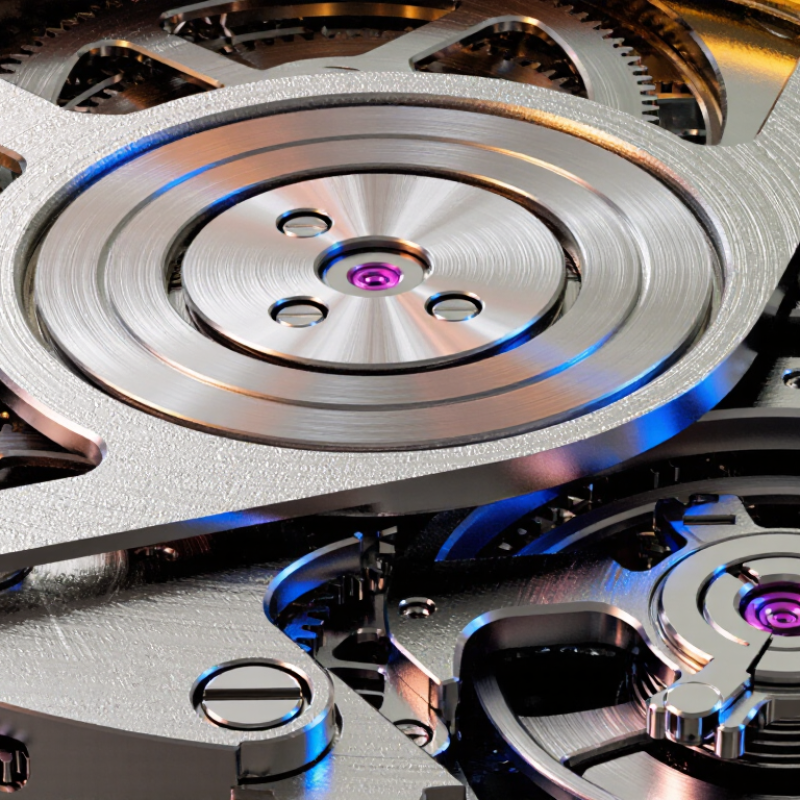
Jewels reduce friction at important pivot points. Bridges hold the wheels in position, while plates form the movement’s structural base. An automatic mechanism adds a rotating weight, which winds the mainspring during wrist movement. The Federation of the Swiss Watch Industry reported that mechanical watches represented about 23% of Swiss watch export volume but over 80% of export value in 2023. That contrast shows the engineering and labor concentrated in each movement. Deloitte’s Swiss Watch Industry Study 2024 also identified mechanical watches as central to perceived value, although consumer preference is not always predictable. Small parts. Delicate tolerances. Beautiful, but imperfect.
How the Mainspring Stores and Releases Energy
What Is a Mechanical Watch and How Does It Work?
A mechanical watch keeps time through carefully arranged mechanical parts, not a battery. At its center, the mainspring stores the energy needed to drive the movement. In a manual-winding watch, turning the crown tightens this thin metal coil inside the barrel. An automatic watch winds the same spring through a rotating weight moved by the wearer’s wrist.
The mainspring behaves like a controlled energy reservoir. When fully wound, its outer coils press firmly against the barrel wall. As the spring relaxes, it turns the barrel and powers the gear train. The gears reduce and regulate this force before it reaches the hands. Without control, the spring would unwind in seconds. The escapement releases tiny portions of energy, while the balance wheel swings at a steady rhythm. Each release creates the familiar ticking sound.
Small details matter. A watchmaker checks the spring, barrel, lubrication, and winding system during service. Dried oil can increase friction, while excessive force may damage the winding parts. I have found the power reserve less predictable near the final hours, especially when friction is uneven. That observation is useful, but it is not universal. Temperature, position, and spring tension can all affect accuracy. Mechanical watches are impressive, yet they are not perfectly self-correcting machines. Their performance depends on materials, adjustment, and regular care.
How a Mechanical Watch Mainspring Stores and Releases Energy
The mainspring stores potential energy when it is wound. As it unwinds, torque gradually decreases while the gear train and escapement meter the release to drive the hands. This normalized 48-hour model illustrates the relationship between remaining spring energy and relative torque; actual values vary by movement design.
How the Gear Train and Escapement Regulate Motion
A mechanical watch stores energy in a coiled mainspring. Winding tightens that spring inside the barrel. As it unwinds, it turns the first wheel. The gear train carries this force across several precisely sized wheels. Each wheel changes speed and available torque. The center wheel commonly completes one revolution per hour. The fourth wheel often drives the seconds display. Exact layouts can differ.
Without control, the spring would release its energy too quickly. The escapement regulates that motion. A pallet fork alternately locks and unlocks the escape wheel. Each release allows one small gear movement. The balance wheel then swings back and forth. Its hairspring returns it toward a central position. This repeated exchange creates the familiar ticking rhythm. Listen closely. Tiny clicks reveal the mechanism working. Timing is not perfectly fixed. Temperature, position, and lubrication can affect performance.
In practical servicing, a watchmaker checks the gear train for wear and resistance. Dust or dried lubricant can make the wheels lose energy. A clean tooth may still fail if its alignment is slightly wrong. My first assumption was simple: more spring tension should mean better accuracy. I was wrong. Excess force can disturb the escapement. The train must transmit power smoothly, not aggressively. Precision comes from many small relationships between teeth, pivots, and springs. Even a healthy movement can gain or lose time over several days. Observing those changes gives useful evidence about its condition.
How the Balance Wheel Drives Accurate Timekeeping
What Is a Mechanical Watch and How Does It Work?
How the Balance Wheel Drives Accurate Timekeeping
A mechanical watch stores energy in a tightly wound mainspring. As the spring unwinds, gears transfer that energy through the movement. The balance wheel controls this release, turning steady motion into measured seconds.
The balance wheel swings back and forth like a tiny pendulum. A hairspring pulls it toward its center after each swing. Together, they regulate the escapement, which releases energy in small, repeated steps. Each release moves the gear train and advances the hands.
Small details matter here. A balance wheel may complete several swings each second. Its regular rhythm helps the watch keep time, but it is not perfectly isolated. Temperature, magnetism, position, and dried lubricant can affect its motion. Even a slight change in amplitude may create noticeable daily gain or loss.
A watchmaker checks this behavior with timing equipment and compares readings in several positions. On the wrist, movement and temperature keep changing. That is real-world testing. I have found the most interesting part is also the least convenient: accuracy is never completely fixed. Careful adjustment improves performance, but mechanical timekeeping still depends on delicate parts, sensible servicing, and how the watch is worn. The balance wheel is precise, not magical.