How to Treat Venous Ulcers?
Venous Ulcers are open wounds, usually around the lower leg or ankle, linked to poor blood return through the veins. They may look shallow, uneven, and wet, with swelling or skin discoloration nearby. Some are painful; others are surprisingly quiet. A wound’s appearance alone cannot confirm its cause, so clinical assessment matters.
Treatment aims to support healing and reduce the chance of another ulcer. A clinician may assess circulation, check for infection, and review medicines and other health conditions. Compression is often central to care, but it is not suitable for everyone and should follow an assessment of arterial blood flow. Wound dressings, leg elevation, walking or calf exercises, and support for healthy skin may also form part of a care plan. Small details count.
Healing can take weeks or months, and progress is not always steady. A dressing may become damp, swelling may return, or the wound may seem unchanged for a while. That can be frustrating. It does not automatically mean treatment has failed, but it should prompt a review when concerns persist. This guide explains common treatment approaches, what to expect during care, and when to seek medical advice. Increasing pain, spreading redness, fever, or a sudden change in the wound deserves prompt attention. The right plan depends on the person, not just the ulcer.
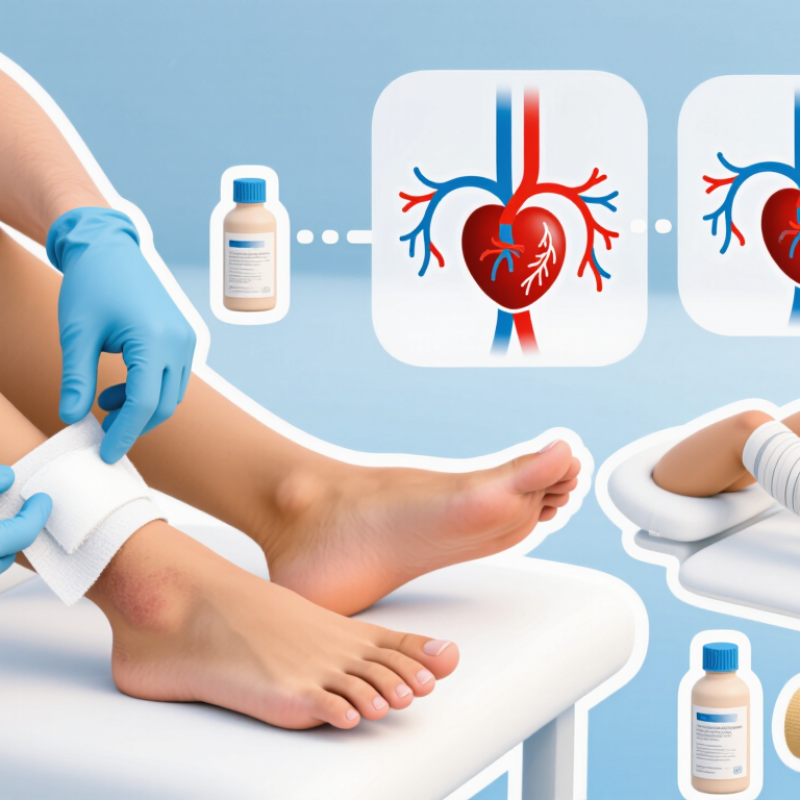
Assess ulcer cause and arterial flow; avoid compression if ABI is below 0.5
Venous ulcers often appear near the inner ankle, where skin may look swollen, brown, or flaky. But appearance alone cannot confirm the cause. A clinician should assess the wound, medical history, and circulation before choosing treatment. A small cuff reading can change the plan.
The ankle-brachial index, or ABI, compares blood pressure at the ankle and arm. An ABI below 0.5 suggests significant arterial impairment. Avoid compression in this situation unless a vascular specialist specifically directs otherwise; pressure may further reduce blood flow and damage tissue. Check pulses, skin temperature, and symptoms such as pain while walking or pain at rest. Cold toes matter.
ABI is not perfect. Hardened arteries can produce falsely high readings, especially in some people with diabetes or kidney disease. Toe pressure testing or vascular imaging may help clarify uncertain results. Do not start tight wraps or compression stockings at home based only on a suspected venous ulcer. Keep the wound covered with a clean dressing, and seek prompt care for spreading redness, fever, sudden severe pain, or a darkening foot. Real wounds can be messier than diagrams. A careful reassessment is worth the extra time.
Use compression safely: ABI 0.5–0.8 generally calls for modified compression
Venous ulcers often appear near the inner ankle, where swelling can keep skin fragile and slow healing. Compression helps reduce that pressure, but only when blood flow is adequate. An ankle-brachial index (ABI) of 0.5–0.8 suggests reduced arterial flow alongside venous disease. Strong, standard compression may be unsafe in this range. Use modified compression instead, with pressure selected by a qualified clinician and adjusted to the person’s circulation and symptoms. Less pressure matters.
Before treatment, clinicians may repeat the ABI or check toe pressures, especially when diabetes or stiff, calcified arteries could make the result misleading. A neat number can still mislead. A trained professional should apply or guide the wrap and explain what to watch for. New or increasing pain, numbness, or toes that become pale, blue, or cold need prompt medical review. Do not ignore them. Keep the wound covered with an appropriate dressing, and raise the leg when resting if advised. Walking may help calf-muscle pumping when it is safe, but the plan should fit the person’s overall health. Compression is not a set-and-forget treatment; swelling, skin changes, and discomfort deserve reassessment.
Clean and dress the wound; treat clinical infection rather than colonization
How to Treat Venous Ulcers?
Venous ulcers need gentle cleaning and a dressing suited to the wound’s drainage. Rinse with clean water or saline, then pat the surrounding skin dry. Choose a dressing that manages fluid without sticking to the wound bed; change it when saturated or soiled. Compression is often central to healing, but circulation should be assessed before it begins. A dressing alone does not correct venous pressure.
Bacteria commonly live on open ulcers without causing infection. A positive swab alone is not a reason for antibiotics. NICE guideline NG152 recommends antibiotics only when clinical signs suggest infection, such as spreading redness or swelling, warmth, increasing pain, or fever. Not just a swab. If infection is suspected, a clinician can assess the wound and decide whether sampling or antibiotics are appropriate. In practice, the distinction is not always neat; pain and drainage can change for other reasons, too. The US Agency for Healthcare Research and Quality’s 2014 statistical brief estimated that chronic ulcers affected about 2.5 million Medicare beneficiaries in 2009. That broad figure includes different ulcer types, not venous ulcers alone, but it shows how often careful wound care matters.
Consider early venous ablation: EVRA healed ulcers in 56 vs 82 days
How to Treat Venous Ulcers?
Venous ulcers need more than dressings. A clinician should assess circulation, confirm venous reflux with duplex ultrasound, and usually recommend compression when safe. In the EVRA randomized trial, 450 people with active venous ulcers received compression and either early or deferred endovenous treatment. Median healing time was 56 days with early ablation, compared with 82 days with deferred treatment. At 24 weeks, 85.6% of early-treatment ulcers had healed, versus 76.3%. These findings were reported by Gohel and colleagues in the New England Journal of Medicine in 2018. The benefit applies to suitable patients, not every ulcer.
Early treatment aims to reduce high pressure in affected surface veins while the wound is still being cared for. Keep the dressing plan consistent, elevate the leg when resting, and seek review if redness, worsening pain, fever, or a sudden change develops. Healing can still be slow. That is frustrating.
Tips: Ask whether a duplex scan shows treatable superficial reflux, and discuss the timing, benefits, and risks of ablation with a vascular specialist. Take a simple photo each week under similar lighting; it can help track changes, though it cannot replace an examination. EVRA evidence supports considering early ablation alongside compression, not stopping wound care.
Reassess healing and prevent recurrence with ongoing compression and follow-up
Venous ulcers often improve with compression, wound care, and treatment of the underlying vein problem. Compression should be recommended and fitted by a clinician after checking circulation, because it is not suitable for everyone. At follow-up visits, ask the care team to compare wound measurements, drainage, surrounding skin, and pain. A simple record can reveal progress that is hard to notice day by day. Healing is not always steady. The routine can feel repetitive, and a small setback may need a fresh assessment.
Once the ulcer closes, ongoing compression may help reduce the chance of another wound. Keep follow-up appointments so a clinician can review the fit, skin condition, and any changes in leg swelling. Report new pain, numbness, a cold or discolored foot, or a wound that is enlarging or becoming more inflamed. These changes need prompt medical advice. Gentle walking, if appropriate for you, can support calf-muscle movement; raising the leg when resting may also ease swelling. Your plan should reflect your health and mobility.
Tips: Put on prescribed compression as instructed, and check your skin daily for blisters, redness, or pressure marks. If the garment becomes uncomfortable or difficult to use, ask for a review rather than quietly stopping it.
Venous Ulcer Compression: Typical Ankle-Pressure Targets
Reassess healing and arterial circulation regularly. These typical ranges should be individualized; modified compression requires clinical assessment and supervision. Once the ulcer heals, ongoing compression and follow-up can help prevent recurrence.
Pressure ranges are general clinical guidance, not a substitute for local protocols or individual assessment. Sources: Wound, Ostomy and Continence Nurses Society (WOCN) venous leg ulcer guidance; European Society for Vascular Surgery (ESVS) 2022 Clinical Practice Guidelines.