Choosing a refrigeration unit for a truck means matching cooling performance to the cargo, route, and working conditions. The right Refrigeration Unit Truck setup can help protect product quality through long drives, frequent stops, and changing outdoor temperatures. But a unit that looks powerful on paper may still be poorly suited to a particular delivery schedule.
Start with the required temperature range and the type of goods being carried. Fresh produce, dairy, and frozen food place different demands on a cooling system. Then consider cargo space, insulation, door openings, and how long the truck runs between deliveries. Details matter. A side door opened repeatedly on a summer route can add a meaningful cooling burden. So can loading warm products into a compartment that is already expected to stay cold.
Fuel use, noise, maintenance access, and service availability deserve attention too. A fleet manager may prioritize uptime, while an owner-operator may weigh purchase cost more heavily. There is no single best unit for every truck. Compare manufacturer specifications with real operating needs, and ask qualified technicians to confirm fit and installation requirements. A temperature display is useful, but it cannot compensate for poor loading practices or damaged insulation. That part is easy to overlook. Even careful planning leaves some uncertainty, so tracking temperatures during actual routes can reveal gaps before they become routine problems. This guide outlines the practical factors to review before choosing a system.
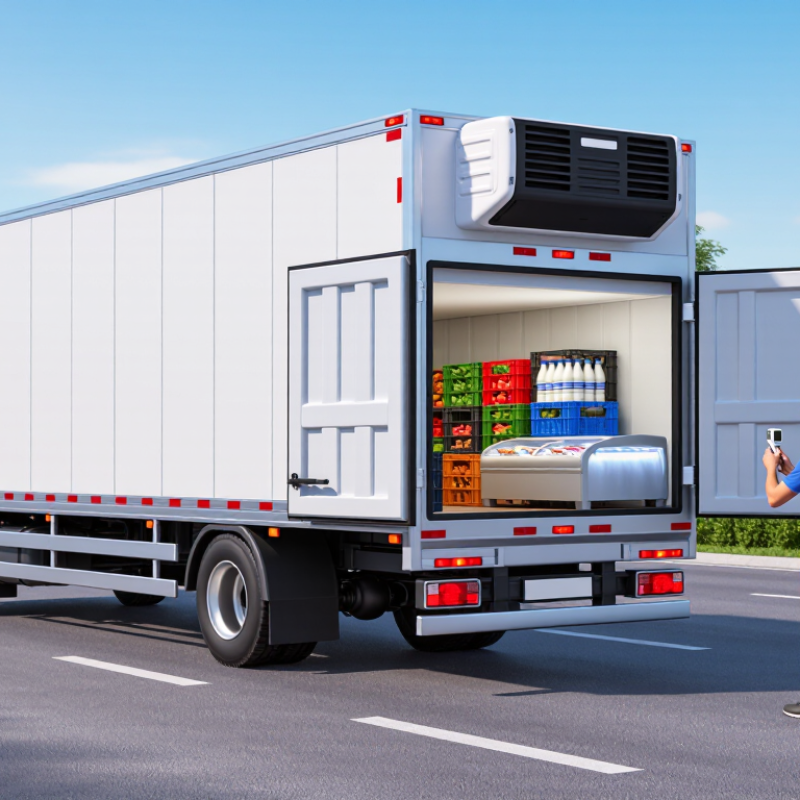
When choosing a Truck Refrigeration Unit, start with the cargo’s required temperature range, not a generic “cold” setting. Fresh produce, dairy, frozen foods, and temperature-sensitive medicines can need very different conditions. Check the shipper’s written specifications, including acceptable limits during loading and delivery. Small details matter. A product may tolerate brief variation, while another can lose quality after a short warm exposure.
Then consider how the cargo is handled. Frequent stops and long door openings let warm, humid air enter the trailer. A unit that holds temperature during highway travel may struggle on a multi-stop route. Ask how quickly the load must recover after each opening, and whether the unit needs to manage humidity or prevent freezing. “Keep it cold” is not enough. Note whether goods arrive pre-cooled, since refrigeration units are generally meant to maintain cargo temperature, not rapidly cool warm product.
Match the unit’s capacity to trailer size, insulation, route length, and expected outdoor conditions. Also check airflow around pallets; blocked return-air paths can create warm pockets, even when the display looks correct. Use a calibrated temperature logger near the cargo and review readings after a trial trip. I would not trust one dashboard number alone. Different loads and routes behave differently, so record door-open times and temperatures before settling on a setting.
Choose the unit from the truck’s real heat load, not cargo volume alone. Measure the usable interior and note wall, roof, and floor condition. Thick insulation slows heat gain, but damaged door seals can undo that benefit. Check for warm spots near hinges and thin metal joints. Small details matter.
The International Institute of Refrigeration’s 2019 report, The Role of Refrigeration in the Global Economy, estimates refrigeration uses about 17% of global electricity. That figure covers refrigeration broadly, not trucks specifically, but it shows why avoiding excess capacity matters. Ask a qualified installer to calculate heat entering through insulated panels, door openings, fresh cargo, and required pull-down time. Then factor in hot weather, frequent stops, and long idle periods. A truck delivering chilled produce through city traffic faces a different load than one carrying frozen goods on a steady highway route. Don’t overlook airflow around stacked pallets. One estimate may still be wrong; actual route temperatures and door-open time are worth tracking after installation.
Direct-drive units suit vans and light trucks, where the vehicle engine powers cooling. Larger trucks often use self-powered units, which can cool independently during stops. Eutectic systems store cooling in plates and can suit repeated, short urban routes. The catch? Their recharge time and available capacity matter.
Compare rated capacity in kilowatts or BTU per hour at the same ambient and cargo temperatures. A rating without test conditions can mislead. Size for the actual heat load: cargo volume, insulation, door openings, solar heat, and product temperature at loading. A warm load needs more pull-down capacity than pre-chilled goods. IIR’s 2021 report estimates that inadequate refrigeration contributes to losses of about 12% of food produced globally. That makes temperature control a practical equipment choice, not just a comfort feature. Ask suppliers for capacity at your hottest expected conditions, plus holding capacity after pull-down. Check the duty cycle against your route; a number on a specification sheet won’t capture every stop. I’d also leave a sensible margin, though too much capacity can waste fuel and money.
| Refrigeration Unit Type | Indicative Cooling Capacity | Typical Truck or Application | Power Source | Advantages | Considerations |
|---|---|---|---|---|---|
| Vehicle-engine-driven direct-drive unit | Approximately 1–7 kW | Small vans and light-duty trucks making local or regional deliveries | Truck engine, through a belt or other mechanical drive | Usually compact and comparatively simple; suitable for frequent urban stops and moderate cooling loads. | Cooling generally depends on the vehicle engine running. Check the unit’s performance at the required box temperature and in hot weather. |
| Independent-engine diesel unit | Approximately 3–18 kW | Medium- and heavy-duty trucks, larger insulated bodies, and demanding frozen or chilled applications | Dedicated diesel engine on the refrigeration unit | Can provide substantial cooling independently of the truck engine and is commonly suited to longer routes or extended operation. | Adds an engine that requires fuel, maintenance, and noise management. Capacity varies with operating conditions and setpoint. |
| Electric unit with battery or electric power take-off | Approximately 2–12 kW | Urban delivery vehicles and trucks designed for electric or hybrid operation | Vehicle battery, auxiliary battery, or electric power take-off | Can reduce local exhaust emissions and may operate with less noise than an engine-driven unit. | Confirm available electrical power, battery range, charging strategy, and cooling output during vehicle operation and stationary delivery. |
| Electric standby system | Typically about 2–15 kW, depending on the refrigeration system | Vehicles that spend time loading, unloading, or parked near a suitable power supply | External mains electricity while parked; a separate drive source may be used on the road | Can reduce operation of the vehicle or auxiliary engine while parked and can support pre-cooling. | Requires compatible site power and connection equipment. Standby operation does not by itself determine road-mode capacity. |
| Eutectic plate system | Not directly comparable as a continuous kW rating; output depends on plate size, freezing time, and stored cooling | Repeated local deliveries with predictable routes and relatively short operating cycles | Plates are frozen before the route, often using an electric refrigeration system | Stores cooling in the plates and can provide quiet operation during delivery without continuous mechanical cooling. | Must be recharged between routes. Suitability depends on route duration, door openings, load, and the time available to refreeze the plates. |
How to use the figures: Capacity ranges are broad, indicative planning values, not guaranteed ratings for a specific unit. Compare certified cooling capacity at the intended box temperature and stated ambient conditions. Final selection should also account for body insulation, internal volume, product pull-down, door openings, solar heat, route duration, and required temperature.
Check the power source before comparing cooling capacity. A diesel-driven unit can suit long routes, while an electric system may fit depot-based delivery with reliable shore power. Confirm the truck’s alternator output, battery capacity, and available voltage; a unit that cools well on paper may overload an undersized electrical system.
FAO’s 2019 State of Food and Agriculture estimated that 14% of food is lost between harvest and retail, underscoring the value of dependable temperature control.
Installation details matter. Measure roof clearance, body openings, and service access, then check airflow around the condenser. Ask an installer to verify mounting strength, drainage, and wiring against the vehicle’s specifications. Small details matter.
Regulations also vary by route and cargo: check refrigerant requirements, noise and emissions rules, and applicable food-temperature and recordkeeping standards before purchase. Requirements can change, so confirm them with the relevant transport and food-safety authorities.
Tips
Match the unit’s capacity to the truck’s insulation, door-opening frequency, and hottest expected conditions. Request operating data at realistic ambient temperatures, not just ideal test conditions. Keep a little margin, but avoid oversizing without a reason; extra capacity can mean added weight and cost. I would still verify the installer’s assumptions in writing.
When comparing truck refrigeration units, ask for fuel or electrical consumption at your actual set point, not just a rated-capacity figure. A unit holding frozen cargo on a hot afternoon works harder than one carrying chilled produce overnight. The IEA’s 2018 report, The Future of Cooling, estimates that space cooling uses about 10% of global electricity. That figure is not specific to trucks, but it shows why cooling efficiency deserves careful scrutiny. Request test conditions and operating data before comparing quotes.
Maintenance affects performance as much as the unit’s specification. Check how easily technicians can reach filters, belts, coils, and drain lines during routine service. Ask for a written maintenance schedule and typical parts lead times. Small leaks matter. A blocked coil or worn seal can increase run time and threaten cargo temperatures. Ask for records. If a seller cannot explain likely service intervals, treat that uncertainty as a real operating cost.
Service support matters most when a load is at risk. Confirm coverage along your regular routes, after-hours response options, and access to trained technicians. Ask what happens if a repair needs a part that is not stocked locally. Compare the warranty’s exclusions, too. A low purchase price can look attractive, but downtime has a cost that a simple payback spreadsheet may miss. That calculation is imperfect; route conditions and driver habits change the result. Keep those assumptions visible.
Watch video