In 2026, choosing Die Cast Part Surface Finishing means balancing appearance with function, production needs, and cost. A component used inside a machine may need corrosion protection more than a mirror-like shine. A visible appliance housing may demand consistent color, texture, and clean edges. Small details matter: alloy composition, casting porosity, sharp corners, and the part’s operating environment can all affect how a finish performs. Looks simple on a specification sheet. Less simple on the production floor.
This guide examines common options, including powder coating, plating, painting, and conversion treatments, and explains where each may fit. It considers preparation steps, coating thickness, dimensional tolerances, adhesion, and likely wear. For example, a coating that bridges a narrow recess could change assembly fit, while trapped residue may cause an uneven finish. Ask suppliers how they control cleaning, masking, and inspection, then assess samples made from the actual alloy and casting process. Results from a polished sample alone may not predict performance across a full production run. There is no universal best finish; application requirements and verified process data should guide the choice. Even then, early assumptions sometimes need revision. A practical selection starts with measurable requirements, realistic samples, and clear acceptance criteria.
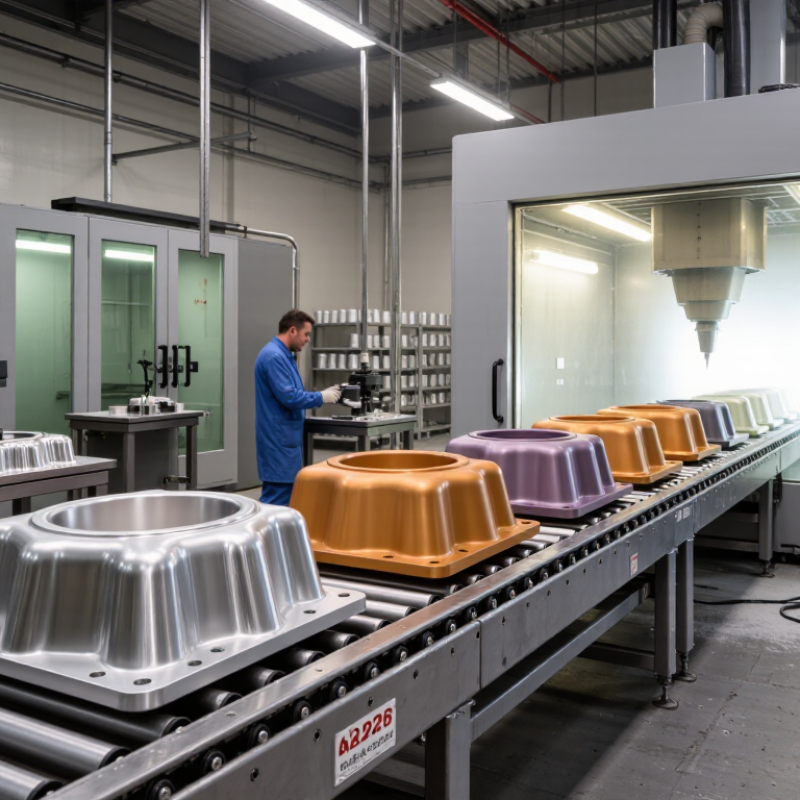
Identify the alloy before choosing a finish. Aluminum, zinc, and magnesium die castings do not respond identically to pretreatment or coating. Check the alloy designation and supplier’s process notes; a generic label such as “aluminum” is not enough. For example, silicon content and casting porosity can affect coating adhesion and appearance. Small test coupons can reveal problems before a full production run.
Then define what the part must do. Will it sit outdoors, touch skin, carry electrical current, or show on a visible panel? A decorative housing may need consistent color and a smooth appearance. A bracket hidden inside equipment may prioritize corrosion protection and cost instead. Note the operating temperature, chemicals, handling, and expected service life. Be specific. “Good durability” is hard to evaluate.
Dimensions matter, too. Measure critical holes, threads, sealing faces, and mating surfaces before selecting a coating that adds thickness. Mark areas that must remain uncoated, and confirm how masking will work on the actual casting. Sharp edges and recessed pockets can finish unevenly. This is easy to overlook. It is also worth questioning the first specification: a premium finish may add little value where the part is never seen, while a low-cost option may disappoint on a frequently handled surface. Decide what evidence will count as acceptable, such as a sample part inspected under the intended lighting.
Before selecting a finish, write down what the die cast part must do in service. A housing near moving components may need abrasion resistance, while a connector face may need reliable electrical contact. Small details matter. Note heat, cleaning agents, moisture, and handling frequency. These conditions can rule out attractive finishes that wear quickly or interfere with fit.
Appearance needs should be specific, not simply “premium.” Decide whether the part should look matte, uniform, or polished, and identify visible surfaces. A textured coating can hide minor casting variation, but it may soften edges or change dimensions. Check masking lines and fastener contact areas on a real sample. The sample may disappoint. That is useful evidence.
Environmental needs shape the choice too. Outdoor exposure, salt-laden air, oils, and temperature cycling affect finishes differently. Confirm the alloy, cleaning process, and any pretreatment with the finishing supplier; adhesion can fail when surface preparation is overlooked. Ask for test panels or representative parts, then inspect color, coverage, and wear after relevant exposure. Keep tolerances in view, since coating buildup can affect assembly. No single finish solves every need.
Typical coating thickness ranges help compare finishing options, but they are broad estimates—not acceptance limits. Choose a process based on the part’s alloy, corrosion and wear requirements, appearance, dimensional tolerances, and applicable environmental requirements. Confirm the specification and compatibility with your finishing supplier.
Die-cast parts can leave the mold with a usable surface, but “as-cast” does not mean perfectly smooth. Ejector marks, parting lines, and small pores may remain visible. For hidden brackets or internal housings, this finish can be enough. It avoids extra processing, though cosmetic variation should be checked across production batches.
Mechanical finishing changes the texture without adding a coating. Vibratory tumbling can soften sharp edges on small parts, while bead blasting creates a more uniform, matte appearance. Blasting may expose pores or alter fine details, so inspect a sample before approving the process. Small features matter. For visible components, liquid paint offers flexible color and touch-up options; powder coating generally forms a thicker, durable layer. Either can affect fit at holes or mating faces, which may need masking.
Plating and conversion coatings serve different needs. Plating can add a decorative or functional surface, but the casting alloy and porosity affect adhesion and consistency. Conversion treatments are often thinner and preserve dimensions better, yet their appearance and corrosion protection depend on the specific process. A practical comparison uses actual parts, not just finish samples: check color, edge coverage, corrosion exposure, and critical dimensions. Teams sometimes choose a premium finish before confirming the part’s real environment. That deserves a second look.
Choosing a die cast part surface finish in 2026 starts with the part’s real working conditions. A housing exposed to road spray needs different protection from an indoor control knob. Check the alloy, porosity, sharp edges, and mating surfaces before selecting a coating. Small pores can trap cleaning chemicals or create visible defects. Preparation matters.
Ask your finisher how parts are cleaned, blasted, masked, and inspected. A test batch can reveal adhesion problems before production volumes rise. Compare total cost, not just the price per part: include rejected castings, masking labor, touch-ups, and inspection time. A thick coating may improve corrosion resistance but interfere with tight fits. I have seen teams overlook that detail. It is an easy miss.
For 2026 projects, confirm applicable environmental and customer requirements for the coating process, restricted substances, worker controls, and waste handling. Requirements vary by destination and application, so verify current documentation with qualified compliance staff rather than relying on an old supplier declaration. Request coating specifications, test methods, and traceable batch records. Salt-spray results can help, but they do not predict every field condition. No finish is perfect. A practical choice balances preparation, service life, appearance, and repeatable quality.
Use this comparison for initial planning. Suitability and performance depend on alloy, part geometry, service environment, finish specification, and process controls. Cost indices are illustrative relative estimates—not quotations—and should be validated with finishers.
| Finish | Typical Substrate Fit | Key Preparation | Typical Performance / Appearance | Relative Cost Index* | 2026 Compliance Checks | Best-Fit Use |
|---|---|---|---|---|---|---|
| As-cast / cleaned | Aluminum, zinc, or magnesium die castings where the casting surface is acceptable | Remove flash and release-agent residue; wash or degrease; inspect porosity and cosmetic defects | Retains the natural casting texture; offers little added barrier protection or color consistency | 20–40 | Confirm any cleaning-agent restrictions and wastewater controls; material declarations may still be required for the finished article | Hidden or indoor parts with low corrosion and appearance requirements |
| Powder coating | Common on aluminum and zinc; alloy and part geometry must tolerate the cure cycle | Clean and degrease; pretreat for the substrate; mask threads and contact surfaces; control outgassing from porous castings | Durable colored film with broad gloss and texture choices; edge coverage and impact performance depend on design and process | 100 (reference) | Check local VOC and chemical rules for pretreatment and powder ingredients; request restricted-substance and applicable RoHS/REACH documentation | Consumer, industrial, and outdoor parts needing color and a robust coating |
| Wet paint | Aluminum, zinc, and magnesium when a compatible primer and paint system are specified | Clean and pretreat; apply primer when needed; mask critical features; manage flash-off and cure conditions | Supports thin films, fine cosmetic effects, and complex shapes; typically needs more care to resist chips and abrasion than a heavy-duty coating system | 90–140 | Verify site-specific VOC limits, solvent handling, and worker-exposure controls; assess coating substances against destination-market requirements | Decorative finishes, low-temperature-sensitive parts, or parts requiring specialized colors |
| Conversion coating / chemical pretreatment | Aluminum and zinc systems are process-specific; magnesium requires a qualified compatible process | Thorough cleaning and controlled bath chemistry; specify the substrate and whether the coating is a standalone finish or paint pretreatment | Thin treatment that can improve paint adhesion and corrosion resistance; appearance and protection vary by chemistry and specification | 50–90 | Specify hexavalent-chromium-free chemistry when required; verify applicable RoHS, REACH, wastewater, and customer requirements rather than assuming one rule covers every use | Paint pretreatment or a thin corrosion-protection layer where dimensions must change minimally |
| Anodizing | Primarily aluminum; high-silicon die-casting alloys may anodize unevenly or produce a less uniform appearance | Clean and etch; assess alloy and silicon content; mask electrical contacts and allow for dimensional change where relevant | Hard, integral oxide layer on suitable aluminum; color uniformity and achievable appearance depend strongly on alloy and casting quality | 120–200 | Check process chemicals, wastewater permits, and applicable substance restrictions; confirm the anodizing specification and any customer or market-specific requirements | Suitable aluminum parts needing wear resistance or an anodized appearance, after an alloy trial |
| Electroplating (for example, zinc or nickel systems) | Often used on zinc die castings; aluminum typically needs specialized activation and undercoat steps | Clean, activate, and apply compatible strike or undercoat where required; control porosity, rack marks, and coverage in recesses | Metallic decorative or functional layer; corrosion performance depends on the coating stack, thickness, and exposure | 150–300 | Review metal and process chemistry against applicable RoHS/REACH and destination-market rules; avoid assuming all chromium-containing processes are permitted | Decorative metal appearance or specified functional surface properties where geometry and substrate are suitable |
| Mechanical finishing (tumbling, blasting, or polishing) | Aluminum and zinc; method must suit wall thickness, detail, and cosmetic requirements | Remove gates and flash; select media and cycle carefully; protect thin walls, sharp edges, and critical dimensions | Can reduce burrs and improve surface uniformity; does not by itself provide a durable corrosion barrier | 40–100 | Control dust, media, and waste under applicable workplace and environmental rules; check whether a subsequent coating triggers additional requirements | Deburring, texture control, or preparation before painting or plating |
*Illustrative relative cost index: powder coating is set to 100 for comparison. Actual cost varies with part size, production volume, alloy, masking, pretreatment, required testing, finish specification, and regional supplier rates. Before release, confirm the applicable 2026 requirements for the product’s destination, end use, and customer specification; regulations and exemptions can vary and change.
A finish that looks right on a sample panel may behave differently on a die cast part. Test coupons should match the alloy, surface preparation, and coating thickness planned for production. Better still, include parts with ribs, recessed corners, and thin edges. These areas often reveal uneven coverage or poor adhesion.
Define acceptance limits before testing. Measure coating thickness at several points, then check adhesion after curing. Add corrosion, abrasion, and chemical exposure tests that reflect the part’s real environment. A component near road splash needs different validation from one inside a dry enclosure. Record the exposure time, temperature, and inspection method. Small details matter.
Inspect the finish under consistent lighting, too. Look for blisters, pinholes, color shifts, and exposed edges. Die castings can contain porosity or residue that disrupts coating performance, even when preparation seems controlled. Test parts from more than one production run if possible. One batch is not proof. Results may still miss field conditions, so review failures and adjust the process before approval. That extra loop can feel slow, but it is cheaper than discovering weak adhesion after assembly.
Watch video