Why Home Robots Are the Future of Smart Living and Household Automation
As the landscape of technology continues to evolve, home robots have emerged as pivotal players in the quest for smarter living and efficient household automation. According to a recent report by the International Federation of Robotics, the global market for home robots is projected to reach USD 15 billion by 2024, reflecting a compound annual growth rate of 25%. This explosive growth underscores the increasing consumer demand for solutions that enhance daily living through automation.
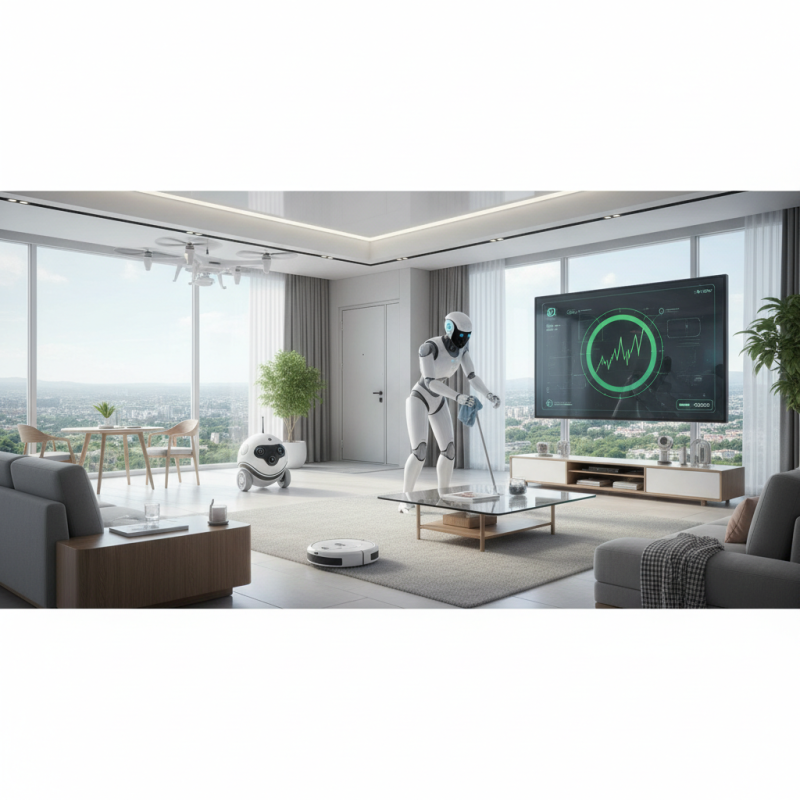
Home robots, equipped with advanced artificial intelligence and machine learning capabilities, are designed to take on a myriad of household tasks ranging from cleaning to security. A study by ResearchAndMarkets estimates that nearly 80% of households will employ some form of automated assistant by 2025, indicating a significant shift towards integrated living spaces where technology harmonizes with everyday life. These robots not only aim to alleviate the burdens of mundane chores but also provide valuable companionship and safety features, thus enriching the overall quality of life.
As we look to the future, it is clear that home robots are not just a passing trend; they represent a transformative force in how households operate. With advancements continuing at a rapid pace, these intelligent devices are set to become indispensable companions in the journey towards a fully automated home environment, forever changing the fabric of domestic life.
The Rise of Home Robots: A Market Overview and Growth Projections
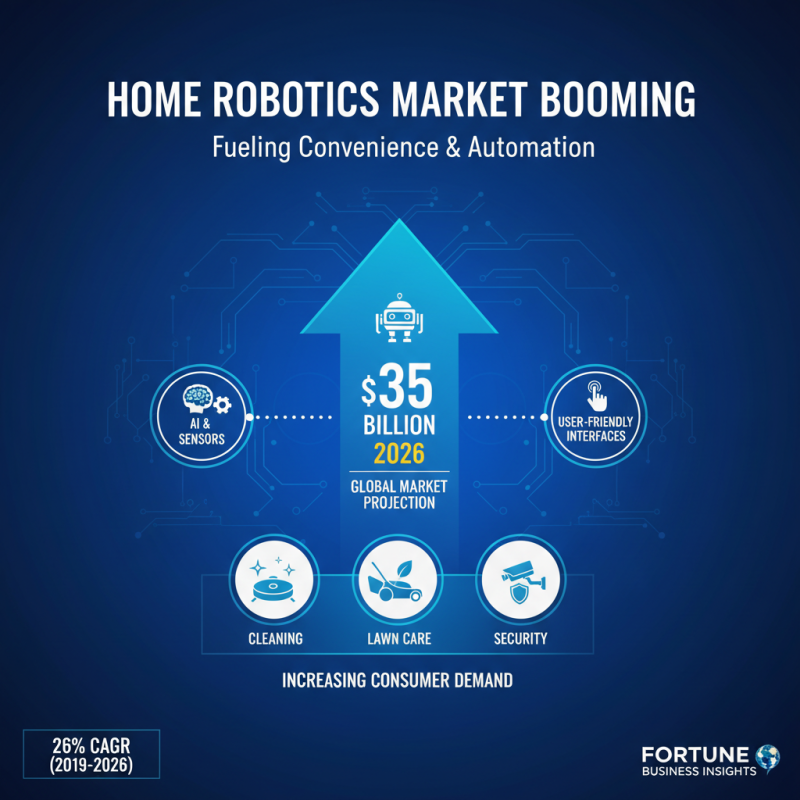
The home robotics market is experiencing unprecedented growth, fueled by advancements in artificial intelligence, sensor technologies, and user-friendly interfaces. According to a recent report from Fortune Business Insights, the global home robotics market is projected to reach approximately $35 billion by 2026, growing at a compound annual growth rate (CAGR) of over 26% during the forecast period. This surge can be attributed to increasing consumer demand for convenience and automation, particularly in daily household tasks such as cleaning, lawn maintenance, and security.
Additionally, the rise of connected devices within smart homes has further accelerated the integration of home robots. A study by ResearchAndMarkets indicates that the smart home market is expected to surpass $174 billion by 2025, with home robots playing a critical role in enhancing the user experience. Intelligent robots equipped with machine learning capabilities are becoming smarter, allowing them to adapt to user preferences and routines effectively. As the technology matures, we can expect even greater adoption rates, paving the way for a future where home robots are an integral part of everyday living.
Key Technologies Driving Home Robot Development and Adoption
The development and adoption of home robots are driven by several key technologies that enhance their capabilities and integrate seamlessly into smart living environments. Artificial intelligence (AI) plays a pivotal role, enabling robots to learn from their surroundings and improve their performance over time. Machine learning algorithms allow these devices to adapt to individual user preferences, providing personalized assistance and optimizing household tasks. Additionally, advancements in computer vision technology enable robots to navigate complex home environments, avoiding obstacles and identifying objects.
Another crucial aspect is the evolution of connectivity technologies, such as the Internet of Things (IoT). This connectivity allows home robots to communicate with other smart devices, creating a cohesive ecosystem that enhances overall functionality. For instance, a home robot can receive instructions from a smartphone app or coordinate with smart appliances to perform tasks more efficiently. The combination of these technologies is making home robots not only more effective but also more accessible to the average consumer.
**Tips:** When considering investing in home robots, assess your specific needs and the tasks you want them to perform. Research various options and look for models that offer compatibility with existing smart home devices. Regular software updates are essential for maintaining optimal performance, so opt for robots that provide ongoing improvements to their systems.
Why Home Robots Are the Future of Smart Living and Household Automation - Key Technologies Driving Home Robot Development and Adoption
| Technology |
Description |
Benefits |
Adoption Rate (%) |
| Artificial Intelligence |
Enables robots to learn from their environment and improve efficiency over time. |
Enhanced automation, adaptability to user preferences. |
67 |
| Machine Learning |
Algorithms allow robots to analyze data and make decisions based on patterns. |
Continuous improvement, efficient task management. |
55 |
| Computer Vision |
Allows robots to interpret visual information from the world. |
Improved navigation and interaction with objects. |
63 |
| Natural Language Processing |
Facilitates communication between humans and robots using everyday language. |
User-friendly interaction, enhanced customer experience. |
52 |
| Internet of Things (IoT) |
Connects devices and appliances for streamlined operation and control. |
Centralized management, improved operational efficiency. |
70 |
Impact of Home Robots on Daily Life: Time Savings and Efficiency Gains
The integration of home robots into daily life has significantly transformed how households operate. These intelligent devices handle a variety of tasks, from mundane cleaning chores to complex meal preparations, allowing individuals and families to reclaim valuable time. By automating repetitive activities, home robots empower users to focus on what truly matters—spending quality time with loved ones, pursuing hobbies, or simply relaxing. This shift not only enhances the quality of daily life but also contributes to an overall boost in well-being.
Moreover, the efficiency gains provided by home robots are remarkable. Tasks that once required considerable time and effort can now be completed swiftly and effectively. For instance, robotic vacuum cleaners can navigate spaces autonomously, ensuring that floors remain clean without the need for constant human intervention. Similarly, smart kitchen devices can streamline meal prep by automating various cooking processes, reducing the time spent in the kitchen. The efficiency of these robots allows households to operate more smoothly, turning what might be stressful or time-consuming into seamless experiences. This change signifies a shift towards smart living, where technology and daily life intertwine to create a more balanced and enjoyable home environment.
Impact of Home Robots on Daily Life: Time Savings and Efficiency Gains
Consumer Acceptance and Demographics: Who's Embracing Home Automation?
As home automation technology continues to evolve, a diverse array of consumers is embracing smart home solutions. According to a report by Statista, the global smart home market is projected to reach approximately $135 billion by 2025, reflecting a growing interest across various demographics. Younger consumers, especially millennials and Generation Z, exhibit a strong preference for smart devices, motivated by convenience and the desire for enhanced control over their living environments. Research indicates that about 47% of millennials own at least one smart home device, a figure expected to rise as technology becomes more accessible.
Moreover, the demographic landscape of home automation users is shifting. A study from Parks Associates reveals that households with children are significantly more likely to adopt home automation systems, with 67% of families considering smart home technology essential for modern living. Conversely, older generations, while initially slower to adopt these innovations, are gradually increasing their engagement. The same study highlights that 24% of consumers aged 55 and older now own smart home devices, a number rising as educational resources and user-friendly solutions become more prominent. This shift indicates a future where smart living is inclusive, offering solutions tailored to the needs of various age groups and lifestyles.
Future Trends: Innovations Shaping the Next Generation of Home Robots
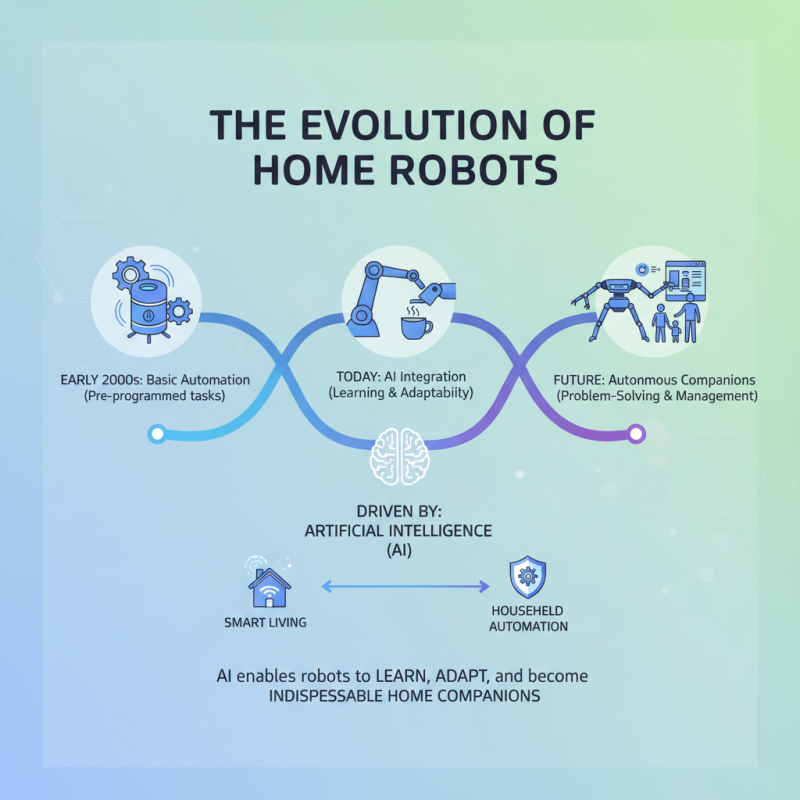
The evolution of home robots is driven by a convergence of innovative technologies that are reshaping the landscape of smart living and household automation. One prominent trend is the integration of artificial intelligence (AI), which enables robots to learn from their environments and user habits. This adaptability allows for more personalized experiences, as robots can anticipate tasks and perform them with increasing efficiency. As AI continues to advance, we can expect home robots to not only execute predefined commands but also to engage in complex problem-solving, making them indispensable companions in home management.
Another significant trend influencing the next generation of home robots is the improvement in sensor technologies and connectivity. With the rise of the Internet of Things (IoT), home robots are becoming more interconnected, allowing them to communicate seamlessly with other smart devices within a household. Enhanced sensors enable robots to navigate spaces with greater precision, avoid obstacles, and even understand changes in their surroundings, ensuring they can provide support in real-time. This interconnectedness enhances the overall efficiency of household automation, as robots can coordinate with various devices to optimize energy use and streamline daily chores, thus heralding a new era of smart living.