10 Essential Tips for Choosing the Best Home Robot for Your Needs
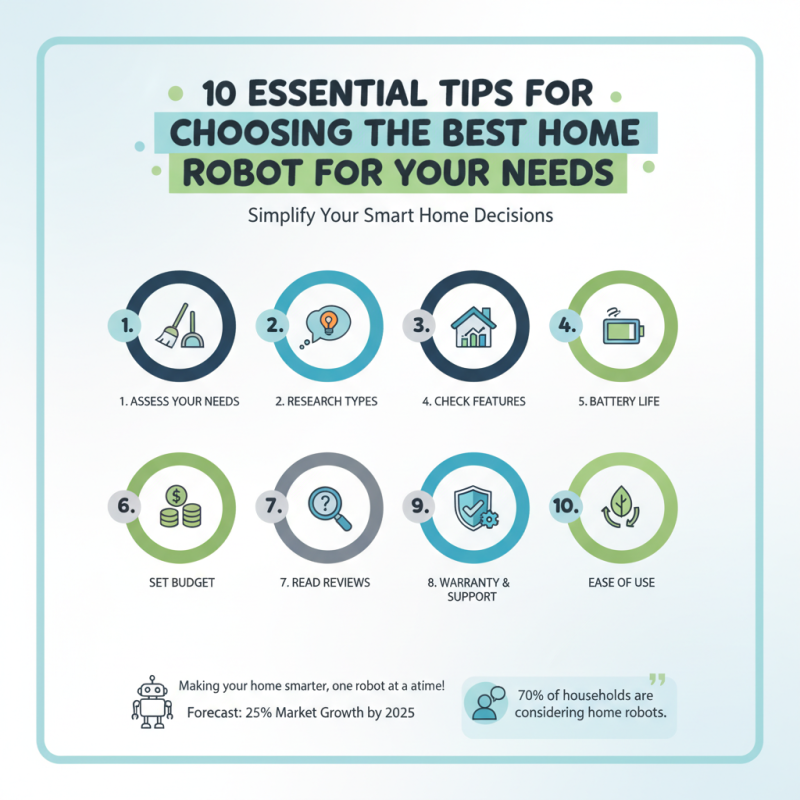
Choosing the right home robot can be a complex task. The market is growing rapidly, with forecasts predicting a 25% increase in sales by 2025. This growth reflects a rising interest in home automation. According to robotics expert Dr. Emily Carter, “Selecting the right home robot requires understanding your lifestyle needs.”
These intelligent devices come in various forms. From vacuum robots to smart assistants, the options can overwhelm consumers. Reports indicate that 70% of households are considering integrating home robots into their daily lives. Yet, each consumer’s needs differ significantly. Many forget that the best choice hinges on personal preferences and requirements.
Home robots can save time and effort but may also present challenges. Some models might lack key features that are crucial for specific tasks. It’s essential to conduct thorough research and evaluate functionality. Reflecting on what you truly need can transform your home experience.
Understanding Your Home Needs and Preferences
When choosing a home robot, understanding your specific needs is crucial. Consider what tasks you want it to handle. Do you need assistance with cleaning, cooking, or security? Break down your household activities. This will help narrow your options. For instance, if you have pets, a robot that tackles pet hair is essential. You may also require a robot that can navigate around furniture.
Personal preferences also matter. Some people appreciate a robot that blends into their home. Others may want a device with visible features for easier access. Think about your daily routine. A busy person might benefit from a robot that runs on a schedule. However, a more spontaneous individual may prefer a robot with on-demand capabilities.
Moreover, consider your tech comfort level. Some users may find complex interfaces daunting. Others may crave advanced features. Remember, a perfect fit for one home may not work for another. Reflect on your lifestyle and preferences. Embrace the trial-and-error nature of selecting the best robot. Each choice can bring new challenges. Staying adaptable can enhance your experience significantly.
Evaluating Different Types of Home Robots
When selecting the right home robot, it's crucial to evaluate the various types available. For example, cleaning robots are among the most popular. According to recent market reports, about 30% of households now own a robotic vacuum. These devices can save you significant time and energy, but they may not handle corners or high-pile carpets well.
Another category is home security robots. These robots often feature cameras and motion sensors. A study revealed that nearly 45% of consumers consider security features when purchasing a robot. However, many models can be complex to set up. Users sometimes find themselves struggling with connectivity issues.
Tip: Always consider your specific needs. If you have pets, look for robots designed to manage pet hair effectively. Models with strong suction and tangle-free brushes could fit your requirements better. Test features like scheduling and auto-cleaning modes. They can greatly enhance functionality but may lead to unexpected challenges, such as scheduling conflicts with your routine.
Smart home assistants are also growing in popularity. These robots do more than just manage tasks; they interact with other smart devices. But beware of over-reliance. These systems can malfunction, causing frustration. Evaluating their ease of use is essential. Read user reviews carefully and weigh the pros and cons before making a commitment.
10 Essential Tips for Choosing the Best Home Robot for Your Needs
This chart illustrates the satisfaction ratings for various types of home robots based on their primary features. For instance, vacuuming robots score the highest satisfaction at 85%, while cooking robots score lower at 65%. This data can assist consumers in evaluating which type of home robot may best fit their needs.
Assessing Features and Functionalities
Choosing the right home robot involves understanding its features and functionalities. The robot should align with your daily activities and lifestyle. Are you looking for help with cleaning, security, or companionship? Identifying your needs is crucial for making the right choice.
Tip 1: Evaluate task efficiency. Not all robots perform equally well at the same tasks. For example, some vacuum robots may struggle with pet hair. Ensure you look for reviews that discuss specific performance against your main requirements.
Tip 2: Consider integration options. How well does the robot work with your existing smart home devices? A seamless connection can enhance its usefulness. However, some robots might not play well with others. Check compatibility carefully.
Reading user reviews is fundamental. They provide insights you might miss otherwise. Pay attention to features people love and those they find lacking. It's all part of assessing the true value of a robot. Each feature has its pros and cons that should not be overlooked.
10 Essential Tips for Choosing the Best Home Robot for Your Needs - Assessing Features and Functionalities
| Feature |
Description |
Importance |
Price Range |
| Cleaning Capability |
Ability to vacuum, mop, or both. |
High |
$200 - $900 |
| Navigation Technology |
Method of avoiding obstacles and mapping areas. |
Medium |
$150 - $800 |
| Battery Life |
Duration the robot can operate before needing a recharge. |
High |
$100 - $600 |
| Smart Home Integration |
Compatibility with devices like Alexa, Google Assistant. |
Medium |
$200 - $1000 |
| Filter Quality |
Effectiveness of the filters in capturing dust and allergens. |
High |
$150 - $500 |
| Design and Size |
How the robot fits into home aesthetics and spaces. |
Low |
$100 - $700 |
| Maintenance Requirements |
Ease of cleaning and replacing parts. |
Medium |
$50 - $300 |
| Noise Level |
The sound produced during operation. |
Medium |
$100 - $600 |
| Warranty |
Duration and coverage of product repair and service. |
High |
Variable |
| User Reviews |
Feedback from existing users on performance and reliability. |
High |
$100 - $900 |
Budget Considerations for Home Robot Purchases
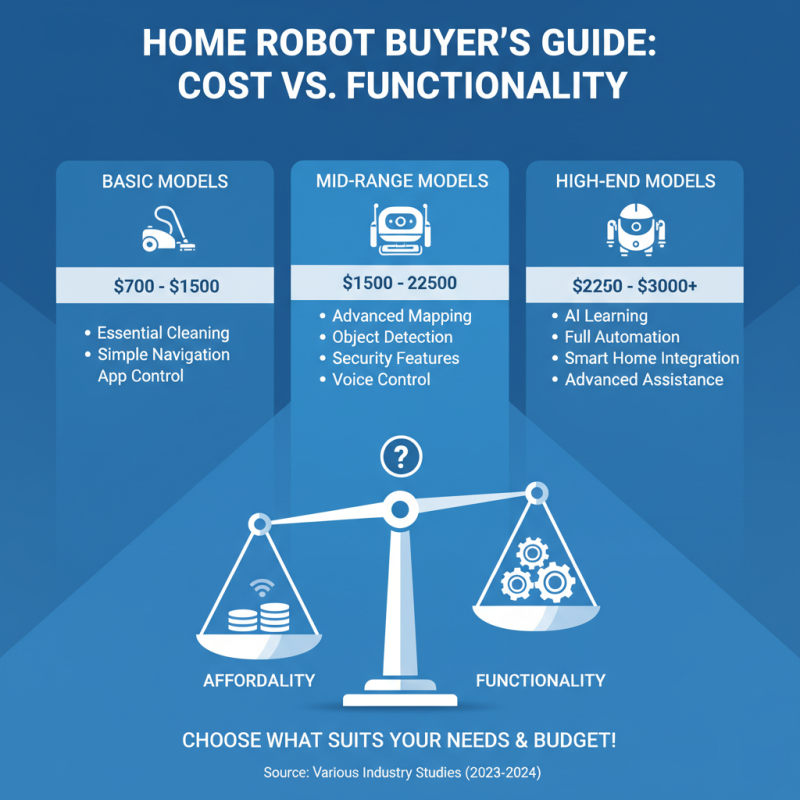
When considering a home robot, budget plays a crucial role. Various studies indicate that the average cost of home robots ranges from $700 to $3,000. Lower-priced models often have basic features. Higher-end models bring advanced capabilities but might not offer significant value for all households. Many consumers find themselves torn between affordability and functionality.
Data from recent market analyses show that 45% of buyers prioritize price over features. This often leads to purchasing a model that lacks essential functions, resulting in disappointment. For instance, budget robots may not perform well on uneven surfaces or with pet hair. These deficiencies can turn into frustrating experiences.
Understanding ongoing costs is also essential. Maintenance, software updates, and potential repairs can add up. A budget-friendly robot might save money upfront but could incur higher expenses later. Balancing initial costs with long-term benefits is complex. Evaluating both immediate and future needs can help guide your decision.
Researching Brands and Customer Reviews
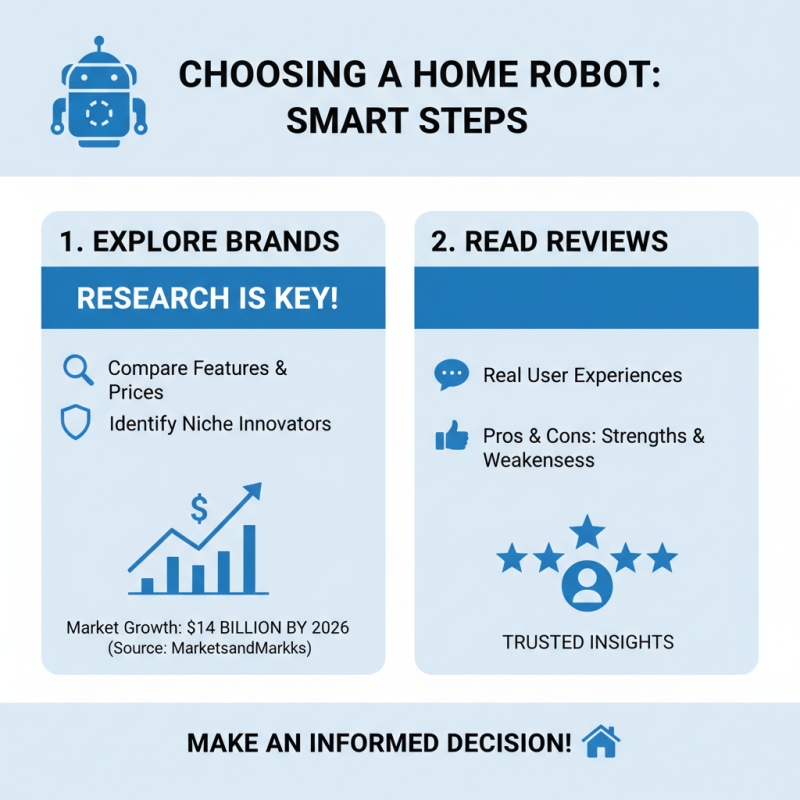
When exploring the home robotics market, researching brands and customer reviews is crucial. According to a report by MarketsandMarkets, the home robot industry is projected to reach $14 billion by 2026. With such growth, choosing the right robot can be overwhelming. Many users rely on online reviews to guide their decisions. Engaging with real experiences can help highlight both strengths and weaknesses of products.
Customer feedback often reveals common issues. For instance, battery life can vary significantly among models. Some users report needing daily charging, making daily chores tedious. Others find setup instructions unclear, causing frustration. Such insights can save potential buyers time and money.
There’s also a disparity in customer service experiences. One user may praise a brand’s quick response time, while another reports delays that lead to unresolved issues. Researching these trends is vital. Utilizing platforms like consumer review sites can provide a more rounded view. Balancing positive and negative feedback helps in making an informed choice.