10 Best Commercial Power Plant Manufacturers for Buyers

Choosing a commercial power plant manufacturer is not simply a matter of comparing nameplate capacity or equipment prices. Buyers must examine the complete project: fuel availability, expected operating hours, grid requirements, emissions controls, installation support, and access to replacement parts. A low initial quote can become expensive if commissioning takes longer than planned or critical components are difficult to service. Details matter.

Energy analyst and engineer Amory Lovins is often associated with the reminder, “The cheapest energy is the energy you don't use.” That principle is relevant when assessing plant efficiency, but efficiency figures need context. Ask how performance was measured, under what conditions, and whether the manufacturer can support those results at your site. Request clear warranty terms, documented reference projects, and a realistic maintenance plan. Then compare each offer against the same technical requirements.

This guide reviews 10 commercial power plant manufacturers for buyers evaluating project fit, technology, and service capabilities. It is intended as a starting point, not a substitute for independent engineering or financial review. A manufacturer may have an impressive portfolio and still be a poor match for a particular fuel supply, climate, or operating profile. That is easy to overlook. Verify claims directly, speak with existing operators where possible, and ask what happens when equipment is unavailable. The best choice is not always the largest system or the most familiar brand; it is the one whose documented capabilities align with your operating needs. Some uncertainties remain until site data and contract terms are examined closely.
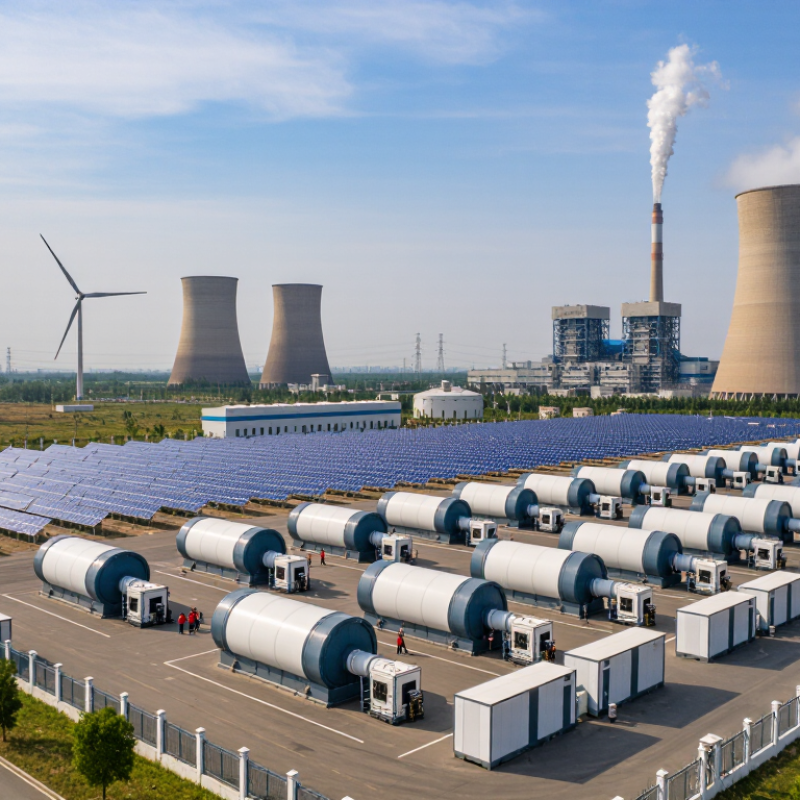
10 Best Commercial Power Plant Manufacturers for Buyers

What Commercial Power Plant Manufacturers Build and Supply

Commercial power plant manufacturers build and supply the equipment that turns fuel or renewable resources into dependable electricity. A typical package may include gas or steam turbines, reciprocating engines, boilers, generators, transformers, switchgear, and plant control systems. Suppliers may also provide cooling equipment, emissions controls, engineering drawings, installation support, commissioning, and maintenance. Some projects arrive as modular units; others require equipment designed around a specific site, fuel, and grid connection.

Small details matter. A poorly matched transformer or cooling system can limit output even when the generator is correctly sized. Buyers should check operating range, service access, spare-parts availability, and how the controls respond to changing demand. The International Energy Agency’s Electricity 2024 report projects global electricity demand to grow by an average of 3.4% annually from 2024 through 2026. Meanwhile, IRENA’s Renewable Power Generation Costs in 2023 report found that 81% of newly commissioned utility-scale renewable capacity that year produced power at lower cost than fossil-fuel alternatives. These figures shape procurement choices, but they do not decide them. Local grid conditions and operating needs still count. A specification can look complete on paper and overlook a difficult maintenance task. That deserves a second look.

Key Power Plant Technologies and Their Applications

Commercial power plants should be matched to operating needs, not nameplate output alone. Gas turbines can ramp up quickly, making them useful for peak demand and space-constrained sites. In a combined-cycle plant, turbine exhaust heats water to produce steam for a second power stage. This can improve fuel efficiency, but adds equipment, maintenance needs, and commissioning work. Details matter.

Reciprocating engines are often suited to smaller facilities, backup supply, or microgrids that need flexible output. Steam plants can use coal, biomass, or other heat sources, depending on fuel availability and project requirements. Solar thermal systems use mirrors to concentrate sunlight and generate heat, which can drive a steam cycle where sunlight is dependable. Each option has trade-offs. A plant with strong output figures may still be a poor fit if fuel delivery, cooling water, or grid connection is unreliable. Buyers should compare expected load patterns, service access, emissions controls, and realistic maintenance intervals. Paper estimates can look tidy; actual site conditions rarely do.

How Buyers Evaluate Commercial Power Plant Manufacturers

Buyers evaluating commercial power plant manufacturers should look beyond rated output. Compare expected efficiency at the site’s actual temperature, altitude, fuel quality, and operating schedule. A unit rated for one condition may deliver less power in another. Ask how the supplier supports load changes, planned maintenance, and unexpected shutdowns. Request performance data, commissioning procedures, and references from facilities with similar duty cycles. Check whether the proposed controls can communicate with existing plant equipment. Details matter.

Tips: Compare total lifecycle costs, not purchase price alone. Verify spare-parts lead times and local service coverage. Keep assumptions in writing.

Review warranty limits carefully, including operating-hour caps and required maintenance records. Ask who handles installation coordination and how performance is measured during acceptance testing. A clear answer should identify responsibilities, timelines, and supporting documents. If answers stay vague, pause and ask for specifics.

Site visits can reveal practical issues that a proposal misses, such as cramped maintenance access or noisy auxiliary equipment. I would not treat a polished presentation as proof of reliability; even good evaluations can overlook a constraint that appears only after a detailed site review.

Profiles of Ten Leading Commercial Power Plant Manufacturers

Commercial power plant manufacturers differ less by brochure claims than by how their equipment performs under real operating conditions. The IEA’s Electricity 2024 report projected global electricity demand growth averaging 3.4% annually through 2026. IRENA recorded 473 GW of renewable capacity additions in 2023. These figures make efficiency, delivery schedules, and service support important comparison points.

A buyer’s shortlist may include ten distinct supplier profiles: gas-turbine systems for steady large loads; reciprocating-engine plants for flexible dispatch; modular gas units for staged expansion; biomass systems using local fuel; waste-to-energy facilities; small hydro equipment; geothermal plant packages; utility-scale solar equipment; solar-and-storage systems; and hybrid microgrids. Different needs. Compare net output, heat rate, ramp time, emissions data, and guaranteed availability. Request verified test results, not just modeled performance.

Plant design is only part of the decision. Check whether maintenance crews can reach the site, critical spares are locally available, and controls integrate with existing equipment. Ask for references from plants operating in similar climates and duty cycles. One caution: published efficiency figures may assume ideal fuel and ambient conditions. Actual results can disappoint. Buyers should document those assumptions and compare lifetime operating costs, warranty limits, and service response times before choosing a supplier.

10 Best Commercial Power Plant Manufacturers for Buyers - Profiles of Ten Leading Commercial Power Plant Manufacturers

The profiles below compare common commercial power-plant supplier specializations without naming companies or brands. Capacity figures are broad, indicative technology-level ranges—not specifications or verified product ranges for any individual manufacturer. Actual output depends on site conditions, equipment configuration, and project scope.

Profile Primary Plant Specialization Typical Fuel or Energy Source Indicative Plant Output Common Delivery Scope Typical Buyer Fit Key Buyer Checks
Profile 1 Simple-cycle gas-turbine plants Natural gas; some turbine configurations can use specified liquid fuels Roughly 30–600 MW per turbine or plant configuration Turbine-generator packages, balance of plant, controls, commissioning support Utilities and industrial buyers needing dispatchable power or peaking capacity Heat rate, ramp rate, fuel quality, emissions permits, and hot-climate performance
Profile 2 Combined-cycle gas plants Primarily natural gas; exhaust heat generates additional steam-cycle power About 100–1,200 MW for plant configurations, depending on turbine count and design Gas turbines, heat-recovery steam generators, steam turbines, plant integration Large utilities and independent power producers seeking high-efficiency generation Net efficiency basis, cooling-water needs, start-up flexibility, and turnkey guarantees
Profile 3 Reciprocating-engine power plants Natural gas, biogas, or specified liquid fuels, depending on engine design Typically 1–20 MW per engine; multi-engine plants can reach hundreds of megawatts Engine-generator sets, modular auxiliaries, controls, and maintenance services Industrial sites, islands, microgrids, and projects requiring fast-start generation Engine availability, maintenance intervals, fuel flexibility, noise, and emissions
Profile 4 Steam-turbine and boiler-based plants Coal, biomass, waste-derived fuels, nuclear heat, or industrial process steam From a few megawatts to more than 1,000 MW, depending on the heat source and design Steam turbine-generator, condenser, auxiliaries, and sometimes boiler or plant island Sites with a suitable heat source, existing steam infrastructure, or combined heat needs Steam conditions, cooling system, fuel handling, water treatment, and emissions controls
Profile 5 Biomass-fired power and combined heat and power plants Wood residues, agricultural residues, or other permitted biomass feedstocks Often around 5–100 MW, with project size constrained by feedstock supply and logistics Fuel preparation and handling, boiler, steam turbine, emissions equipment, heat recovery Industrial facilities and regions with reliable, sustainable local biomass resources Fuel moisture and consistency, long-term supply contracts, ash disposal, and permits
Profile 6 Geothermal power plants Naturally occurring underground steam or hot geothermal fluid Commonly about 5–150 MW per plant; resource conditions determine feasible scale Steam or binary-cycle equipment, turbines, heat exchangers, and plant controls Utilities and developers with access to a proven geothermal resource Reservoir testing, fluid chemistry, reinjection plan, drilling risk, and resource decline
Profile 7 Utility-scale solar photovoltaic plants Solar radiation converted to electricity by photovoltaic modules Commonly 10–500 MWp or more; MWp is direct-current peak capacity PV modules, inverters, mounting systems, electrical balance of plant, and controls Utilities, developers, and commercial buyers with suitable land and grid access AC versus DC capacity, energy yield, degradation, grid connection, and storage interface
Profile 8 Concentrated solar-thermal plants Concentrated sunlight heats a working fluid to produce steam and electricity Projects are often in the tens to several hundreds of megawatts Solar field, receiver or collector system, thermal storage where included, power block Developers in high-direct-normal-irradiance locations seeking dispatchable solar output Solar resource, storage duration, water use, land requirements, and operating strategy
Profile 9 Hydropower plants and electromechanical equipment Water flow and hydraulic head From small installations below 10 MW to plants exceeding 1,000 MW Turbines, generators, governors, control systems, and associated plant equipment Utilities and project owners with a suitable water resource and required approvals Hydrology, head and flow data, civil works interfaces, environmental approvals, and sediment
Profile 10 Nuclear steam-supply and generating systems Nuclear fission heat used to produce steam and electricity Large reactor units commonly range from several hundred to roughly 1,700 MWe; designs vary widely Reactor systems, steam supply, safety systems, instrumentation, and engineering services Utilities and public-sector owners with nuclear licensing, financing, and long-term operating capability Licensing basis, safety case, construction schedule, fuel services, waste plan, and lifecycle support

How to Match a Manufacturer to Project Requirements

Choosing a commercial power plant manufacturer starts with the project, not a ranking. Define required output, fuel availability, operating hours, and grid conditions before comparing proposals. A 25-megawatt plant serving a remote mine has different needs from one supporting an urban district. Small details matter. Ask how equipment performs during load swings, high ambient temperatures, dusty conditions, and water restrictions.

Technical fit should be clear in documents, not just sales meetings. Review heat-rate curves, guaranteed output under site conditions, emissions data, maintenance intervals, and spare-parts lead times. Request references for plants with similar operating schedules, then speak with their operators about start-up delays and service response. That can be awkward. A polished brochure rarely shows what happens when a control module fails at 2 a.m.

Compare lifecycle costs across the expected operating period, including fuel, planned outages, training, and major overhauls. Confirm what commissioning includes and whether local technicians receive hands-on instruction. Ask each bidder to list assumptions, exclusions, and performance remedies in plain language. Early estimates may look precise while relying on uncertain fuel prices. No spreadsheet settles every risk. Treat projected savings as scenarios, and test them against conservative operating conditions.

Smart Robotics brand movie

Watch video