Why Are Cobot Robots Revolutionizing the Future of Work?
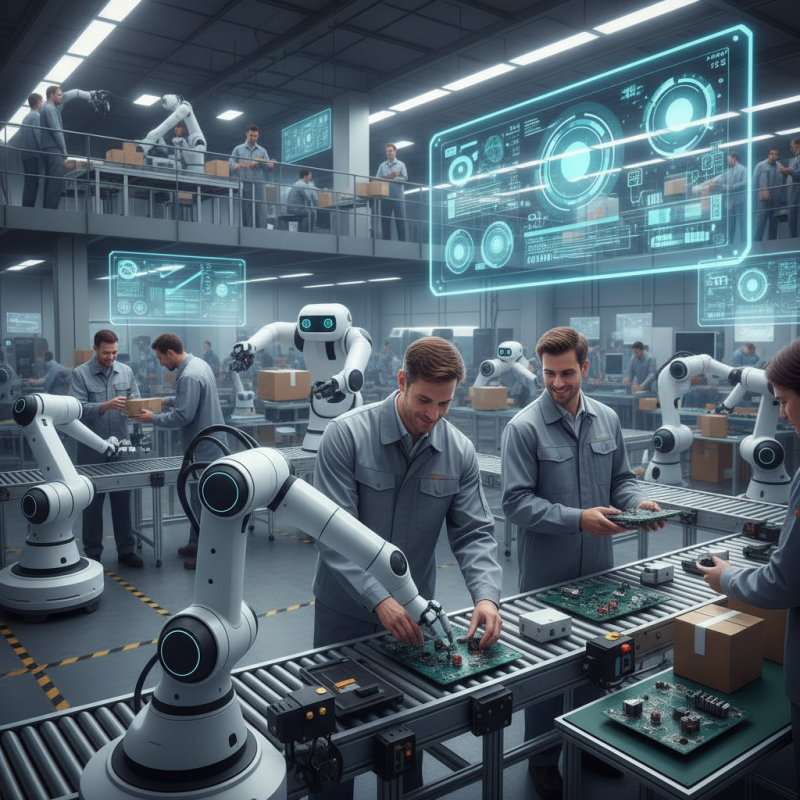
The rise of cobot robots is transforming various industries. Recent reports indicate that the global collaborative robot market is projected to reach $12.3 billion by 2025. This growth reflects a shift in how businesses approach automation. Cobot robots work alongside humans, enhancing productivity while maintaining safety.
These machines excel in repetitive tasks, allowing workers to focus on complex duties. For example, in manufacturing, cobots reduce error rates and increase efficiency. As processes become more streamlined, companies report significant cost savings. However, challenges remain.
Integrating cobots requires careful planning and training. Employees may resist new technology, fearing job displacement. Addressing these concerns is crucial for successful implementation. Companies must ensure that cobots complement the workforce, rather than replace it. Thus, the journey of integrating cobot robots remains a work in progress.
The Definition and Functionality of Cobot Robots
Cobot robots, or collaborative robots, are designed to work alongside humans. They are transforming workplaces by automating routine tasks. Unlike traditional robots, cobots can safely interact with people. They use advanced sensors and AI to detect human presence. This makes them versatile across various industries.
Tips: Start small with cobots. Implement them in easy tasks first. This helps build confidence and smooths integration. Monitor the performance closely to adjust as needed.
Cobot functionality goes beyond simple automation. They can adapt to different processes, learning from their tasks. This adaptability makes them suitable for manufacturing, healthcare, and logistics. However, not every task is ideal for cobots. Some tasks require human intuition or complex decision-making, which they cannot replicate.
Tips: Identify the right tasks for cobots. Analyze workflows to see where they can assist, but don't overlook human strengths. Regular training for staff increases acceptance and promotes efficient collaboration.
Why Are Cobot Robots Revolutionizing the Future of Work?
| Dimension |
Description |
Key Benefits |
Applications |
| Definition |
Cobots, or collaborative robots, are designed to work alongside humans in a shared workspace. |
Increased productivity, improved safety, reducing strain on human workers. |
Manufacturing, assembly lines, healthcare, logistics. |
| Functionality |
Equipped with sensors and AI, cobots can perform tasks with precise control and adaptability. |
Flexibility to handle various tasks, easy programming, less risk of accidents. |
Quality control, packaging, material handling. |
| Safety Features |
Cobot robots are designed with safety in mind, using force limiters and emergency stops. |
Creating a safe working environment, reducing workplace injuries. |
Automated welding, assembly assistance. |
| Cost Efficiency |
Lower upfront costs and versatile applications reduce overall operational expenses. |
Lower operational costs, increased ROI. |
SMB manufacturing, repetitive task handling. |
Key Differences Between Cobots and Traditional Industrial Robots
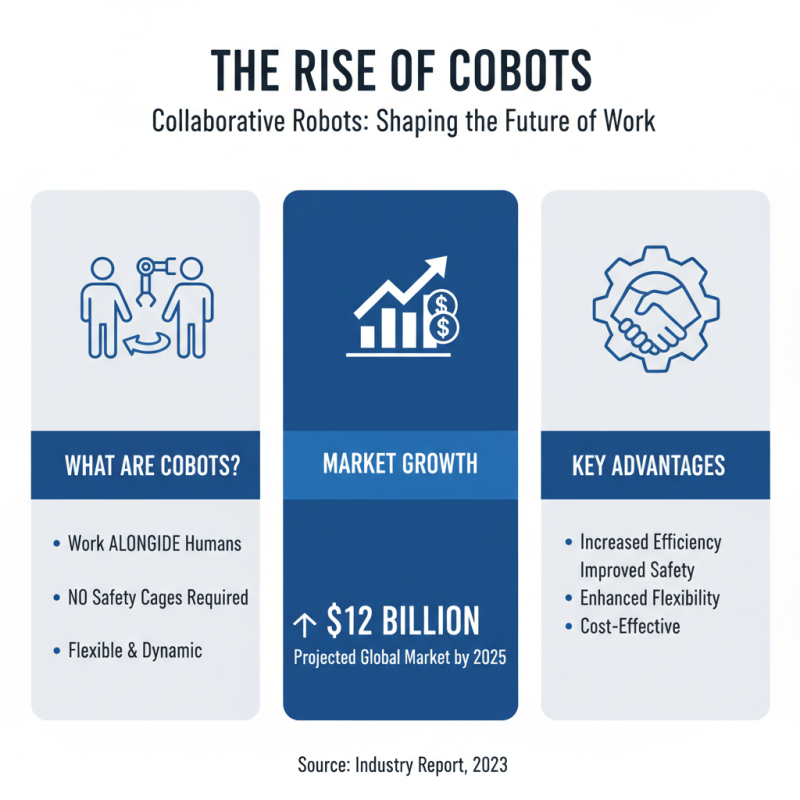
Cobots, or collaborative robots, are changing the landscape of modern workplaces. Unlike traditional industrial robots, cobots are designed to work alongside humans without safety cages. This results in a more flexible and dynamic work environment. According to a recent industry report, the global cobot market is projected to grow to $12 billion by 2025, reflecting their increasing adoption.
Traditional industrial robots require extensive programming and dedicated workspace. They are often limited to repetitive tasks in controlled environments. Cobots, however, are user-friendly and can be programmed with intuitive interfaces. This allows for quick integration into diverse tasks within a production line. In fact, a survey indicated that 77% of firms find cobots easier to deploy than their traditional counterparts, highlighting a significant shift in operational strategies.
Despite their many advantages, implementing cobots isn't without challenges. Organizations may face hurdles like worker acceptance and proper training. There's a risk that some employees feel threatened by cobots taking over their tasks. Addressing these concerns is crucial for the smooth transition to collaborative systems. Understanding the balance between automation and human contribution remains a vital aspect of this evolving technology.
Applications of Cobot Robots Across Various Industries
Cobot robots, or collaborative robots, are transforming industries by enhancing productivity and safety. In manufacturing, they assist workers in assembly lines. A report from the International Federation of Robotics states that the use of cobots will grow by 50% annually through 2025. These robots can work alongside humans, handling repetitive tasks. This setup reduces the risk of injury and allows employees to focus on higher-level functions.
In healthcare, cobots play a crucial role. They assist in surgeries and patient care, improving precision and efficiency. According to a study by the World Economic Forum, cobot applications in healthcare could cut hospital costs by 20% while improving patient satisfaction. However, integration into healthcare systems is challenging. Staff training and technological adjustments must be prioritized to achieve full benefits.
Logistics is another area benefiting from cobots. They streamline picking and packing processes in warehouses. The market for automated logistics is expected to exceed $60 billion by 2024. Yet, many companies struggle with adapting their workflows. Organizational resistance and outdated equipment can hinder progress. Embracing these changes will be key for future success.
Applications of Cobot Robots Across Various Industries
Cobot robots are transforming various industries by enhancing productivity, improving safety, and collaborating with human workers. This chart illustrates the number of cobot units being utilized across key sectors, highlighting their growing adoption in manufacturing, healthcare, food service, logistics, construction, and agriculture.
The Impact of Cobots on Workforce Dynamics and Job Roles
Cobots, or collaborative robots, are transforming workplace dynamics in unprecedented ways. Unlike traditional robots, cobots are designed to work alongside humans. This creates a unique interaction that alters job roles significantly. According to a recent industry report, the global cobot market is expected to reach $12.3 billion by 2025. This growth reflects a rising demand for technology that enhances human capabilities rather than replacing them.
As cobots take on repetitive tasks, workers can focus on more complex responsibilities. A study by the International Federation of Robotics indicates that 65% of employees feel more empowered when cobots assist them. However, there are concerns about job displacement. Workers may face anxiety about their roles as automation progresses. Companies must navigate this fine line carefully. Training and reskilling programs are essential to help employees adapt to this new landscape.
Despite the benefits, the integration of cobots poses challenges. Not all sectors are ready for this shift. Unequal access to technology can create disparities within the workforce. Smaller businesses might struggle to implement cobot systems. This raises questions about equity and job security as industries evolve. Addressing these concerns while harnessing the transformative potential of cobots is crucial for a balanced future.
Future Trends and Innovations in Cobot Technology
Cobot technology is rapidly changing workplaces. These robots are designed to help humans, not replace them. With a focus on collaboration, they're increasingly being used in various industries. Manufacturing, logistics, and even healthcare are seeing innovations driven by cobots.
Future trends suggest that cobots will become more adaptive. They may learn from their human coworkers, improving efficiency over time. Enhanced sensors and AI capabilities are in development. These improvements could lead to smarter robots that anticipate needs. Yet, there are challenges to address. Would a fully automated environment risk human skills becoming obsolete?
Moreover, the integration of cobots raises ethical questions. How do we ensure safety when humans and robots work so closely? There’s a fine line between assistance and dependency. As companies adopt this technology, reflection on these issues is crucial. It's a brave new world, but it may not be all that perfect.