Top 5 Cobot Palletizers for Efficient Warehouse Automation?
In today’s fast-paced logistics environment, efficiency is key. The rise of automation has transformed warehouses. Among the most innovative solutions are cobot palletizers. These machines enhance productivity and create safer workspaces. As businesses seek ways to streamline operations, cobot palletizers are leading the charge.
Cobot palletizers work alongside human operators. They can handle various tasks, from stacking products to sorting items. Their flexibility allows businesses to adapt quickly to changing demands. Implementing these systems can significantly reduce labor costs and increase throughput. However, organizations must evaluate their specific needs before committing.
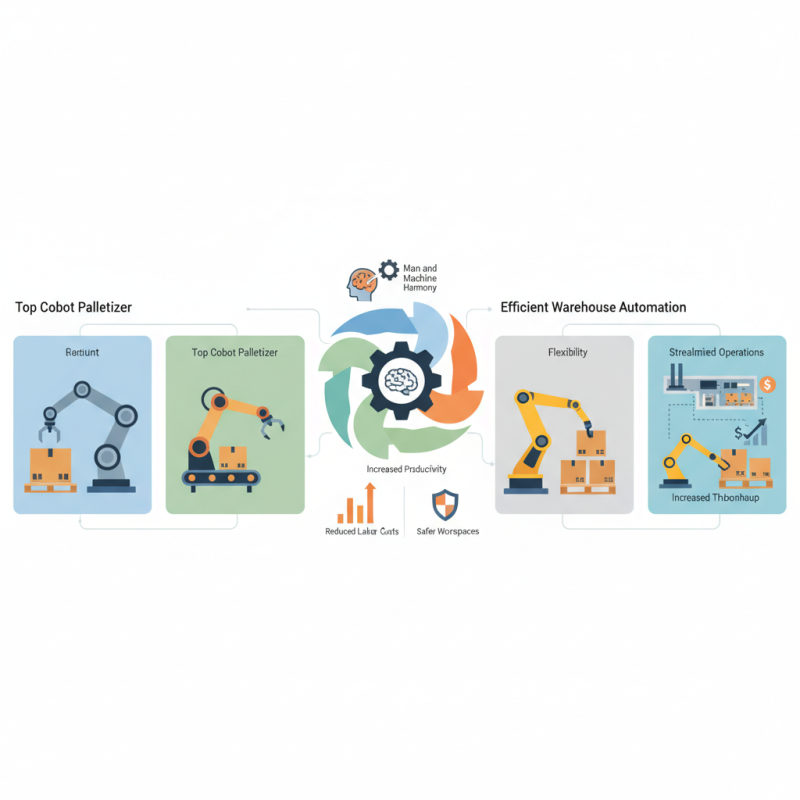
Understanding the right cobot palletizer can be challenging. Different models offer unique features and capabilities. Some may fit better in certain environments than others. Businesses must consider their layout, product types, and workflows. Even the best automation systems require fine-tuning and adjustments. Selecting the right cobot palletizer is not just about technology; it’s about creating a harmonious balance between man and machine.
Features to Consider When Choosing Cobot Palletizers
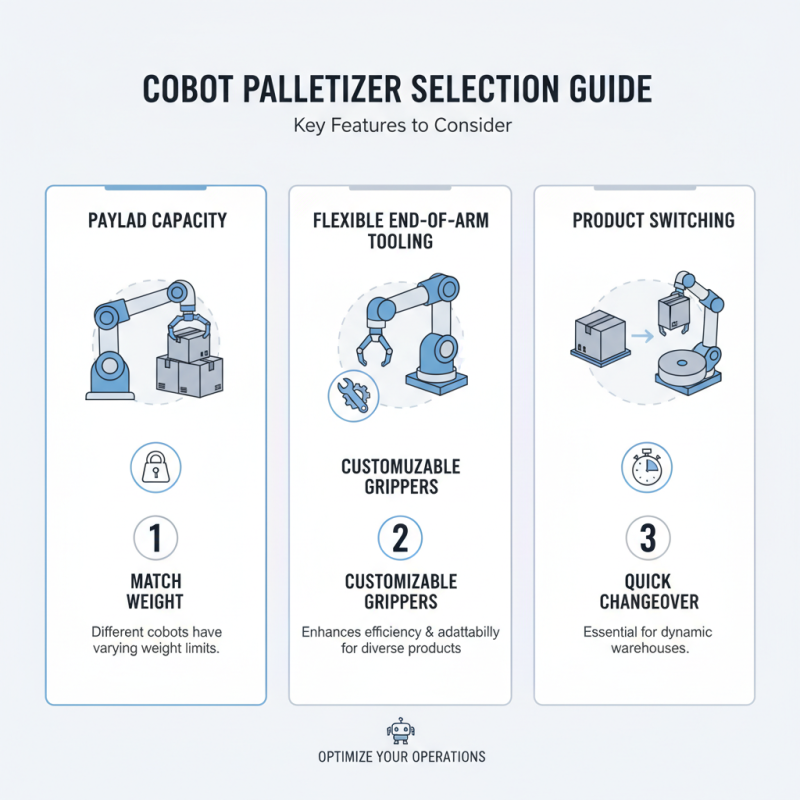
When selecting cobot palletizers, several key features should take precedence. First, consider the payload capacity. Each cobot can handle various weights; knowing your product's weight is crucial. Additionally, look for flexibility in end-of-arm tooling. Customizable tooling will enhance efficiency and adaptability. The ability to switch between different products quickly is essential for dynamic warehouse environments.
Another important factor is the ease of integration. Cobots should seamlessly integrate into existing workflows. Investigate how quickly the cobot can be set up and programmed. User-friendly interfaces are vital. They minimize the training time for staff and improve operation speed. A robust safety system is also necessary. While cobots are designed for safety, understanding their limits is important.
Finally, assess the manufacturer’s support and training options. Reliable support can significantly reduce downtime during operational issues. Maintenance plans should also be clear and straightforward. While cobot technology is advanced, maintenance can be complex. Investing in cobots must also consider future technology compatibility. Unexpected changes may arise, and adaptability will be key.
Overview of the Top Cobot Palletizers in the Market
When considering cobot palletizers for warehouse automation, several options stand out. These robotic systems enhance efficiency, reduce labor costs, and improve safety. A well-chosen cobot can handle various product types, including bags, boxes, and pallets. They are designed to work collaboratively with human workers, which is crucial for maintaining productivity and safety in busy environments.
It's important to assess the specific needs of your warehouse. Different cobots offer unique features that cater to various applications. An effective palletizer should be able to adapt to your existing processes. Pay attention to factors such as load capacity, cycle time, and ease of integration. This ensures that your investment aligns with your operational goals.
Tips: Always consider future scalability when choosing a cobot palletizer. As demand changes, your automation needs may evolve. Testing different products before committing can also provide valuable insights. Lastly, seek expert advice to ensure proper implementation and training for your staff. This can significantly affect overall performance and efficiency.
Benefits of Cobot Palletizers for Warehouse Automation
Cobot palletizers are transforming warehouse automation. Benefits include increased efficiency and reduced labor costs. Recent studies indicate that integrating cobots can enhance productivity by 30% in high-demand environments. This is particularly relevant as more warehouses face labor shortages and increased order volumes.
The flexibility of cobot palletizers allows them to adapt to various products and packaging types. Unlike traditional palletizers, which can be rigid and expensive, cobots can be deployed in diverse settings without extensive reconfiguration. Reports suggest that 70% of warehouse operators see a return on investment within two years of implementing cobot technology.
However, it’s essential to note potential challenges. Worker safety and cobot training are critical considerations. Ensuring that human workers and cobots collaborate effectively requires ongoing assessment. Many facilities report that initial deployment phases can be tricky. Regular feedback and adjustments are necessary for optimal operation. The path to seamless integration is complex but beneficial in the long run.
Case Studies: Successful Implementations of Cobot Palletizers
Cobots, or collaborative robots, are transforming warehouse automation. Many companies are adopting cobot palletizers to improve efficiency and reduce labor costs. Recent studies indicate that automating palletizing processes can increase productivity by up to 30% and decrease operational errors by nearly 20%. These figures illustrate the significant impact of cobot technology on warehouse management.
For instance, a food and beverage company integrated a cobot palletizer into their operations. They reported that the cobot managed repetitive tasks efficiently, reducing strain on workers. This implementation led to a noticeable improvement in employee satisfaction, as workers could focus on more complex tasks. However, the company encountered challenges during the training phase. It took time for employees to adapt to working alongside the robot. Clear communication and training protocols became vital for successful collaboration.
Moreover, a case involving a consumer goods manufacturer highlighted the flexibility of cobots. They configured their cobot palletizer to handle multiple product types. Despite initial setbacks during programming and alignment, they achieved an impressive throughput rate. Data shows that flexibility in automation leads to better resource management. Still, companies must remain vigilant about the ongoing maintenance and training needs of these systems. Continuous evaluation and adjustments are essential for maximizing the benefits of cobot palletizers.
Top 5 Cobot Palletizers for Efficient Warehouse Automation
Future Trends in Cobot Palletizing Technology
The future of cobot palletizing technology is evolving rapidly. Industry reports indicate that the market for collaborative robots (cobots) is expected to grow to $8.5 billion by 2025. This growth reflects a shift towards automation in warehousing and logistics. Cobots enhance efficiency and can operate alongside human workers safely.
One notable trend is the integration of artificial intelligence (AI) into cobot systems. AI allows cobots to learn from their environment. This capability means they can adapt to variations in pallet sizes and weights. A 2022 survey found that 55% of logistics firms are adopting AI-driven solutions for palletizing tasks. However, the initial cost of these advanced systems can be a barrier for smaller companies.
Moreover, the demand for flexibility in warehouse operations is increasing. With e-commerce on the rise, companies need palletizing solutions that can handle diverse product ranges. Many cobots struggle with this versatility. According to market research, only 30% of current cobot models meet the dynamic needs of modern warehouses. As technology advances, improving these aspects will be crucial for the future of cobot palletizers.
Top 5 Cobot Palletizers for Efficient Warehouse Automation
| Model |
Load Capacity (kg) |
Speed (Pallets/hour) |
Footprint (m²) |
Integration Ease |
Price Range (USD) |
| Cobot A |
20 |
15 |
2.0 |
High |
$25,000 - $35,000 |
| Cobot B |
25 |
20 |
2.5 |
Medium |
$30,000 - $45,000 |
| Cobot C |
30 |
25 |
3.0 |
Easy |
$40,000 - $55,000 |
| Cobot D |
15 |
12 |
1.8 |
High |
$20,000 - $30,000 |
| Cobot E |
35 |
30 |
3.2 |
Medium |
$50,000 - $70,000 |