How to Choose the Right Plastic Wheels?
Choosing the right Plastic Wheel starts with the job it must perform, not its appearance. A small caster may roll smoothly on a showroom floor yet struggle under a loaded cart. Check the total weight, how many wheels share it, and whether the load shifts during turns. Allow for uneven weight distribution; four wheels do not always carry equal shares. That detail matters.
The floor and working conditions narrow the options. Hard wheels can roll easily on smooth concrete, while softer treads may grip better and reduce vibration. On tile, a quiet wheel can make a busy workspace more comfortable. Measure the wheel’s diameter and mounting space, then confirm that its bearing and rated capacity suit the equipment. Moisture, cleaning chemicals, heat, and frequent impacts can also affect material choice. A supplier’s specifications are useful, but verify that they describe the actual operating conditions.
There is no perfect wheel for every cart. Catalog descriptions can make trade-offs look simpler than they are. A wheel designed for low rolling resistance may not provide the cushioning or traction you need. If possible, test a sample with the real load on the actual floor. Listen for rattling, watch for wobble, and note how easily the cart starts and turns. Small differences show up quickly. A careful choice can improve handling and reduce premature wear, but the right answer depends on the equipment, environment, and routine—not on one material name alone.
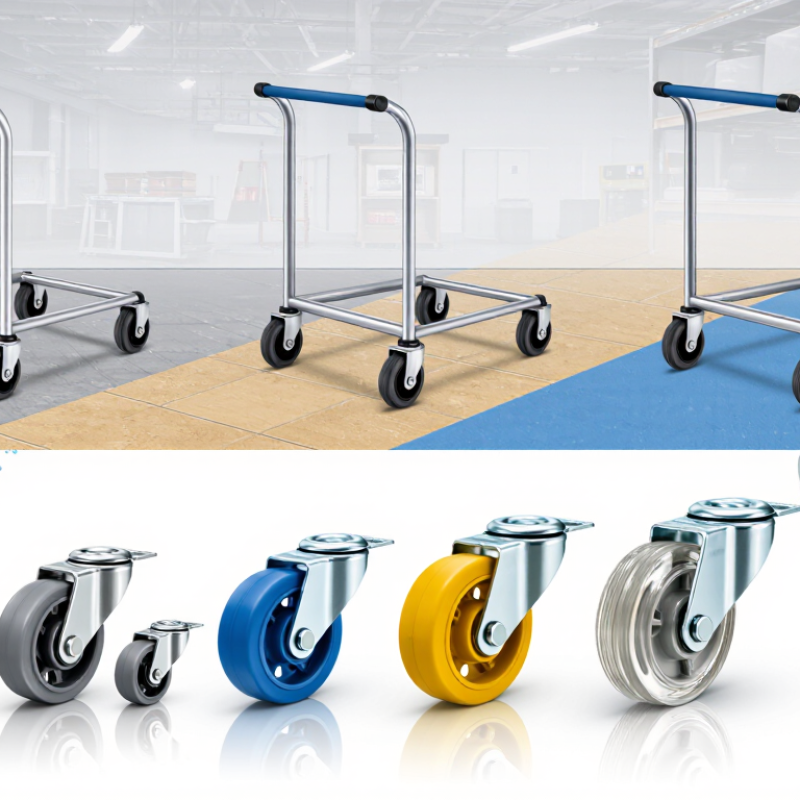
Table of Contents [Hide]
Identify the Load, Surface, and Operating Conditions
How to Choose the Right Plastic Wheels?
Identify the Load, Surface, and Operating Conditions
Start with the real working load: cart, payload, and any tools or fixtures. A 600 kg loaded cart resting unevenly on three wheels puts about 200 kg on each wheel, not 150 kg. That simple calculation is only a baseline; thresholds, bumps, and impacts can raise the load. Check the wheel’s rated capacity and leave an appropriate margin for actual use. ISO 22883:2004 covers castors and wheels for applications up to 1.1 m/s, but its test scope does not confirm suitability for every floor or duty cycle. Small details matter.
Look closely at the route. Smooth concrete may suit a harder plastic wheel, while tile joints, grit, or floor debris can increase vibration and rolling resistance. Softer materials may travel more quietly, but can wear faster under heavy loads. Consider temperature, moisture, oils, cleaning chemicals, travel speed, and daily operating hours; each can change wheel performance. A wheel that rolls well in a showroom may struggle on a damp loading-bay floor. That gap deserves a second look. Match the wheel to the toughest regular condition, then test a loaded cart on the actual route before choosing a full set. The test is not perfect, but it can reveal problems a catalogue rating misses.
Customers




Smart Robotics brand movie
Watch video