How to Choose the Best Robotic Solutions for Your Needs?
Choosing the right robotic solutions can feel overwhelming. With so many options available, identifying what suits your needs is crucial. These advanced systems can enhance productivity, reduce costs, and improve safety across various industries. However, not all robotic solutions are created equal.
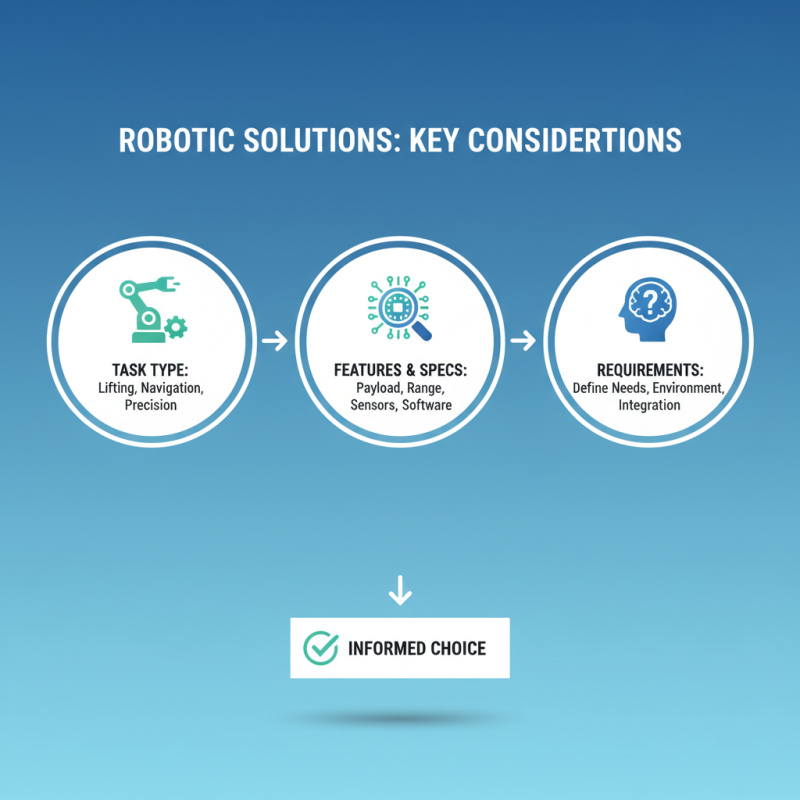
Start by considering the specific tasks you need help with. Does your operation require precision, speed, or flexibility? Each robotic solution has unique features tailored for different applications. It's essential to align your needs with the capabilities of the robots. Sometimes, the most advanced option may not be the best fit.
Budget is another important factor. High-tech solutions often come at a premium. It's worthwhile to reflect on whether the investment matches your operational goals. This approach ensures that you're not just buying technology for the sake of it, but rather a practical solution that delivers real value. As you navigate these choices, keep in mind that the best robotic solutions should empower your workforce and streamline processes effectively.

Understanding Your Requirements for Robotic Solutions
When selecting robotic solutions, understanding your specific requirements is essential. Identify the tasks you want the robot to perform. Is it assembly, packaging, or inspection? Clarifying these needs will help narrow down options. A simple checklist can aid in this process.
Next, consider the environment where the robot will operate. Factors like space, layout, and existing machinery play a role. For instance, a compact lab may necessitate a different solution than a large manufacturing floor. Keep in mind the potential limitations of the robotic systems. They may not perform well in certain conditions or with specific materials.
Additionally, look into the ease of integration. Some solutions may require extensive programming or customization. This could lead to unexpected costs and delays. Be aware of the learning curve associated with each option. It's important to factor in operator training and ongoing support.
A well-defined understanding of your requirements will guide you in making the best choice.
Identifying the Different Types of Robotic Solutions Available
When choosing robotic solutions, understanding the types available is crucial. Robots typically fall into categories like industrial, service, and collaborative robots. Industrial robots are designed for high-volume production. They excel in tasks like welding and assembly. Service robots assist in various environments, from healthcare to hospitality. Their roles can range from cleaning to delivering items. Collaborative robots, or cobots, work alongside humans. They are often more adaptable and user-friendly.
Different applications require different robots. A manufacturing line might benefit from an industrial robot's speed and precision. Meanwhile, a hospital could find a service robot valuable for patient assistance. Each type has unique features. For instance, cobots often have safety measures like sensors. This can make them safer in human-rich environments. However, some cobots may lack the heavy lifting capability of traditional industrial robots.
Choosing the right robotic solution means weighing these attributes. You must consider factors like workload, environment, and user interaction. There’s no one-size-fits-all option. Reflecting on your specific needs is essential. Assessing your goals can lead to choosing the best robotic solution. Each choice comes with its pros and cons. There may be trade-offs in flexibility and performance.
Comparing Costs and Budget Considerations for Robotics
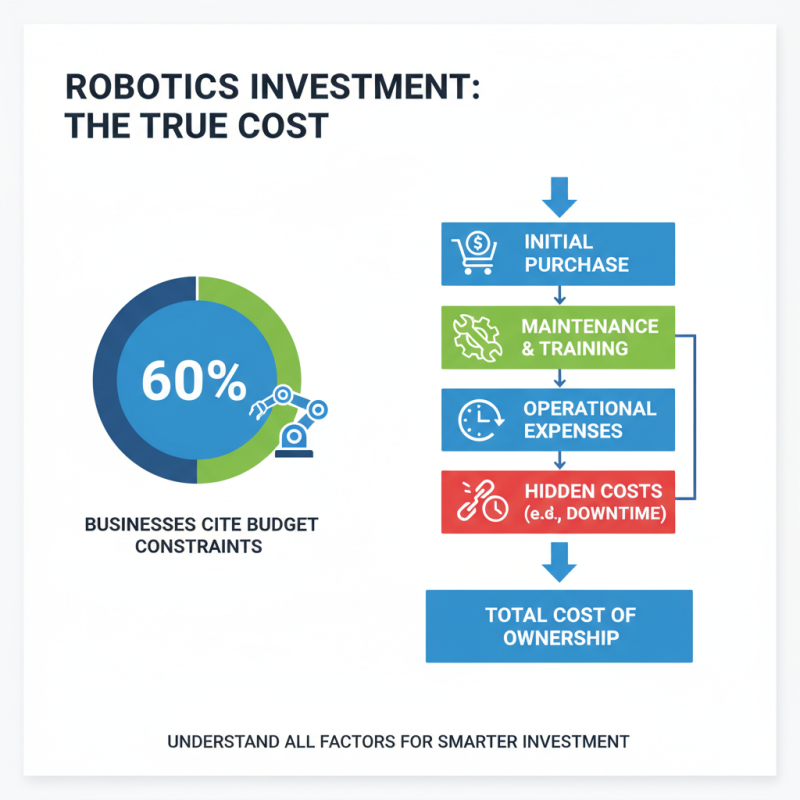
When considering robotic solutions, cost becomes a major factor. A recent industry report states that about 60% of businesses cite budget constraints as a barrier to investment in robotics. Understanding the total cost of ownership is essential. These costs include not only the initial purchase price but also maintenance, training, and operational expenses. Hidden costs, such as downtime during system integration, can add up quickly.
For many industries, the analysis of return on investment (ROI) is crucial. According to a survey, companies that invest in robotics report an average ROI of 30% within the first year. Still, not every company sees similar returns. Factors like employee adaptability and pre-existing workflows play a significant role. Some solutions may appear cost-effective but can lead to unexpected expenses if not properly integrated.
Investment in robotics must align with specific operational goals. When not done, companies may find themselves with underutilized equipment. Additionally, evolving technology may render certain robotic solutions obsolete quickly. A clear understanding of your needs and challenges is vital to making informed decisions. This ensures that the chosen robotics will genuinely enhance efficiency without disproportionately straining your budget.
Assessing After-Sales Support and Maintenance Services Available
When selecting a robotic solution, after-sales support is crucial. It's not just about the initial purchase. Industry reports indicate that over 70% of companies experience operational challenges due to inadequate maintenance services. This statistic emphasizes the importance of assessing support options before committing to a purchase. Without proper help, even the best robotic systems can underperform, leading to delays and increased costs.
Tips: Check the provider's responsiveness. Quick responses can prevent minor issues from becoming major setbacks. Evaluate the training provided to staff. Inadequate training can hinder the effective use of robotic systems.
Additionally, consider the availability of spare parts and repair services. A survey from a leading industry publication found that 60% of businesses wish they had better access to spare parts for their robotic solutions. Long wait times for repairs can disrupt productivity. Engaging with manufacturers on these aspects can lead to better long-term satisfaction. Emphasizing support and maintenance can transform your robotic investments into reliable assets.