Choosing a Film Embossing Machine is less about chasing the highest speed and more about matching equipment to your film, pattern, and production goals. The Flexible Packaging Association’s 2024 State of the U.S. Flexible Packaging Industry report estimated U.S. industry sales at $42.9 billion in 2023. That figure signals a substantial market, but it does not tell buyers which machine will suit a particular line. Details matter.
Before comparing suppliers, define the film types, web width, embossing depth, and finish your products require. Ask how the machine controls heat, pressure, and web tension across a full production run. Then check rated speed against output on your actual material, not just a catalog example. A glossy sample can still mislead. Request a trial using your film, and inspect pattern consistency, edge quality, and changeover time. Not every line needs the same setup.
Industry reports provide useful context, not a purchasing shortcut. They rarely capture the effects of film thickness, adhesive layers, operator skill, or frequent pattern changes on a specific machine. Compare maintenance access, tooling costs, safety features, spare-part availability, and supplier support alongside purchase price. Ask for documented test conditions and references from plants with similar workloads. A careful trial may feel slow. It can prevent an expensive mismatch. This guide explains how to weigh those practical factors and choose equipment that fits both your product specifications and your day-to-day operation.
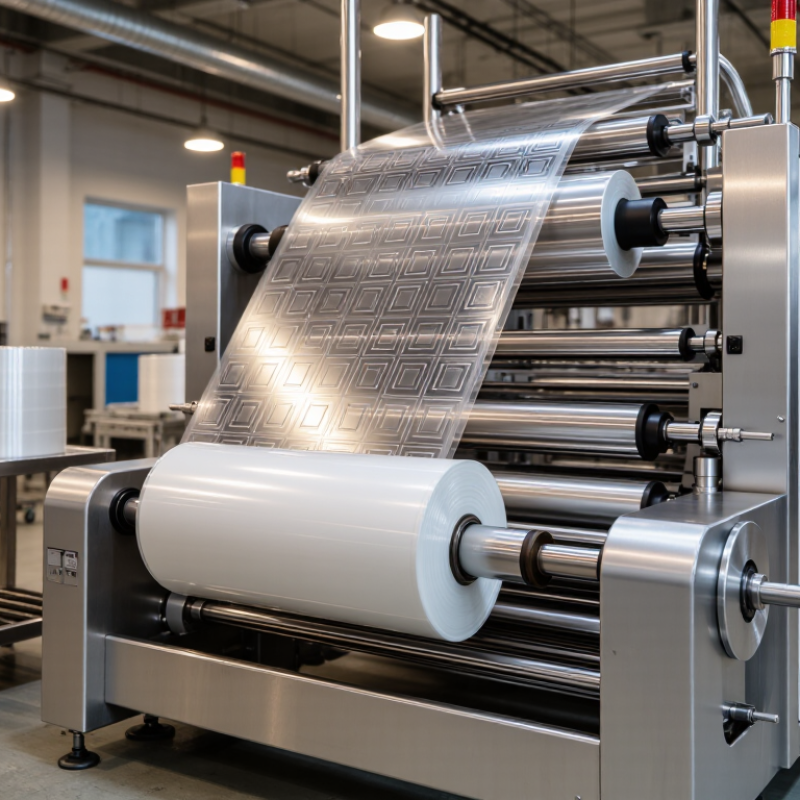
Film embossing machines press a patterned roll against moving film to create repeatable texture. Depending on the material, the process may use heat, pressure, or both. Operators control roll temperature, web tension, pressure, and line speed. Together, these settings affect pattern sharpness and film stability. A shallow diamond texture can improve grip on a pouch; fine ridges can soften glare on a decorative surface. Small details matter. Grand View Research’s Flexible Packaging Market report valued the global market at USD 261.3 billion in 2023 and projects a 4.8% compound annual growth rate from 2024 to 2030. That growth points to expanding demand for flexible formats, though it does not guarantee demand for every embossed finish.
Common applications include flexible packaging, labels, decorative films, and laminates. When choosing equipment, match the working width and speed to the actual production line, then test the intended film thickness and pattern. Check whether the machine holds even pressure across the web and allows quick roll changes. Ask for sample runs using your own material. A deeper pattern is not automatically better: it may distort thin film, affect winding, or create uneven results at higher speeds. Texture can also vary across a roll, even when the settings look consistent. That part is easy to underestimate. A sensible trial should inspect both the embossed surface and the finished roll, not just the first few metres.
How to Choose the Best Film Embossing Machine?
Define Your Film Materials, Embossing Patterns, and Production Needs
Start with the film, not the machine. Polyethylene, polypropylene, and polyester films respond differently to heat, pressure, and tension. Record each material’s thickness, layer structure, web width, and operating temperature. A machine that embosses one film cleanly may wrinkle or stretch another. Small details matter.
Match the embossing roll to the required pattern, depth, and repeat length. Then compare those needs with production speed, changeover time, and available floor space. The Flexible Packaging Association’s 2023 State of the Flexible Packaging Industry report estimated U.S. flexible packaging sales at about $42.9 billion in 2022. This broad market figure signals the scale of flexible packaging, but it does not specify machine demand. Ask suppliers for test runs using your actual film and target settings. A specification sheet can still miss how a textured roll behaves during a long production shift.
Tips: Bring film samples, including the thinnest and most delicate grades. Check tension control, heating consistency, and pattern alignment across the full web. Test before buying. I still find changeover time easy to underestimate; measure it on the shop floor, not just in a sales estimate.
Typical melting-point ranges for common thermoplastic film materials provide a useful first reference when discussing thermal requirements with a machine supplier.
These approximate ranges vary by resin grade and film formulation. Melting point is not the embossing temperature: final machine settings depend on film thickness, embossing pattern, line speed, and the required finish.
Film embossing choices depend on line speed, film structure, and the relief pattern. Rotary machines suit continuous web production and longer runs. Flatbed systems can offer tighter control for short runs or detailed designs, but may interrupt the web more often. Heated rollers soften thermoplastic surfaces before forming texture; pressure-based methods can reduce heat exposure, though results depend on the film. Test real film.
Compare working width and speed with your actual production target, not just the machine’s headline capacity. Check temperature uniformity, nip-pressure adjustment, web-tension control, embossing depth, and supported film thickness. Ask for sample trials using your material, including at startup and after a roll change. A polished sample alone can hide registration drift or edge wrinkles.
Grand View Research’s Flexible Packaging Market report values the global market at USD 278.4 billion in 2023 and projects 4.9% annual growth from 2024 to 2030. This is market context, not proof that one machine type will perform best. A specification sheet can still mislead: changeover time, scrap rate, and operator adjustments may matter more than maximum speed. Compare these figures during a production trial, and record them—even if the results are less tidy than expected.
| Machine type | Typical embossing method | Typical working range* | Best suited for | Main advantages | Limitations to consider | Key specifications to check |
|---|---|---|---|---|---|---|
| Flatbed platen press | A patterned plate presses film against a matching counter surface; heat may be applied. | Sheet or intermittent web; commonly used for small-to-medium working areas. Output is cycle-based rather than continuous. | Prototypes, short runs, large-format panels, and patterns that need precise registration. | Flexible tooling; straightforward pattern changes; good control over individual impressions. | Lower throughput than continuous roll systems; pressure and impression uniformity can be harder to maintain over large areas. | Platen size and flatness; force and pressure uniformity; cycle time; temperature control; registration accuracy; tooling change time. |
| Roll-to-roll rotary embosser | A patterned rotating roll forms a continuous texture in the moving film, typically by pressure and sometimes heat. | Continuous web; working widths and line speeds vary widely by line design and film properties. | Long production runs, repeating textures, and consistent web processing. | High production potential; continuous operation; repeatable patterns with suitable tension and roll control. | Pattern changes may require dedicated rolls; web tension, tracking, and roll alignment need careful setup. | Usable web width; line-speed range; roll diameter and runout; nip-load adjustment; tension and edge-guide systems; winding quality. |
| Heated calender embossing line | Heated rolls soften a thermoplastic film surface while a patterned roll and nip pressure create the texture. | Continuous web; operating temperature and speed depend on polymer, film thickness, and pattern depth. | Thermoplastic films requiring deeper or more permanent surface relief. | Suitable for continuous processing; heat and nip settings can be tuned to the material and desired texture. | Excess heat or pressure can distort, thin, or stick the film; cooling and release behavior may affect the final texture. | Roll-temperature range and uniformity; nip-load range; cooling capacity; film thickness window; release surface; line-speed control. |
| UV micro-embossing line | A transparent patterned tool forms a UV-curable coating; ultraviolet exposure cures the coating before or during release. | Often continuous roll-to-roll; practical speed depends on coating chemistry, UV dose, lamp or LED output, and web width. | Fine optical or functional microstructures and surface patterns formed in a curable coating. | Can reproduce fine features; avoids relying on bulk film softening to form the relief. | Requires compatible resin and release surfaces; cure uniformity, oxygen inhibition, and coating defects need control. | UV wavelength and delivered dose; irradiance uniformity; coating thickness control; tool-release performance; line speed; web tension. |
| Intermittent roll-fed embossing press | A roll-fed web stops or indexes for each impression; a heated or unheated die applies the pattern. | Roll-fed, indexed processing; effective output depends on repeat length, press cycle, and registration requirements. | Repeated localized patterns, short-to-medium runs, and jobs requiring accurate placement on a web. | Combines roll feeding with controlled, discrete impressions; can support registration to printed features. | Indexing limits throughput; start-stop motion can affect web handling and registration at higher speeds. | Index accuracy; repeat length; cycle rate; registration system; die size; feed and take-up tension control. |
*Working ranges are application-dependent, not universal machine ratings. Confirm achievable width, speed, temperature, pressure or nip load, and feature depth with the supplier using your film sample, tooling pattern, and required production quality.
Judge embossing quality on your own film, not a supplier’s showcase sample. Check whether fine lines stay crisp and the pattern remains even across the sheet. Look for wrinkles, edge distortion, and inconsistent depth under normal production settings. Small details matter. Ask how repeatability is measured across several runs, not just one successful pass.
Inspect safety features in person. Confirm that guards cover hot and moving parts, and that emergency stops are easy to reach. Ask how operators are trained to handle setup, cleaning, and routine adjustments. Supplier support matters after installation, too. Clarify response times, spare-parts availability, and whether technical guidance is included. Vague answers may signal a support gap.
Arrange a machine trial using your film, artwork, and target production speed. Record setup time, scrap, registration accuracy, and finished-surface quality. A polished sample can mislead; real production conditions are less tidy. Compare trial results with your tolerances, and ask for the settings used so the test can be repeated. One limitation is worth noting: a short trial cannot reveal every long-term maintenance issue.
How to Choose the Best Film Embossing Machine?
Compare the full cost, not just the purchase price. Include tooling, installation, operator training, energy use, and expected film waste. Ask for realistic estimates based on your material thickness and production schedule. A low-cost machine can become expensive if setup takes hours or frequent adjustments leave film unusable. No shortcut.
Maintenance affects both budgets and output. Check how often rollers, heaters, and pressure components need inspection or replacement. Find out whether routine cleaning requires special tools or long shutdowns. Small details matter. A maintenance log can help estimate downtime, but estimates are not guarantees.
Compare usable output per shift, not only advertised speed. A machine that runs steadily with fewer stoppages may produce more saleable sheets over a month. Request a test using your own film, if possible, and record setup time, waste, and finished quality. The figures may differ from a brochure. It is easy to overvalue peak speed; stable production is usually a more useful measure of long-term productivity.
Watch video