Choosing Stone Composite Floor for international projects requires more than comparing colors and factory prices. A sample may look identical under showroom lights, yet perform differently in a humid apartment or a busy retail entrance. Global buyers need to examine composition, thickness, wear-layer performance, dimensional stability, surface texture, and installation compatibility before approving a large order.
Practical purchasing experience shows that small details often create the largest costs. Check whether the core contains consistent mineral content and whether each carton has matching dimensions. Measure several planks from different boxes. Review moisture-resistance test results, abrasion ratings, fire-performance documents, and applicable regional certifications. Ask for production-batch traceability, packaging photographs, installation instructions, and a written warranty. A dependable supplier should explain limitations clearly, not promise that one product fits every climate.
There is no universal “best” Stone Composite Floor. Coastal warehouses, cold logistics centers, and luxury hotels demand different specifications. Even attractive digital samples can hide shade variation or uneven embossing. That matters. Buyers should request physical samples, independent test reports, and a pilot installation before final payment. A site review can reveal subfloor moisture, temperature changes, or acoustic concerns that product brochures overlook. Mistakes still happen, especially when specifications are translated poorly or local installers are unfamiliar with the locking system. Careful questions, documented checks, and honest supplier communication create a more reliable buying decision.
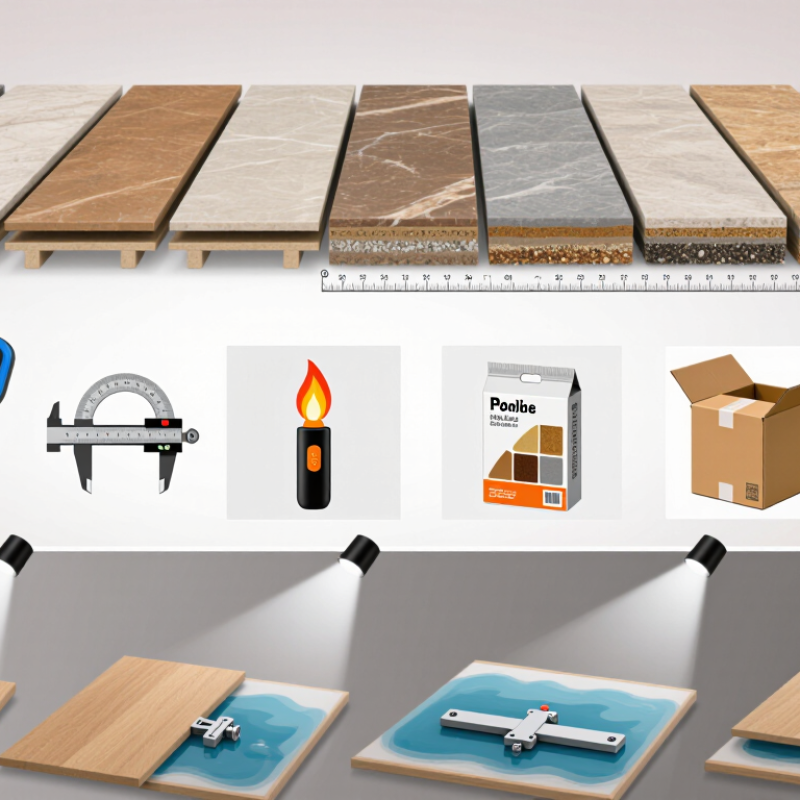
Stone composite flooring is a resilient floor covering with a mineral-rich core. It is often made from limestone powder, PVC resin, and carefully measured stabilizers. The mineral content adds rigidity. The polymer helps control moisture and impact.
Manufacturing starts by blending and heating these materials. The mixture passes through rollers or an extrusion line. It forms a dense, even core. Manufacturers then add a decorative film, wear layer, and protective surface coating. Click profiles are cut after cooling. Each stage affects the final result. Poor mixing may cause weak edges or uneven dimensions. A small flaw matters.
For global buyers, production details deserve close attention. Request test reports for dimensional stability, slip resistance, wear performance, fire behavior, and emissions. Requirements differ between countries and project types. Do not rely only on a product sample. Check several cartons for color variation, locking accuracy, and surface consistency. Measure the subfloor moisture before installation. Uneven concrete can create movement, even with a strong core. I would not treat a heavier board as automatic proof of quality. It may indicate more mineral content, but formulation and processing remain important. Leave the flooring in its installation environment when the technical instructions require acclimation. This step is easy to overlook.
Global buyers should match stone composite flooring to site conditions, not simply choose the thickest board. SPC flooring, with a dense limestone-polymer core, suits retail aisles, offices, and apartments exposed to rolling loads. Its rigid structure can manage minor subfloor imperfections better than softer products. The subfloor still needs preparation. That detail is often underestimated.
WPC flooring provides a warmer, quieter feel underfoot. It works well in hotel rooms, homes, classrooms, and upper-floor renovations where sound reduction matters. For bathrooms, kitchens, and humid coastal properties, water-resistant stone composite flooring is practical. However, the floor is not automatically waterproof after installation. Joints, edges, and pipe openings require careful sealing. Small gaps can become expensive problems.
For healthcare areas and busy public buildings, choose products with tested slip resistance, wear performance, and low emissions. Mineral-core options may suit projects needing stronger dimensional stability, but buyers should check local fire and indoor-air requirements. In sunny regions, confirm UV resistance before selecting dark colors. In cold climates, review temperature limits and expansion guidance. Product samples help, but they do not replace a full installation test. A flooring choice can look excellent in a showroom and behave differently beside a glass wall. Specifications need independent verification.
When evaluating stone composite flooring, inspect the core before admiring the color. A stable core should show consistent thickness, density, and a clean locking profile. Check several boards, not just one sample. Small changes may reveal production variation.
Ask for moisture, dimensional stability, and impact test results from an independent laboratory. Test reports should name the method, sample thickness, and testing date. A heavy board is not automatically stronger. I have seen dense-looking products chip around the click joint during installation. That detail matters. Also inspect the board edge under bright light. Uneven layers may indicate weak bonding or poor calibration.
Surface design needs practical checking. Compare samples under daylight and warm indoor lighting. Look for repeated patterns, blurred printing, or embossing that misses the visual grain. A realistic texture should support grip without trapping dust. Confirm the slip-resistance rating for the intended room and market. Wear resistance deserves equal care. Request the abrasion test method and classification, because ratings are not always directly comparable. Rub the surface near the display edge and inspect gloss change, scratches, and color loss. This simple check is imperfect, but it can expose misleading showroom impressions. Reconsider any supplier who offers only broad claims without complete technical records.
Global buyers should assess stone composite flooring through verified standards, not appearance alone. Request the product specification, installation guide, and batch-based test reports. Check dimensions, thickness, wear-layer performance, dimensional stability, locking strength, and slip resistance. These details affect performance in busy homes, hotels, and retail spaces.
Certification requirements vary by destination. For European sales, review applicable CE obligations and EN 14041 declarations. In North America, check relevant ASTM testing and indoor-air-quality certifications. Ask whether emissions tests cover VOCs, formaldehyde, and restricted substances. A laboratory accredited to ISO/IEC 17025 gives test results greater credibility. Also examine fire classification, acoustic performance, and resistance to moisture. A certificate alone is not enough. Its scope, test date, product name, and factory details must match the flooring supplied.
Tips: Ask for recent reports from an independent laboratory, then compare the tested construction with the shipment. Inspect sample cartons for thickness, surface texture, locking edges, and printed batch information. Confirm whether certification covers accessories, underlayments, and adhesives. Requirements can change by country. Recheck them before ordering. I have seen attractive samples fail because the commercial batch used a thinner wear layer. This small difference can affect service life and warranty discussions. Keep written records of approvals, inspection photos, and corrective actions. Good documentation feels slow, but it prevents expensive misunderstandings.
How to Choose Stone Composite Floor for Global Buyers?
How to Compare Suppliers, Costs, Installation, and Long-Term Value?
A reliable comparison starts with supplier evidence, not attractive photos. Request factory test reports, production details, thickness data, and recent export references. Check whether the quoted specification matches the actual sample. A thicker wear layer may improve durability, but it does not fix weak click joints or poor core stability.
Compare the complete landed cost. Include product price, freight, insurance, import duties, local delivery, underlayment, labor, and expected waste. Ask for a quotation based on the same area and specification. Otherwise, the cheapest offer may only be incomplete. I would also order samples from several suppliers and inspect them under natural light. Small color differences can become obvious across a large floor.
Installation quality strongly affects long-term value. The subfloor should be clean, dry, and sufficiently level before laying begins. Leave the recommended expansion gap around walls and fixed objects. In humid regions, confirm moisture-control requirements before installation. Keep spare planks from the same production batch for future repairs. This is often overlooked. A long warranty sounds reassuring, yet its exclusions, claim process, and local service capacity deserve careful reading. My own assessment would remain provisional until samples, documents, and installation conditions agree.
Watch video