How to Choose the Right Service Robot for Your Business?
Choosing the right service robot for your business can be daunting. Many options exist, each with unique features. It is vital to understand what your business truly needs. Service robots can perform various tasks, from customer service to cleaning.
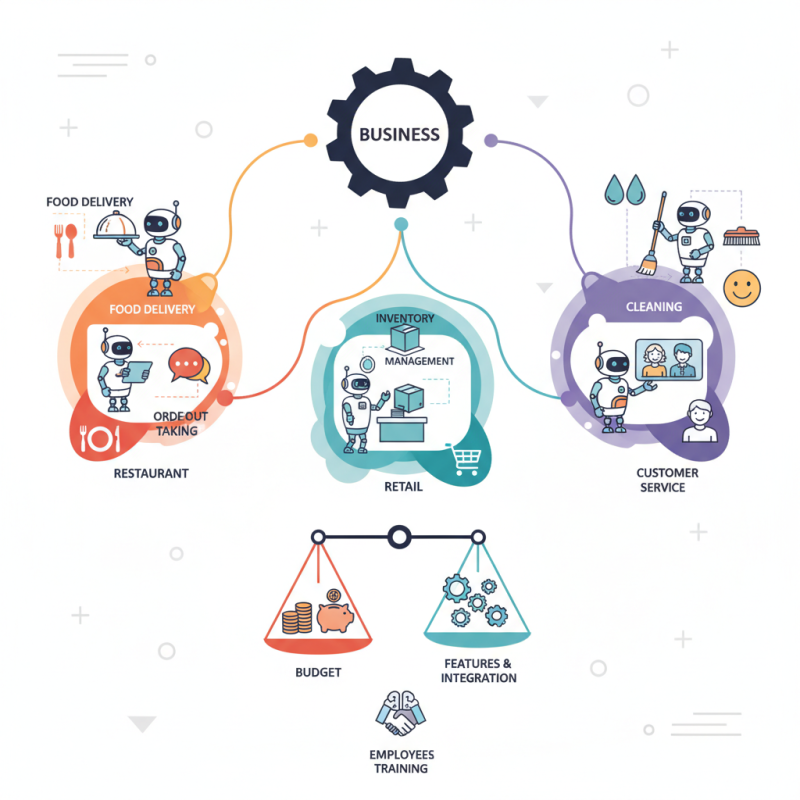
Consider your specific requirements. A restaurant may need robots for food delivery and order taking. A retail store could benefit from inventory management or checkout assistance. Investing in the wrong type could lead to wasted resources and inefficiency.
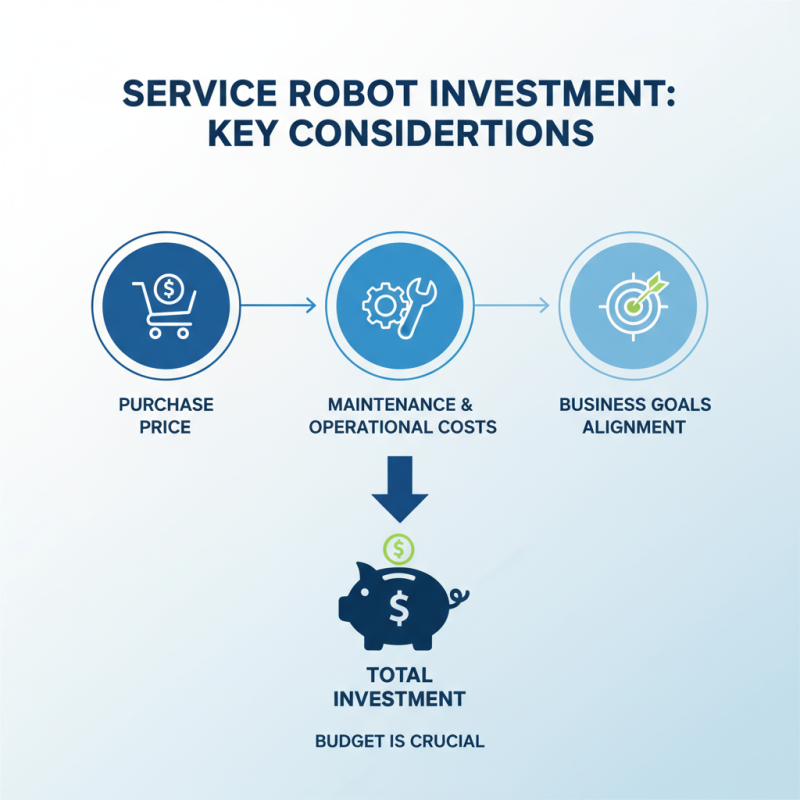
Evaluate your budget, but do not compromise on essential features. Many businesses overlook the integration of service robots into existing systems. Think about employee training as well. Introducing a service robot may require adjustments that your staff need to adapt to. Balancing cost and functionality is crucial in your decision-making process.
Understanding Your Business Needs and Goals
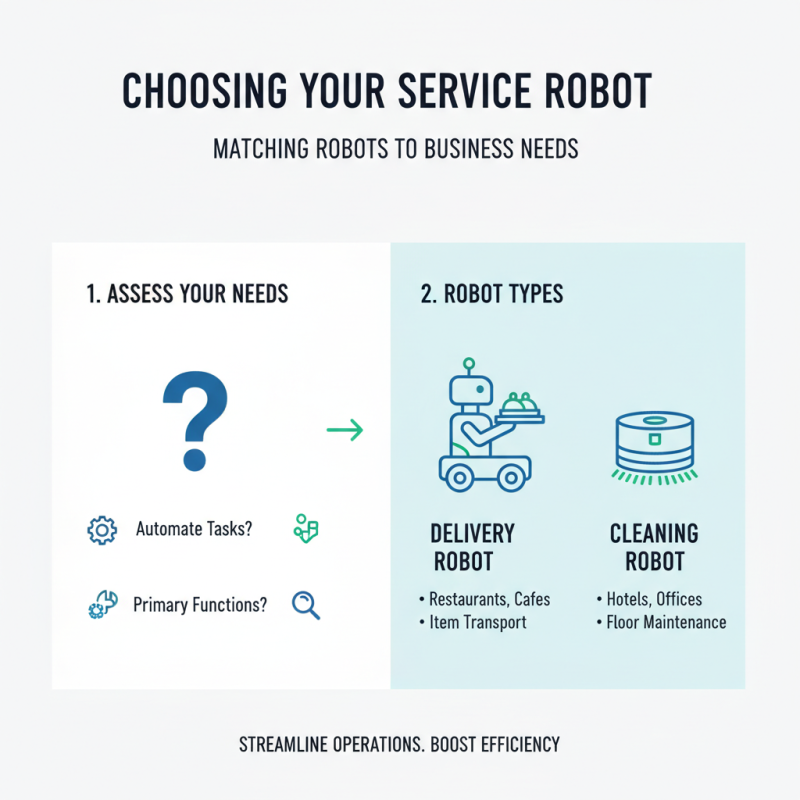
Choosing the right service robot for your business starts with understanding your specific needs. What tasks do you want to automate? A delivery robot may suit a restaurant well. However, a cleaning robot could be better for a hotel. Identifying the primary functions needed helps narrow down your options effectively.
Next, think about your business goals. Are you aiming to improve efficiency or enhance customer experience? For instance, deploying a service robot at the front desk can streamline check-ins. Yet, if your priority is cost-saving, investing in a robot that focuses on inventory management might yield better returns. Reflect on the long-term benefits versus immediate costs. Sometimes, the best choice isn't the most advanced technology but rather the one that aligns perfectly with your operational rhythm.
Identifying the Types of Service Robots Available
When considering service robots for your business, it's vital to understand the types available. Some robots specialize in cleaning, aiding in maintaining hygiene in public spaces. These cleaners are often programmed to navigate complex environments while ensuring efficiency. Imagine a robot gliding over a tiled floor, diligently picking up debris without human intervention.
Another category includes delivery robots. They provide goods to customers or across facilities. Picture a small robot navigating a bustling restaurant, delivering food from the kitchen to hungry diners. However, these robots must manage obstacles and changing layouts, which can be challenging. Businesses may need to rethink their space for optimal robot performance.
Customer service robots represent another option. These robots engage with clients, answering questions or providing information. While they can enhance customer experience, they might lack the personal touch humans offer. A robotic voice might relay information but cannot gauge emotion. Businesses should reflect on how each type aligns with their service goals and customer expectations.
Types of Service Robots in Business
This chart illustrates the distribution of different types of service robots commonly used in various business sectors.
Evaluating Features and Specifications of Service Robots
When evaluating service robots for your business, it's crucial to consider their features and specifications. Look for robots that match your specific needs. Think about the tasks you want them to perform. For example, if you need a robot for cleaning, check the suction power and battery life. Robots with advanced navigation systems can adapt to different environments.
**Tip:** Make a list of essential features. Prioritize what matters most to your operation. Ensure the robot’s capabilities align with your service requirements. Flexibility is essential; different situations may demand different functionalities.
Don’t overlook user experience. Interface simplicity matters a lot. Robots that are easy to program and control will reduce training time for your staff. Consider how often you'll need to maintain the robot too. Robots require regular updates and occasional repairs.
**Tip:** Gather feedback from potential users. Their insights can highlight usability issues you may not have considered. Think about how the robot interacts with your customers as well. A pleasant experience can enhance your brand reputation.
Considering Integration and Support Services for Implementation
Choosing the right service robot involves more than just selecting a model. Integration and support are crucial for successful implementation. Consider how the robot will mesh with your existing systems. Will it require new software? Will it communicate effectively with your staff? These are essential questions.
Support services offer guidance during deployment. Good support can mitigate initial hiccups. However, identify if the service provider has a track record in your industry. Some robots might not perform well in specific environments. That’s where beta testing comes in. Testing in real scenarios helps refine the functionality. It’s a learning journey, filled with adjustments.
Also, take the time to engage your team. Their input can highlight unforeseen challenges. They might encounter issues that tech teams overlook. Reflecting on each stage of the implementation is vital for long-term success. Integration isn’t just technical; it’s about people and processes, too.