How to Choose the Right Industrial Robots for Your Business?
Choosing the right industrial robots for your business can be a daunting task. In a rapidly advancing industrial landscape, making informed decisions is crucial. Dr. Emily Thompson, a leading expert in robotics technology, once stated, "Selecting the right industrial robots can transform your production capabilities and bottom line." Her insights emphasize the importance of considering various factors before making a commitment.
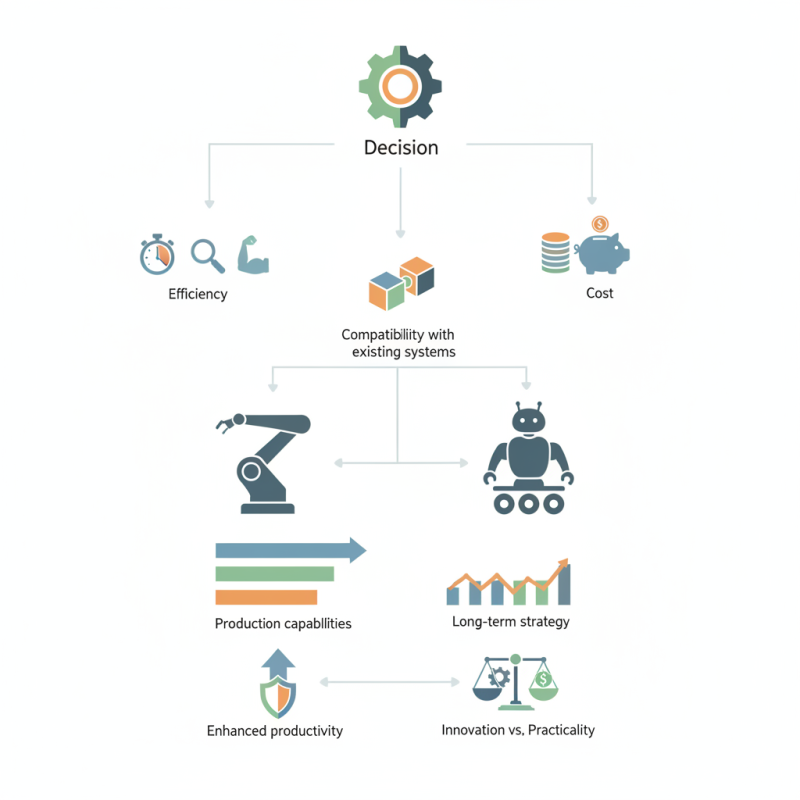
When evaluating industrial robots, businesses must assess their specific needs. Are you looking for increased efficiency, precision, or flexibility? Understanding your operational goals is key. Additionally, compatibility with existing systems can impact your decision. The choice of robot type, whether articulated, collaborative, or mobile, must align with your workflow.
Moreover, cost is a significant consideration. Sometimes, the most advanced options may not suit your budget or immediate needs. Reflecting on your long-term strategy can lead to better choices. Industrial robots have the potential to enhance productivity, but careful evaluation is essential to avoid costly mistakes. Striking a balance between innovation and practicality is vital as you navigate this complex decision-making process.
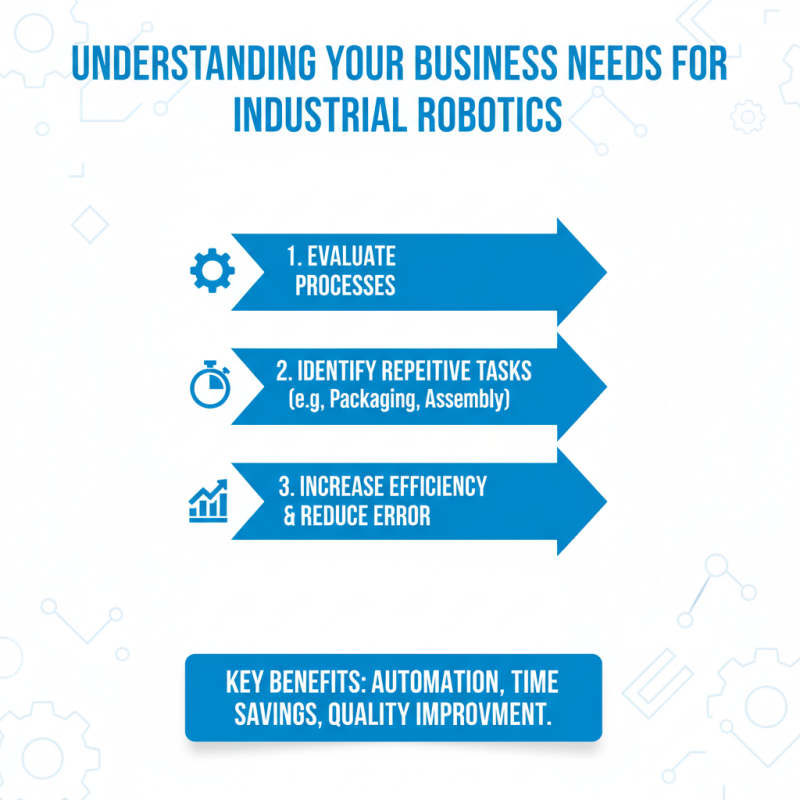
Understanding Your Business Needs for Industrial Robotics
Understanding your business needs for industrial robotics is crucial. Start by evaluating your production processes. Identify repetitive tasks that consume time and resources. For instance, packaging and assembly lines often benefit from automation. Focus on areas where robots can increase efficiency and reduce human error.
Consider the skill level of your workforce. Are they trained to work alongside robots? If not, it might slow down the transition. Avoid choosing complex systems if your team is not ready to embrace new technology. A simple robotic arm could enhance your workflow without overwhelming your staff.
Think about the long-term goals of your company. Are you aiming for expansion or diversification? Your choice of robots should align with these objectives. Each decision comes with its challenges. Sometimes, what seems like an ideal robot may not fit your specific environment. Reflect on your unique circumstances. This consideration will ensure a smoother integration of robotics into your operations.
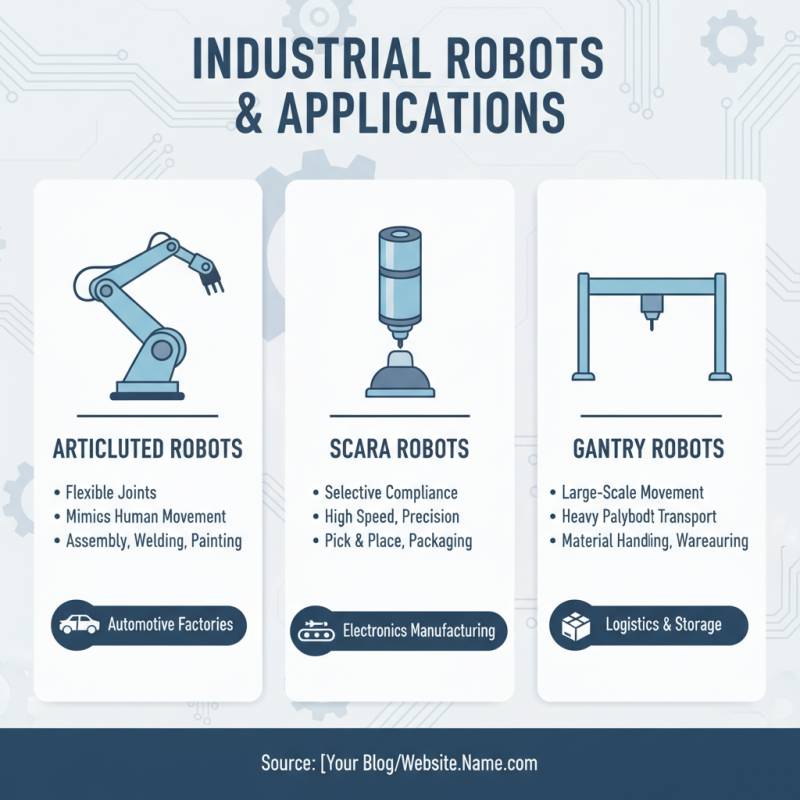
Identifying Different Types of Industrial Robots and Their Applications
Industrial robots come in various types, each serving unique applications across sectors. Articulated robots, for instance, have flexible joints that mimic human movement. They are ideal for assembly, welding, and painting tasks. Their versatility makes them valuable in automotive factories, enhancing precision and speed.
Another popular type is the SCARA robot. These machines excel in pick-and-place operations. They are often used in packaging lines and electronics assembly. SCARAs operate with high speed and accuracy, yet their reach is limited compared to articulated robots. This makes them suitable for specific tasks but not for complex operations involving multiple angles.
Collaborative robots, or cobots, are gaining traction in the industry. Designed to work alongside humans, cobots enhance productivity without compromising safety. They are easier to program and can be deployed in a variety of settings. However, their reliance on human operators means companies must train staff effectively. Balancing automation and human skills can be a challenge. Each robot type requires careful evaluation to align with business goals. Selecting the right robot depends not just on its capabilities but also on the workflow it will integrate into.
Evaluating Key Features and Specifications of Industrial Robots
Choosing the right industrial robot for your business requires careful evaluation of key features and specifications. Start by considering payload capacity. This metric tells you how much weight the robot can handle. If your products are heavy, you'll need a robot designed for greater loads. Look at the reach of the robot too. A robot with a longer reach can cover a larger work area, reducing the need for multiple units.
Another important aspect is precision. Depending on your tasks, you may need high accuracy in movements. Check the robot’s repeatability specifications, as this shows how consistently it can perform tasks. Speed also matters. A faster robot can increase productivity but may sacrifice precision. It’s a balancing act that requires attention to your specific operational needs.
Don't overlook ease of integration. Your new robot should work well with existing systems. Look for features like user-friendly interfaces. Some robots require extensive training, making them a poor fit for smaller operations. Consider what technical support is available. You need reliable assistance for any issues that may arise. A hasty decision can lead to operational setbacks. Reflect on your requirements before making a choice.
Assessing the Cost-Effectiveness of Industrial Robots for Your Operations
Cost-effectiveness is a crucial factor when choosing industrial robots. Businesses must evaluate initial costs against potential savings. The right robot can optimize operations, but it's essential to analyze long-term impacts. ROI can vary widely based on usage and industry. A thorough cost analysis will include purchase price, maintenance, and operational efficiency.
Robots may require significant upfront investment. However, they can reduce labor costs and increase productivity over time. It's important to consider downtime, repairs, and parts replacement when calculating total ownership costs. Companies should ask themselves if these robots will genuinely enhance workflow or just add complexity.
Additionally, not every robot will fit every operation. Some may excel in specific tasks, while others are too universal. Assessing compatibility with existing systems is vital. Performance and reliability should be reviewed before making decisions. A well-informed choice can lead to increased competitiveness, but the process requires careful consideration of both benefits and limitations.
How to Choose the Right Industrial Robots for Your Business?
| Robot Type |
Payload Capacity (kg) |
Reach (mm) |
Application |
Cost Estimate (USD) |
Estimated ROI (Years) |
| Articulated Robot |
10 |
1200 |
Assembly |
25,000 |
2.5 |
| SCARA Robot |
8 |
600 |
Pick and Place |
18,000 |
2 |
| Collaborative Robot |
5 |
1000 |
Quality Inspection |
18,000 |
1.8 |
| Delta Robot |
4 |
800 |
Food Packaging |
30,000 |
2.2 |
| Mobile Robot |
20 |
N/A |
Material Transport |
50,000 |
3 |
Ensuring Compatibility with Existing Systems and Infrastructure
When selecting industrial robots for your business, compatibility with existing systems is crucial.
Assess the architecture of your current infrastructure. Identify communication protocols and software compatibility.
Robots that integrate seamlessly with your systems can boost efficiency and reduce costly downtime.
Consider the following tips for compatibility:
Map out the interfaces your current machinery uses. This ensures the new robots can communicate effectively.
Analyze your software ecosystem. Will the robots work with your management systems?
Understanding these interactions helps mitigate risks.
Another vital aspect is training for staff. Employees should understand how to operate new technology.
Allocate resources for this. Consider potential changes in workflow.
Robots may require adjustments in how tasks are approached.
Balancing automation and human oversight can be complex.
You may find unexpected challenges during implementation.
Recognizing these potential pitfalls allows for better preparation.