How to Choose Hex Machine Screws in 2026?
Choosing a Hex Machine Screw in 2026 takes more than matching a diameter to a drawing. The right choice depends on the joint, the materials, the load, and the working environment. A hex head may suit a wrench-accessible assembly, but tight clearance can make installation awkward. Thread pitch, screw length, strength class, and corrosion protection also matter.
Richard T. Barrett, author of NASA’s Fastener Design Manual, offers a useful engineering reference for fastener selection. A concise editorial paraphrase of its practical lesson is: “Choose for the joint, not just the thread.” That distinction is easy to overlook. A screw that fits a tapped hole may still be poorly suited to repeated vibration, outdoor exposure, or a softer mating material.
Small details count. Check how much thread engages, whether the head sits clear of nearby parts, and whether the selected tool can reach it. Compare material and coating choices with moisture, temperature, and contact with dissimilar metals. Do not assume that a larger screw automatically makes a stronger assembly; joint design matters too. Even careful selection has limits, and real assemblies can behave differently from a neat specification sheet. This guide explains how to assess those trade-offs and choose a Hex Machine Screw with clearer, more dependable criteria.
Identify Hex Screws by ISO 4017: Fully Threaded Hexagon-Head Design
How to Choose Hex Machine Screws in 2026?
Identify Hex Screws by ISO 4017: Fully Threaded Hexagon-Head Design
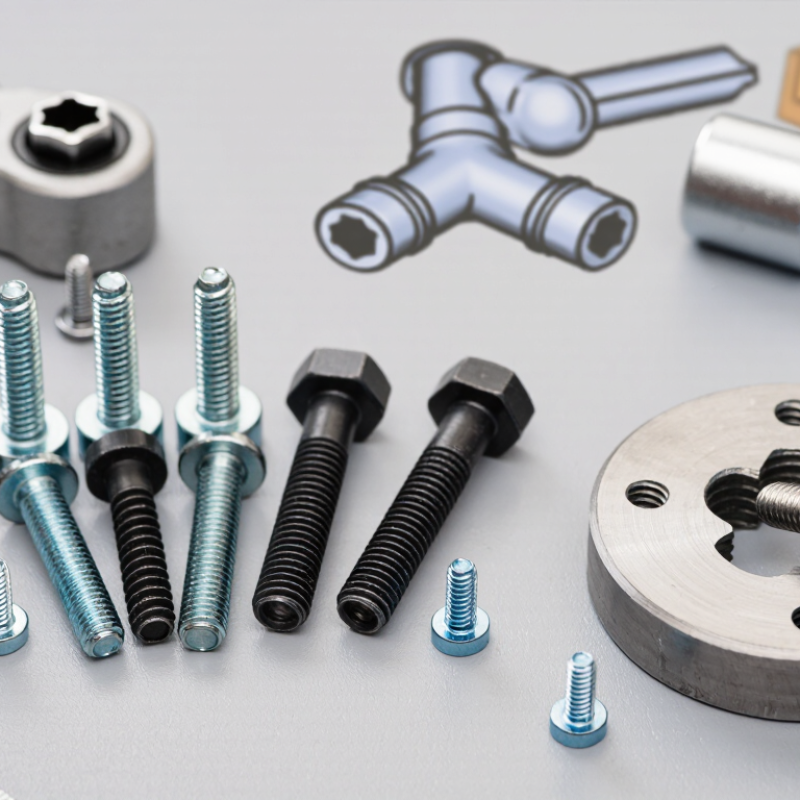
ISO 4017 describes hexagon-head screws with threads extending along the shank. This geometry can suit tapped holes and thin plate assemblies, where a partly unthreaded section may not engage the material. Check the standard, not just the head shape: ISO 4017 specifies dimensions and product grades, but does not establish the screw’s strength or coating. The World Steel Association’s World Steel in Figures 2024 reports 1,892.2 million tonnes of crude steel production in 2023. That figure gives material-supply context, not a way to judge an individual screw.
For strength, check the marking and material specification against ISO 898-1, which defines mechanical properties for carbon and alloy steel fasteners. A property class such as 8.8 is not a universal load rating; joint design, installation torque, and lubrication matter too. Match thread diameter and pitch to the tapped hole, then confirm length, head clearance, and corrosion needs. I still recheck fit on the actual parts. Drawings can miss small assembly quirks.
Tip: Before ordering, compare the screw’s ISO 4017 dimensions with the assembly drawing, then test one fastener in the tapped hole. It should turn smoothly by hand before tightening. Don’t assume a matching diameter means a matching pitch.
How to Choose Hex Machine Screws in 2026?
Identify ISO 4017 screws: they have a hexagon head and a fully threaded shank. Compare the nominal thread diameter with the standard head width across flats shown below.
How to read the chart: For example, an ISO 4017 M8 screw has a nominal thread diameter of 8 mm and a standard head width across flats of 13 mm. Dimensions shown are standard nominal values; confirm the applicable standard edition and product requirements when specifying fasteners.
Match Metric Diameter and Pitch: ISO 261 Lists M6 Coarse at 1.0 mm
How to Choose Hex Machine Screws in 2026?
Matching diameter and pitch is a practical starting point for choosing a metric hex machine screw. ISO 261 lists M6 coarse thread at a 1.0 mm pitch. M6 refers to a nominal thread diameter of 6 mm; the pitch is the distance between adjacent thread crests. It is not the screw length. Check the mating part’s thread specification before ordering. A screw that looks right can still bind or wobble if its pitch differs.
A common mistake is to focus on the hex head and overlook the thread. For an M6 × 1.0 screw, turn it gently into a clean, matching threaded hole by hand. It should engage smoothly. Stop if it catches; forcing it can damage the threads. Then confirm the required length, head clearance, material, and load conditions against the assembly drawing or equipment specification. Details matter. The coarse pitch is common, but it is not universal.
Tips: Keep a thread-pitch gauge nearby, or compare with a verified M6 × 1.0 sample. Check the full callout, not just “M6.” I still pause over length measurements sometimes, so verify whether the drawing measures beneath the head.
Choose Strength Class: ISO 898-1 Defines Steel Classes Such as 8.8
For a hex machine screw, property class 8.8 is a strength rating, not a size or material grade. ISO 898-1:2013 assigns class 8.8 a nominal tensile strength of 800 MPa and a nominal yield ratio of 0.8. Actual minimum values depend on diameter and thread, so check the standard’s table for the screw you are buying. Class markings on the head help confirm the rating; an unmarked screw should not be assumed equivalent. Small detail. Important one.
Choose 8.8 when the joint needs more strength than a lower-class fastener provides, but do not select by strength alone. A brittle failure can follow excessive tightening, especially in a short thread engagement or a poorly aligned joint. NASA’s Fastener Design Manual (RP-1228) notes that torque is only an indirect way to control preload; friction at the threads and bearing face affects the result. Match the screw to the load, mating material, environment, and tightening method. I would still verify the actual application, because “stronger” does not automatically mean safer. ISO 898-1 also covers mechanical properties, not corrosion resistance or suitability for every service condition.
How to Choose Hex Machine Screws in 2026? — Choose Strength Class: ISO 898-1 Defines Steel Classes Such as 8.8
Use the property class and screw diameter together when comparing steel hex-head screws. The tensile-strength figures below are minimum values in MPa for the stated ISO 898-1 property classes; the applicable diameter range and product standard should always be checked.
| ISO 898-1 Property Class | Minimum Tensile Strength, Rm | Meaning of the Class Mark | Practical Selection Guidance |
| 4.6 | 400 MPa | Nominal tensile strength: 4 × 100 = 400 MPa; nominal yield ratio: 0.6. | Consider for relatively light-duty steel fastening when the design load and applicable product requirements permit this class. |
| 5.8 | 520 MPa | Nominal tensile strength: 5 × 100 = 500 MPa; nominal yield ratio: 0.8. The specified minimum tensile strength is 520 MPa. | A medium-strength option. Confirm the required preload, service loads, screw dimensions, and joint materials before selection. |
| 8.8 | 800 MPa for d ≤ 16 mm; 830 MPa for d > 16 mm | Nominal tensile strength: 8 × 100 = 800 MPa; nominal yield ratio: 0.8. ISO minimum tensile strength varies with nominal diameter. | A common high-strength steel class. Verify the diameter-specific requirements and ensure the mating nut and joint are suitable for the intended load. |
| 10.9 | 1,040 MPa | Nominal tensile strength: 10 × 100 = 1,000 MPa; nominal yield ratio: 0.9. The specified minimum tensile strength is 1,040 MPa. | For designs requiring higher strength, subject to engineering checks for fatigue, tightening method, corrosion, and the strength of connected parts. |
Selection note: Property class is not a working-load rating. Determine the design load using the screw’s tensile stress area, loading conditions, safety factors, and relevant product requirements. ISO 898-1 covers mechanical properties of carbon- and alloy-steel bolts, screws, and studs; it does not specify stainless-steel property classes.
Compare Stainless Grades: ISO 3506-1 Covers A2-70 Fasteners
For hex machine screws, A2-70 is a useful starting point when corrosion resistance and strength both matter. ISO 3506-1 specifies mechanical properties for corrosion-resistant stainless steel fasteners. In the A2-70 designation, “70” indicates a minimum tensile strength of 700 MPa. A2 is commonly associated with 304-type stainless steel, but the designation is not a guarantee of identical performance in every environment. Check the material certificate and product marking.
A practical detail: match the screw to its surroundings. A2 usually suits indoor equipment and many mild outdoor settings, while salt spray, coastal air, or chloride cleaners can cause pitting. For those conditions, compare A4 grades and seek application-specific advice. The standard defines mechanical properties; it does not promise a service life in a particular installation. Also check thread engagement, head clearance, and the specified tightening method. A strong screw can still fail in a poorly designed joint.
Industry context helps, but needs care. World Stainless reported global stainless-steel crude production of 58.4 million tonnes in 2023, up 4.6% from 2022. That figure signals broad material use, not demand for A2-70 screws specifically. I would not choose a grade from production trends alone. Verify the ISO class, diameter, and working environment—then document why the choice fits. I still see one easy-to-miss point: stainless steel is not rust-proof.
Check Thread Fit and Tolerances Against ISO 965-1
Hex-head machine screws may share the same diameter yet bind or wobble in a tapped hole. Check the thread designation, pitch, and tolerance class together. ISO 965-1:2013 sets tolerance principles for ISO general-purpose metric screw threads; ISO 261:1998 lists their preferred diameter-and-pitch combinations. For example, M6 × 1 means a nominal 6 mm diameter and 1 mm pitch. That pitch is not the clearance between mating threads.
A common general-purpose pairing is an internal 6H thread with an external 6g thread, as specified within the ISO 965 tolerance system. Confirm the exact class on the drawing, especially when parts are coated or assembled in dusty conditions. Small differences matter.
A practical check uses calibrated GO/NO-GO thread gauges: the GO gauge should engage smoothly, while the NO-GO gauge should not enter beyond the limit set by the inspection procedure. Do not force a screw to make it fit. Burrs, plating thickness, and worn taps can all change engagement.
A torque wrench cannot diagnose a mismatched thread class. One imperfect habit worth correcting: assuming a screw fits because it starts by hand. Verify the drawing and gauge result before approving a batch.