How to Choose an MCB Lock Off Kit in 2026?

Choosing a Mcb Lock Off Kit in 2026 is not just a matter of buying a plastic clamp and padlock. The device must fit the breaker toggle, sit securely inside the panel, and allow the cover to close without pressure. A poor fit can look acceptable at a glance. That detail is easy to miss.

The US Occupational Safety and Health Administration has estimated that effective control of hazardous energy prevents about 120 fatalities and 50,000 injuries each year. These figures concern lockout/tagout programs broadly, not MCB lock-off kits alone. They still show why product selection deserves care. Check the manufacturer’s compatibility list, breaker type, toggle dimensions, locking method, and supplied labels. A kit designed for one miniature circuit breaker may not secure another. Verify the fit on the actual panel, and follow the equipment maker’s isolation and testing instructions.

Safety scholar James Reason wrote, “We cannot change the human condition, but we can change the conditions under which humans work.” That principle is useful here. A well-chosen Mcb Lock Off Kit makes the isolation point easier to secure and identify; it does not replace a safe work procedure or competent verification. Look for durable materials, clear identification, and instructions that match the intended breaker range. Ask for evidence, not just a broad compatibility claim. The market can be confusing, and a tidy product photo proves very little. This guide explores the practical checks that help buyers compare kits with confidence in 2026.
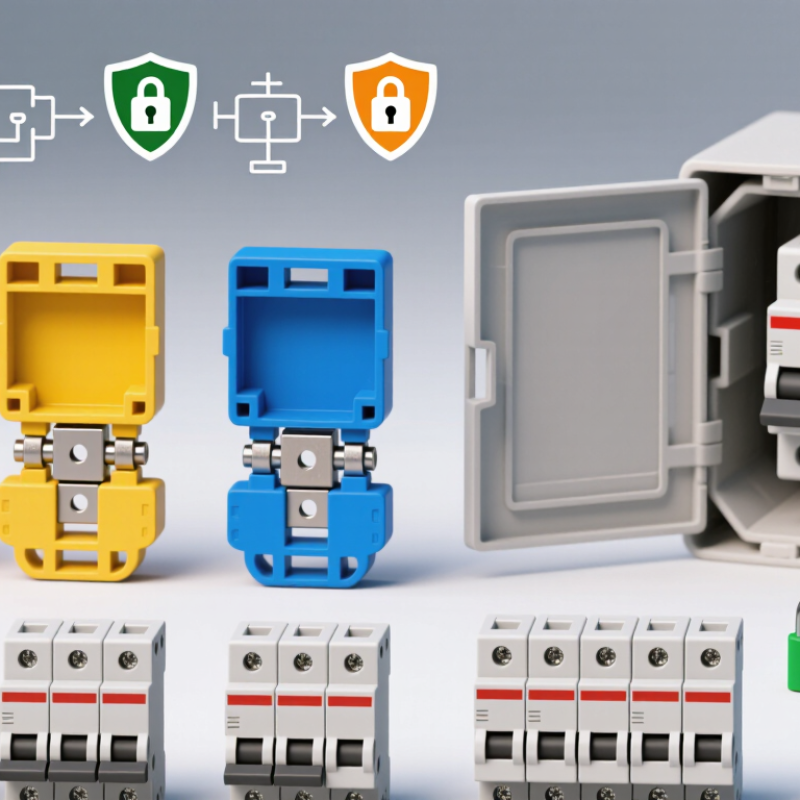
How to Choose an MCB Lock Off Kit in 2026?

Understand the Purpose and Safety Role of an MCB Lock Off Kit

An MCB lock off kit is a small physical barrier that helps keep a miniature circuit breaker in the OFF position during maintenance. It usually fits over or around the breaker toggle and accepts a padlock, with a tag identifying who is working. Fit matters: a loose or incompatible device may fail to prevent switching. Check the breaker’s shape and dimensions, then follow the kit manufacturer’s instructions. The lock is one part of a safe isolation process, not proof that a circuit is dead.

The purpose is to reduce the risk of unexpected re-energisation while someone is working on equipment. OSHA’s lockout/tagout guidance estimates that effective control of hazardous energy prevents about 120 fatalities and 50,000 injuries each year. That matters. A locked toggle alone cannot confirm safe conditions; a qualified worker must also isolate and verify the circuit using appropriate procedures and test equipment. Tags should be clear and attached securely. In a crowded panel, a small label can be easy to miss. I would still pause over whether the lock, tag, and isolation record are unmistakably tied to the same breaker.

Identify Your MCB Type, Brand, and Breaker Compatibility

Choosing an MCB lock-off kit starts with identifying the exact breaker, not guessing from its appearance.

Read the manufacturer’s name, product series, and model from the front label or side marking. Then note the pole count, handle width, and whether the toggle sits in a recessed opening. Small differences matter. A clamp-on device may fit one handle but obstruct the neighboring breaker on a crowded DIN rail. Trip curves such as B, C, or D describe electrical response; they do not confirm physical lockout compatibility.

Check the kit’s compatibility chart against the breaker’s exact model and dimensions. Confirm its locking method, handle clearance, and padlock-shackle size. IEC 60898-1 and IEC 60947-2 cover common circuit-breaker categories, but compliance with a standard alone does not prove a particular lockout will fit.

The NFPA report Home Electrical Fires recorded an estimated 46,700 U.S. home fires annually involving electrical failure or malfunction from 2015 to 2019. That figure is not evidence that a lockout prevents fires; it underlines why equipment identification and safe isolation deserve care.

Verify isolation using the site’s established procedure. I still double-check the model. Labels can be worn, and product revisions can change the handle shape.

Match the Kit to Your Lockout and Isolation Requirements

How to Choose an MCB Lock Off Kit in 2026?
Match the Kit to Your Lockout and Isolation Requirements

Choose a kit around the breakers and isolation steps you actually use. Check each MCB’s toggle shape, width, and available clearance inside the distribution board. Some devices clamp onto a toggle; others need a small fixing point. A kit that looks close may still slip or block the cover. Check the manufacturer’s compatibility information before purchase, and trial-fit the device without forcing it.

Tips: List the breaker types and sizes on site. Confirm how many locks are needed, whether tags are required, and if the kit fits your padlocks. Keep a sample breaker photo or measurement handy when comparing options.

Think through the full isolation task, not just the hardware. A secure lock-off should prevent operation and allow a clear warning tag to be attached. For multi-pole circuits, confirm the device suits the breaker arrangement and isolates the required poles. Then follow your site procedure, apply the lock, and verify the circuit is de-energized with a suitable tester. Small details matter. Even a correctly fitted lock-off device does not prove that a circuit is safe. Compatibility can be awkward to judge from photographs, so ask a qualified electrical professional to assess uncertain installations.

Check Materials, Padlock Fit, and Installation Method

How to Choose an MCB Lock Off Kit in 2026?
Check Materials, Padlock Fit, and Installation Method

Start with the breaker itself. MCB sizes and toggle shapes vary, so check the lockout device’s stated compatibility before buying. Look for a sturdy body with no cracks, sharp edges, or loose moving parts. Insulating materials can be useful near electrical equipment, but they do not make a live circuit safe. A neat fit is not always a secure fit; test that the device stays in place without forcing the breaker handle.

Check the padlock’s shackle diameter and usable length against the lockout opening. Too wide, and it may not pass through. Too short, and it may press awkwardly against the panel. Consider how much room is available beside adjacent breakers. For installation, compare clamp-on and screw-fastened designs, then follow the kit instructions. If it shifts, blocks neighboring controls, or needs improvised adjustments, stop and choose a suitable option. A qualified person should isolate the circuit and verify it is de-energized before work begins.

Tips: Try the fit on the identified breaker before relying on the kit. Keep the key controlled, and label the locked circuit clearly. Small details matter. Recheck the fit after installation; I would not assume the first attempt was perfect.

How to Choose an MCB Lock Off Kit in 2026? — Check Materials, Padlock Fit, and Installation Method

Selection Factor What to Check Practical Guidance Common Pitfall
Breaker compatibility Breaker manufacturer and series, toggle shape, toggle width, and available clearance around the breaker. Compare the lockout device’s stated compatibility with the exact MCB model. Test the fit on the intended breaker while it is safely isolated. Assuming a device fits every MCB because the breakers look similar. Toggle dimensions and panel layouts can differ.
Installation method Whether the device attaches with a screw, clip, pin, or clamp; whether a tool is required; and whether adjacent breakers obstruct access. Choose a method that can be fitted securely in the actual panel. A tool-operated clamp may suit some toggle shapes, while pin-style devices require a matching breaker feature. Choosing a tool-free design without checking whether it can be securely engaged on the specific breaker.
Device material Body material, metal components, durability, and suitability for the work environment. Lockout devices commonly use engineered plastics, metal, or a combination. Check the product’s stated temperature, chemical, and impact limitations where relevant. Judging durability by appearance alone or assuming a plastic device is suitable for every environment.
Padlock fit Shackle diameter, usable shackle length, lockout aperture size, and space for the padlock body. Measure the padlock shackle and compare it with the device’s specified aperture and clearance. Confirm that the fitted padlock prevents the lockout from being removed. Checking only the shackle diameter; a short shackle or bulky lock body may still prevent a proper fit.
Number of users Whether one or several workers need to apply personal locks to the same isolation point. For multiple workers, use a compatible group lockout arrangement, such as a hasp where the panel and device allow it, so each person can apply their own lock. Trying to fit several padlocks into an opening designed for one, which can prevent secure closure.
Panel clearance Spacing between breakers, enclosure depth, nearby wiring, and whether the cover can close with the device installed. Check the complete installation in the panel, not just the fit on a loose breaker. Confirm the device does not press against adjacent equipment or obstruct the enclosure. Ordering based on breaker fit alone without checking clearance inside the distribution board.
Kit contents Included lockout devices, padlocks, keys, labels, and any required fitting tool. Match the kit contents to the number and types of MCBs in the work area. Check whether padlocks are included or need to be selected separately. Assuming a “kit” includes padlocks or every adapter needed for the site’s breaker range.
Verification and safe use Whether the breaker can be held in the OFF position and whether the isolation can be identified and verified. Follow the site’s isolation and lockout/tagout procedure. After isolation, verify the circuit is de-energized using the approved method before work begins. Relying on the lockout device alone as proof that a circuit is de-energized.

Important: Compatibility, dimensions, and material specifications vary by device and breaker model. Check the manufacturer’s current technical information and confirm the fit before use; follow applicable electrical safety procedures and local requirements.

Verify Standards, Documentation, and Suitability for 2026 Use

In 2026, choose an MCB lock off kit by checking documented conformity, not packaging claims alone. Ask for applicable standard numbers, edition dates, and a declaration or test evidence. Confirm that these references apply to the product type and the market where it will be used. Check current editions against official standards catalogues or relevant authorities. Small details matter. A certificate without a clear product reference may not establish that the supplied device was assessed.

Match the kit to the exact breaker type, toggle dimensions, and available panel clearance. Check that its clamp grips securely without damaging the switch or obstructing adjacent modules. Review instructions for installation steps, permitted tools, environmental limits, and removal procedures. Keep records. If a panel contains mixed MCB designs, verify compatibility with each relevant model before ordering.

Request dated technical documentation, material details, traceability information, and a clear compatibility list. Look for stated temperature ranges and limits for dust, moisture, or repeated use. A lock off kit supports isolation; it does not prove a circuit is de-energized. Follow site procedures and have a competent person verify isolation with suitable test equipment. Documentation may still be incomplete, so flag gaps rather than treating assumptions as evidence.

Smart Robotics brand movie

Watch video