Choosing the best Tubular Heater in 2026 is less about buying the highest wattage and more about matching heat to the job. A stainless-steel tube beside a washdown tank faces different demands from one warming air inside a compact cabinet. Surface temperature, sheath material, mounting position, controls, and exposure to moisture all matter. Small choices have consequences.
The U.S. Department of Energy’s Manufacturing Energy and Carbon Footprints and process-heating research identify process heating as a major energy demand in manufacturing. That context makes heater sizing and control worth careful attention. The International Energy Agency’s Energy Efficiency 2024 report also stresses the need to accelerate efficiency improvements. Neither report selects a heater for a specific machine, though. Site conditions still decide.
This guide compares practical selection factors: heat-transfer medium, operating temperature, watt density, voltage, dimensions, materials, and safety features. It also explains what to check in technical datasheets and what questions to ask a supplier. A heater’s rated output can look convincing on paper. Yet poor fit, weak temperature control, or unsuitable materials may shorten service life or waste energy. There is no universal best model. The right choice is the one that meets the process requirements, fits the installation, and can be maintained reliably.
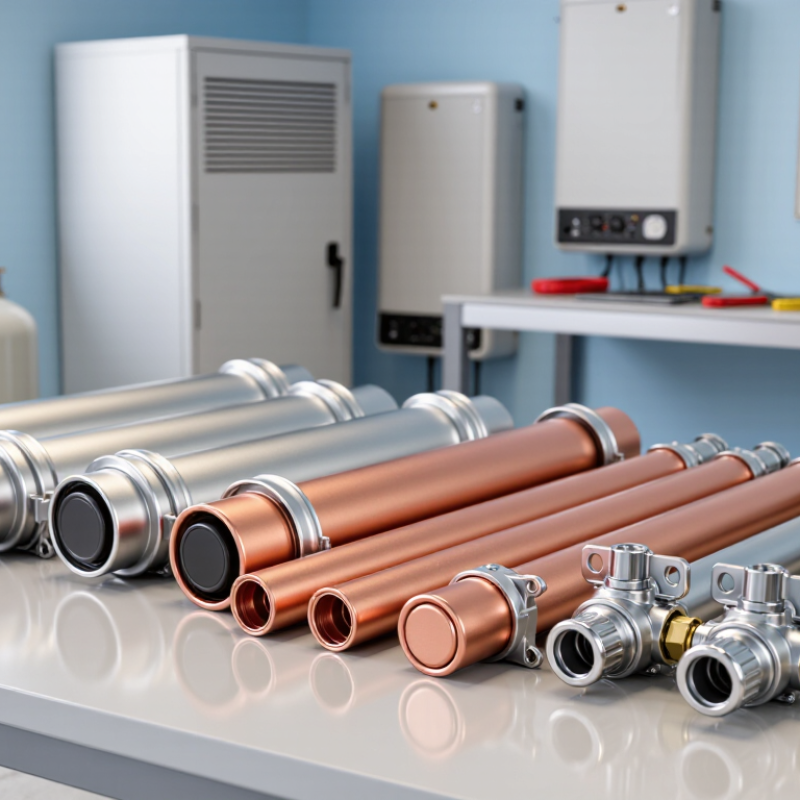
Tubular heaters are metal-sheathed electric elements that convert electrical energy into heat. Their shape allows them to fit inside tanks, ducts, ovens, and compact equipment. Heat moves through the sheath and into nearby air, liquid, or a solid surface. The exact transfer depends on how the heater is installed. In 2026, choosing one still starts with the job, not a trend.
Common uses include warming water in process tanks, heating air in ventilation systems, and maintaining temperatures in industrial ovens. A heater for still water may not suit fast-moving air. Fluid type, operating temperature, available space, and corrosion risk all matter. Sheath material and watt density should match those conditions. A mismatch can shorten service life or cause uneven heating. Even a careful selection can miss something; installation details often reveal the gap.
Tips: Check voltage, dimensions, and mounting requirements before ordering. Confirm the heater’s temperature limits and required controls with its technical documentation. Leave enough clearance for maintenance, and use suitable protection against overheating. If the application involves an unusual fluid or frequent temperature changes, ask a qualified heating professional to review the specification.
Choosing a tubular heater starts with the job, not the catalogue. Define the target temperature, warm-up time, and material being heated. A water tank, metal plate, and moving air shed heat differently. Be specific. Record the dimensions, available voltage, and whether the heater runs continuously or in short cycles. A small bench test can reveal heat losses that a calculation misses.
Operating conditions matter just as much. Note the surrounding temperature, humidity, airflow, vibration, and contact with oils or cleaning fluids. For immersion, identify the liquid and its level; dry firing can quickly damage an element. For surface heating, check how firmly the element touches the part. Gaps cause hot spots. Estimate the required wattage from the load and heat-up target, then check the specified limits for watt density and sheath temperature. These figures depend on the application.
Leave room for controls and protection. A thermostat or sensor should measure the heated area, not an unrelated point nearby. Consider an over-temperature cut-out, grounding, enclosure rating, and safe clearance from combustible materials. Exact sizing is not always obvious. An initial estimate can be wrong when insulation or airflow changes. Recheck assumptions after installation using measured temperatures and current draw. Choose a configuration that can be inspected and replaced without dismantling the whole process.
| Selection dimension | Operating condition or example | How to choose | Checks before ordering |
|---|---|---|---|
| Heating medium | Water, oil, process liquid, air, or a heated metal surface | Select an immersion, duct, or surface-contact configuration intended for the medium and installation method. | Confirm chemical compatibility, flow or circulation, and whether the element will be continuously immersed or exposed to air. |
| Required heat output | Example: heating 10 kg of water from 20°C to 80°C requires about 0.70 kWh of heat, before vessel and environmental losses. | Estimate energy with Q = m × c × ΔT, then divide by the target heating time and allow for system losses. | For the example, a one-hour heat-up needs at least about 0.70 kW of delivered heat; actual electrical input must be higher when losses are present. |
| Supply voltage and phase | Common supplies include 120 V, 230 V, and three-phase industrial supplies such as 400 V or 480 V, depending on location. | Match the heater’s rated voltage and phase to the available supply. For a resistive single-phase load, current is approximately I = P ÷ V. | A 2 kW heater at 230 V draws approximately 8.7 A. Check circuit capacity, wiring, protection, and local electrical requirements. |
| Sheath material | Material choice depends on the liquid or gas, temperature, and exposure to corrosion or contamination. | Stainless steel is commonly used in many water and general-purpose applications. Nickel-iron-chromium alloys are used in some higher-temperature applications. Copper may suit compatible clean-water service. | Verify compatibility with the exact fluid, concentration, temperature, and cleaning chemicals; no sheath material is suitable for every environment. |
| Temperature and control | Specify the normal operating temperature, desired setpoint, and maximum allowable temperature for the process. | Use a suitable temperature sensor and controller. Consider an independent high-limit device where overheating could cause damage or create a hazard. | Check the heater’s rated temperature and the limits of the vessel, seals, insulation, and surrounding materials. |
| Immersion and flow conditions | Liquid level, circulation rate, and local flow can affect heat transfer and element temperature. | Choose a length and mounting arrangement that maintain the specified immersion depth and provide adequate circulation around the heated section. | Prevent operation below the required liquid level. Consider a low-level interlock where dry firing could damage the heater. |
| Installation space and connection | Available space, insertion length, bend geometry, terminal clearance, and mounting style vary by equipment. | Match the element geometry and fitting to the vessel or duct, allowing room for installation, wiring, and future maintenance. | Confirm dimensions, connection type, seal requirements, enclosure protection, and access to terminals before purchase. |
| Safety and maintenance | Electrical heating requires appropriate grounding, overcurrent protection, and safeguards for the specific application. | Plan for inspection, scale or deposit removal where applicable, and safe isolation before maintenance. | Follow applicable electrical codes and the heater’s installation instructions. For air heating, use airflow protection where loss of airflow could cause overheating. |
Choosing a tubular heater starts with the material that touches the process. Stainless steel suits many general-purpose applications, while copper transfers heat quickly in compatible environments. For higher temperatures or demanding conditions, nickel-based alloys may be appropriate. The right choice depends on the fluid, temperature, and cleaning routine—not a material ranking alone. Check the manufacturer’s operating limits.
Shape affects heat distribution and installation. A straight element fits a long channel or tank wall, while a U-shaped element can provide more heated surface in a compact space. Finned designs transfer heat efficiently to moving air, but fins can collect dust and need room for cleaning. Fit matters. Measure the available clearance, including space around bends and terminals.
Configuration matters just as much as shape. Match wattage and watt density to the medium and available circulation; excessive surface loading can cause local overheating. Consider single- or multi-element assemblies, mounting flanges, terminal orientation, and temperature controls. A useful comparison includes the actual process temperature and fluid chemistry. There is no tidy winner: a material that looks ideal on paper can perform poorly in a particular mixture. Record the operating conditions before comparing quotations, and verify that the proposed sheath and electrical arrangement match them.
How to Choose the Best Tubular Heater in 2026
Evaluating Power, Controls, Safety, and Energy Efficiency
Match the heater’s wattage to the space, insulation, and intended use—not just its physical size. A powerful element may warm a small enclosure quickly, but poor control can cause temperature swings. The U.S. Energy Information Administration’s 2020 Residential Energy Consumption Survey reported that space heating accounted for about 42% of household site energy use. That figure makes precise temperature control worth considering, even for a compact heating application. Small details matter.
Look for an adjustable thermostat, clear temperature limits, and overheat protection. Check that the heater’s materials and ingress-protection rating suit its actual environment, especially around dust or moisture. Follow the manufacturer’s spacing and installation instructions; a close-fitting enclosure can trap heat. The U.S. Department of Energy notes that electric resistance heating converts nearly all consumed electricity into heat at the point of use. That does not guarantee low running costs: insulation, set temperature, and operating hours still affect the bill. That sounds simpler than it is.
Tips: Compare wattage and control range, then check the supply requirements and safety features. If the heater will run for long periods, use a thermostat to avoid unnecessary heating. Keep a little margin for real-world heat loss, but don’t oversize blindly. I’d recheck the application before buying.
Compare nominal power with modeled energy use to find a heater that fits your application. The chart assumes 1,000 hours of operation at full rated power; actual consumption depends on operating time, thermostat cycling, and conditions.
Selection tip: Choose power for the required heat output, then check that the controls suit the application and that the heater’s safety features and installation ratings match its operating environment. Energy values shown are calculated as rated power multiplied by 1,000 operating hours, not measured product results.
How to Choose the Best Tubular Heater in 2026
Choosing a tubular heater starts with the medium, target temperature, available space, and heat-up time. Measure the bore and check the mounting orientation before ordering. Then match the sheath material to the fluid or atmosphere, and confirm voltage and wattage with a qualified engineer. Watt density matters: too much heat concentrated in a small area can cause premature failure. Details matter.
The U.S. Department of Energy’s Improving Process Heating System Performance: A Sourcebook for Industry reports that process heating accounts for about 36% of manufacturing energy use. That figure is a reminder to consider the whole system, not just the element. Insulation, airflow, controls, and cycling affect energy use and temperature stability. A heater can be correctly rated yet perform poorly in an uninsulated tank or with uneven airflow.
For maintenance, isolate power and allow the heater to cool before inspection. Look for scale, corrosion, loose terminals, and damaged insulation. Clean deposits using a method approved for the sheath material; abrasive tools can create trouble. Check resistance and insulation condition against the heater’s specifications, and record readings over time. I would revisit the original sizing if temperatures drift or deposits return quickly. That can reveal a process issue, not merely a worn heater.
Watch video