Why Choose a CNC Knife Grinder for Precision Cutting?
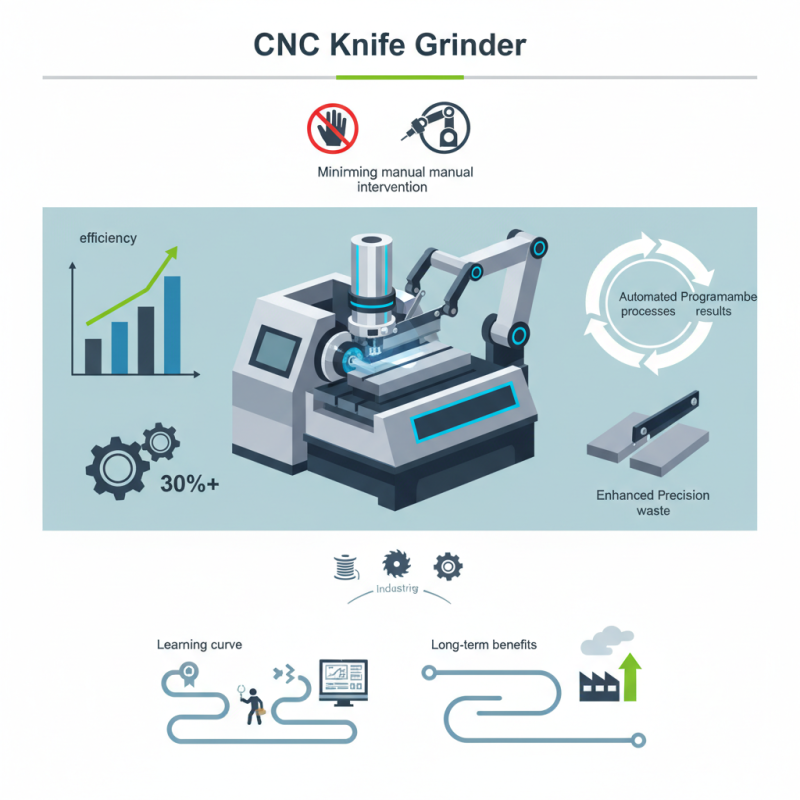
In the realm of precision cutting, choosing the right equipment is crucial. A Cnc Knife Grinder has emerged as a leading choice for many manufacturers. According to a report from the International Manufacturing Technology Show, CNC machines can improve efficiency by up to 30%. Experts agree that investment in technology like the CNC knife grinder pays off over time. Renowned industry expert Dr. Sarah Benson stated, “A CNC knife grinder not only enhances precision but also reduces waste.”
Manufacturers face challenges in maintaining high-quality standards. Traditional grinding methods often fall short in achieving the necessary precision. CNC knife grinders offer advanced features such as automated processes and programmable settings, ensuring consistent results. This transition can lead to a steep learning curve and initial setbacks. However, adapting to CNC technology brings significant long-term benefits.
The benefits of CNC knife grinders are clear. They minimize manual intervention, thereby reducing the risk of errors. The machines deliver precise cuts, reflecting modern production demands. Industries ranging from textiles to woodworking are increasingly adopting these tools. Yet, it is essential to recognize that not every shop may see immediate improvements. Careful evaluation and training are vital for successful implementation.
Understanding CNC Knife Grinding Technology
CNC knife grinding technology offers notable advancements in precision cutting. The process utilizes computer numerical control to achieve high levels of accuracy. According to industry reports, CNC knife grinders can reduce production errors by up to 95% compared to traditional methods. This precision is critical in industries where tolerances are tight, such as aerospace and medical manufacturing.
Operating a CNC knife grinder requires skilled technicians who understand coding and machine operation. Training programs can enhance employee skill sets, leading to decreased operational downtime. A report from the Precision Machined Products Association indicates that facilities using CNC technology have seen productivity increases of up to 30%.
Tip: Regular maintenance of CNC machines is essential. Even minor wear can affect precision. Ensure operators conduct routine checks on blade alignment and machine calibration. Precision is vital; small errors can lead to costly waste.
CNC knife grinding is not without challenges. Investment costs can be high, and upgrading existing machinery may pose difficulties for some companies. Consider the long-term benefits versus upfront expenses to make informed decisions. A thoughtful approach can lead to significant improvements in cutting quality.
Why Choose a CNC Knife Grinder for Precision Cutting? - Understanding CNC Knife Grinding Technology
| Feature | Description | Benefits |
| High Precision | CNC knife grinders utilize advanced robotic mechanisms to ensure cutting accuracy down to microns. | Improves product quality and reduces material waste. |
| Versatility | Capable of grinding various knife shapes and sizes for different applications. | Cater to different industries such as paper, metal, and wood processing. |
| Automation | Programs can be set for specific grinding tasks, minimizing manual input. | Increases efficiency and reduces human error. |
| Material Compatibility | Effective with a wide range of materials including hard metals and composites. | Allows for flexibility in manufacturing processes and material selection. |
| Cost Efficiency | Reduces the cost per part through efficient processing and minimal rework. | Improves overall profitability for manufacturers. |
The Advantages of Precision Cutting with CNC Knife Grinders
CNC knife grinders are revolutionizing precision cutting in various industries. These machines enable manufacturers to achieve detailed and accurate cuts, essential for quality control and production efficiency. According to industry reports, precision cutting can improve yield rates by up to 30%. This significant enhancement comes from the CNC system’s ability to control cutting parameters with extreme accuracy.
The advantages of using CNC knife grinders extend beyond just precision. They offer a reduction in human error, making the production process more reliable. Many studies indicate that automated systems can decrease waste by at least 15%. This reduction not only optimizes material usage but also minimizes costs. Furthermore, CNC grinders can operate continuously, enabling high-volume output while maintaining quality.
However, the transition to CNC grinders is not without challenges. Initial investment costs can be high. Businesses must weigh the upfront expenses against long-term benefits. Additionally, the need for skilled operators who can manage these sophisticated machines can strain resources. Despite these hurdles, the push for precision cutting continues to grow in importance within the industry. The demand for accuracy reflects the evolving standards of modern manufacturing.
Applications of CNC Knife Grinders in Various Industries
CNC knife grinders are increasingly used across various industries for their precision and efficiency. In the food processing sector, they ensure that knives remain sharp, contributing to safer and cleaner operations. In many cases, using dull knives can lead to food contamination. Companies prioritize consistent knife quality to meet health standards.
Another significant application is in the textile industry. CNC knife grinders allow precise cuts for fabrics, ensuring minimal waste and optimizing production. This versatility helps manufacturers adjust quickly to changing designs without compromising on precision.
Tip: Regular maintenance of CNC knife grinders is essential. Check alignment and calibrate settings often to maintain quality cuts.
In woodworking, CNC knife grinders aid in producing precision joinery and intricate designs. However, some may overlook the need for continual operator training. Skilled operators are crucial for maximizing the machine's capabilities. This awareness can significantly impact production quality and efficiency.
Tip: Invest in ongoing training sessions for staff. Well-informed operators tend to make better decisions throughout the cutting process.
Key Features to Look for in a CNC Knife Grinder
Choosing a CNC knife grinder for precision cutting can significantly enhance production capabilities. Key features to consider include the machine's accuracy and versatility. Industries rely on grinders that can achieve tolerances of ±0.001 inches. This level of precision is essential for creating sharp, consistent blades. Many reports suggest that improving cutting accuracy can reduce material waste by up to 30%.
Power and speed are crucial as well. A grinder with high RPM capabilities offers quicker processing times. Machines that operate between 3000 to 6000 RPM are ideal for various materials. This allows for a more efficient workflow in busy manufacturing settings. However, with higher speeds, consistent maintenance becomes imperative to prevent overheating and tool wear—issues that can disrupt production schedules.
User-friendly controls also shouldn't be overlooked. An intuitive interface streamlines operations, reducing the learning curve for new operators. CNC knife grinders equipped with advanced software can optimize cutting paths, enhance tool life, and support complex designs. Yet, the complexity of these systems can pose challenges for some teams. Proper training and ongoing support are necessary to maximize these features effectively.
Comparing CNC Knife Grinders to Traditional Grinding Methods
CNC knife grinders offer a significant advantage over traditional grinding methods. With precise digital controls, they can achieve intricate cutting patterns. Traditional methods rely on manual adjustments, leading to potential human error. A CNC grinder maintains consistent precision, essential for high-quality knife production.
The speed of operation adds to their appeal. CNC machines execute cuts quickly and efficiently. In contrast, traditional grinding can be slow and labor-intensive. However, not every machine is perfect. Initial setup and programming may require skilled operators. This complexity can be daunting for smaller shops.
Furthermore, CNC grinders reduce material waste. They can optimize cuts to maximize the use of raw materials. Traditional grinding often leads to more scrap due to imprecise angles. Yet, some artisans still prefer hand grinding for its tactile feedback. It offers a connection to the craft that machines cannot replicate. Balancing technology with tradition remains a topic of discussion in the industry.